Sonos Arc Ultra: Dolby Atmos, Done Properly
What it adds over the original Arc, how it compares with the Beam Ultra, and which rear speakers are worth adding, from a pair of Era 100 SLs to Sonos Plays you bring in for movie night.

The Arc Ultra is Sonos’s best soundbar. Add a sub and a pair of rear speakers and you have the best home theatre sound Sonos makes. Even on its own, it plays full Dolby Atmos for immersive, blockbuster sound, and it gets full marks from me. I have one at home.
It replaces the original Sonos Arc, and at $1,799 it’s $700 more than the Sonos Beam Ultra, Sonos’s smaller premium soundbar and a good fit for a smaller room or budget. The Arc Ultra is a full-width bar with an impressively wide sound for a single speaker, and it fills a mid-sized room or an apartment without help. Rear speakers and a sub are upgrades for later, not part of the price of entry.
The extra money buys four height channels, so a helicopter passes over your head rather than out of the TV, and a thunderstorm breaks above you, not in front of you. A new woofer adds serious bass too, enough that most rooms don’t need a sub.
Atmos from above, and bass from a slim bar
Dolby Atmos adds a height layer to film and TV sound, and the Arc Ultra plays it as 9.1.4: nine channels spread around the room, one for bass and four overhead. Two of its tweeters fire up and bounce sound off the ceiling, which is what puts overhead effects above you instead of in the TV.

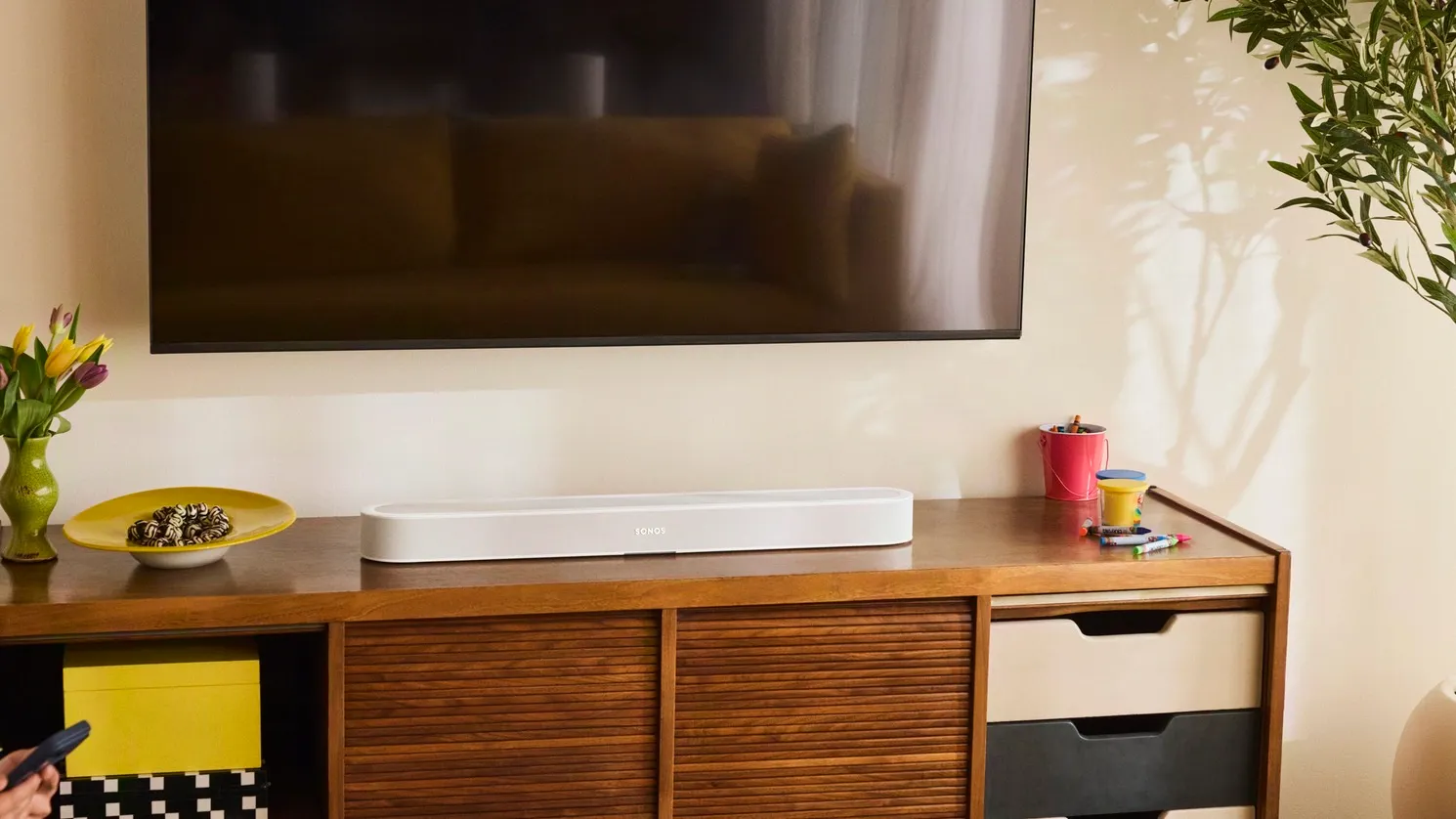
The Arc Ultra in white, wall-mounted under a TV. Photo: Sonos
Bass is the hard part for any soundbar. Deep notes need a driver that moves a lot of air, and a soundbar is only a few centimetres tall. The Arc Ultra’s answer is a woofer with two membranes driven by four motors, packed into a bar 75 mm high, which Sonos says gives up to twice the bass of the original Arc. That woofer is why the Arc Ultra holds up without a sub in most rooms.
One cable to the TV
The Arc Ultra connects to the TV with a single HDMI cable, included in the box, plugged into the TV’s HDMI eARC port. Most current TVs have one. That one cable is what makes a soundbar easy to live with: the TV remote controls the volume, and everything you watch, from the TV’s own streaming apps to a console plugged into the TV, plays through the bar. HDMI is also the only connection that carries Atmos. An older TV without an HDMI ARC port needs Sonos’s optical adapter, sold separately, and plays without the height channels.
The bar is 1,178 mm wide, 75 mm high and 5.9 kg, in black or white. If it’s going to sit on a cabinet in front of the TV, check the bottom of the screen sits more than 75 mm above it, or the bar will cut off the picture.
Day to day, Speech Enhancement lifts dialogue for shows where the actors mumble, and Night Sound evens out the loud bits so you can watch late without waking the house. Both sit in the Sonos app, where Trueplay also tunes the sound to your room using an iPhone or an Android phone. For music, the bar streams over Wi-Fi 6, AirPlay 2 or Bluetooth 5.3, so it doubles as the lounge room’s speaker. Voice control is Sonos’s own or Amazon Alexa, and a switch on the back cuts power to the microphones. If you own Sonos Ace headphones, TV Audio Swap sends the TV’s sound to them, which suits late nights.
Arc Ultra or Beam Ultra
Both are current Sonos soundbars with Dolby Atmos, HDMI eARC, Bluetooth and Trueplay, so the real difference is size.
| Arc Ultra | Beam Ultra | |
|---|---|---|
| RRP | $1,799 | $1,099 |
| Dolby Atmos | 9.1.4 | 7.1.2 |
| Width | 1,178 mm | 750 mm |
| Weight | 5.9 kg | 2.88 kg |
| Dual-membrane woofer | Yes | Not listed |
The Arc Ultra has twice the height channels, and at almost 1.2 metres wide it spreads sound further across the room. The Beam Ultra is the one to choose for a smaller TV, a bedroom or a budget that stops at about $1,100. It still has upward-firing drivers for Atmos, and it leaves $700 for a pair of rear speakers later.
Adding rear speakers
Rear speakers put sound behind you, like footsteps creeping up or a car passing from back to front. The Arc Ultra is complete on its own, but any pair of rears takes it to another level, and you don’t need the most expensive pair to hear the difference. They matter most with Dolby Atmos and 5.1 soundtracks, while the news may not use them at all. The right pair depends on whether they’ll stay behind the couch.

A Sonos soundbar with a sub and a pair of rear speakers on stands. Photo: Sonos
The flexible option, and the one I’d recommend, is a pair of Sonos Plays as portable rears. The Arc Ultra handles the TV news and YouTube on its own. On a Friday night, when a blockbuster goes on, you put the Plays down behind the couch and they join the Arc Ultra as surrounds in about eight seconds. Pick one up for the backyard the next morning and both go back to being standalone speakers. The pair must match (two Plays or two Move 2s), they have to be in the same room as the soundbar, and they only work as rears. At $499 each, they earn their keep the rest of the week as portable speakers.
For rears that stay put, a pair of Era 100 SLs at $289 each is the one to buy. The SL is the Era 100 without microphones, and a rear speaker doesn’t need them: you won’t be talking to it, and the Arc Ultra’s own microphones handle Trueplay tuning for the whole setup. If you have an iPhone, Trueplay does a great job of it. In a medium-sized room they may be all the rears you need. A pair of regular Era 100s at $319 each sounds the same, but the microphones aren’t worth paying for in a rear speaker when the Arc Ultra already has voice control. Sonos sells the Arc Ultra and two Era 100s as the Surround Set for $2,437.

A pair of Era 100s on stands. Photo: Sonos
For the best Sonos home theatre sound, a pair of Era 300s at $799 each is the top option. Each one has its own upward-firing driver, so the overhead effects come from behind you as well as in front. The Premium Surround Set (Arc Ultra and two Era 300s) is $3,397. They’re the one to beat if you watch a lot of films and Atmos, and they make the most sense once you have a Sub 4, when the rears are the weakest part of the system. In a small or medium room they can be more speaker than you need.
Adding a sub
The Sonos Sub 4, at $1,299, pairs with the Arc Ultra to take over the lowest notes. With the bar’s own woofer doing so much, it’s for a large, open-plan room or for people who want explosions to shake the couch.
Price and where to buy
The Arc Ultra’s RRP is $1,799, the same as at launch, from Sonos and its Australian retailers.
Previous models
The original Sonos Arc went on sale in June 2020 and is no longer sold new by Sonos in Australia. It has 11 drivers, including two upward-firing ones, HDMI eARC and the same capacitive controls on top, and its box included an optical adapter.
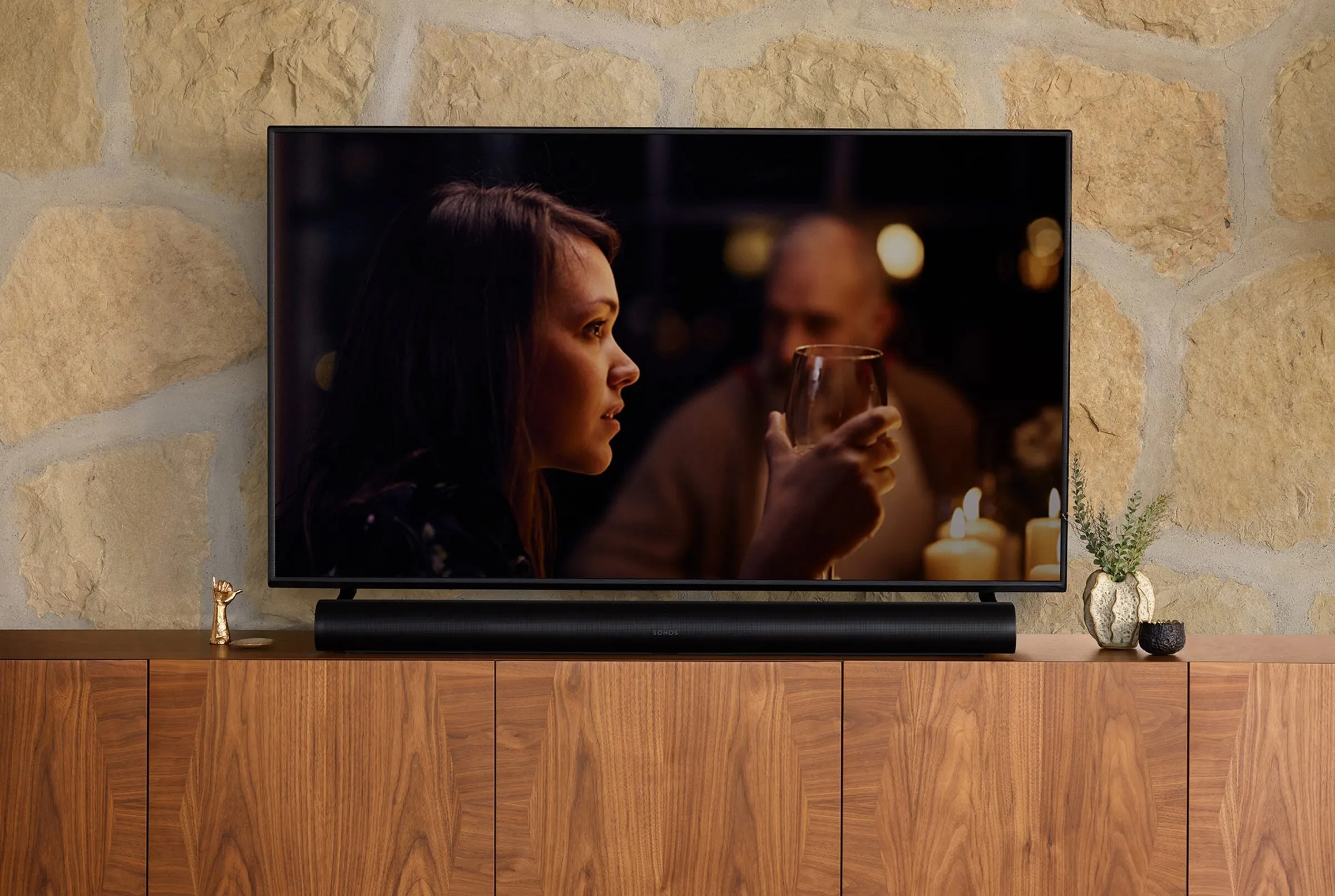
The original Arc (2020). Photo: Sonos
The Arc Ultra adds the new woofer, Bluetooth and Trueplay on Android, and the bar is slightly lower, lighter and wider. Google Assistant, which the original Arc supported, isn’t on the Arc Ultra’s feature list. A secondhand Arc is still a good soundbar and works with the same Sub 4 and rear speakers, but the missing bass is exactly what the Ultra fixes.
Back to the full range: the best Sonos speakers.