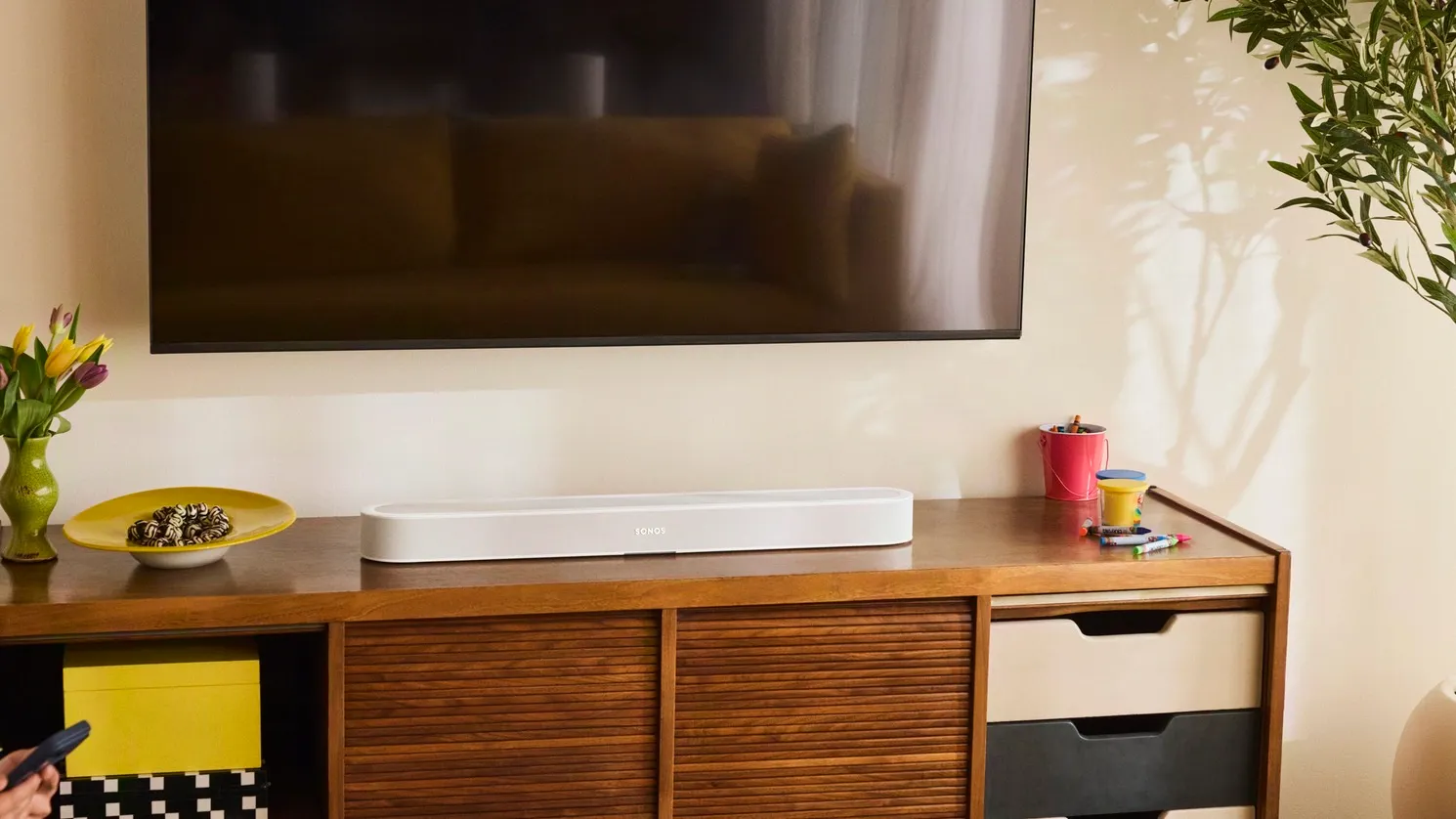
Sonos Ray: A Budget Soundbar for Small TVs
Why the missing HDMI eARC rules it out for a main TV, what the $799 Beam (Gen 2) adds, and the one room where the Ray still fits.
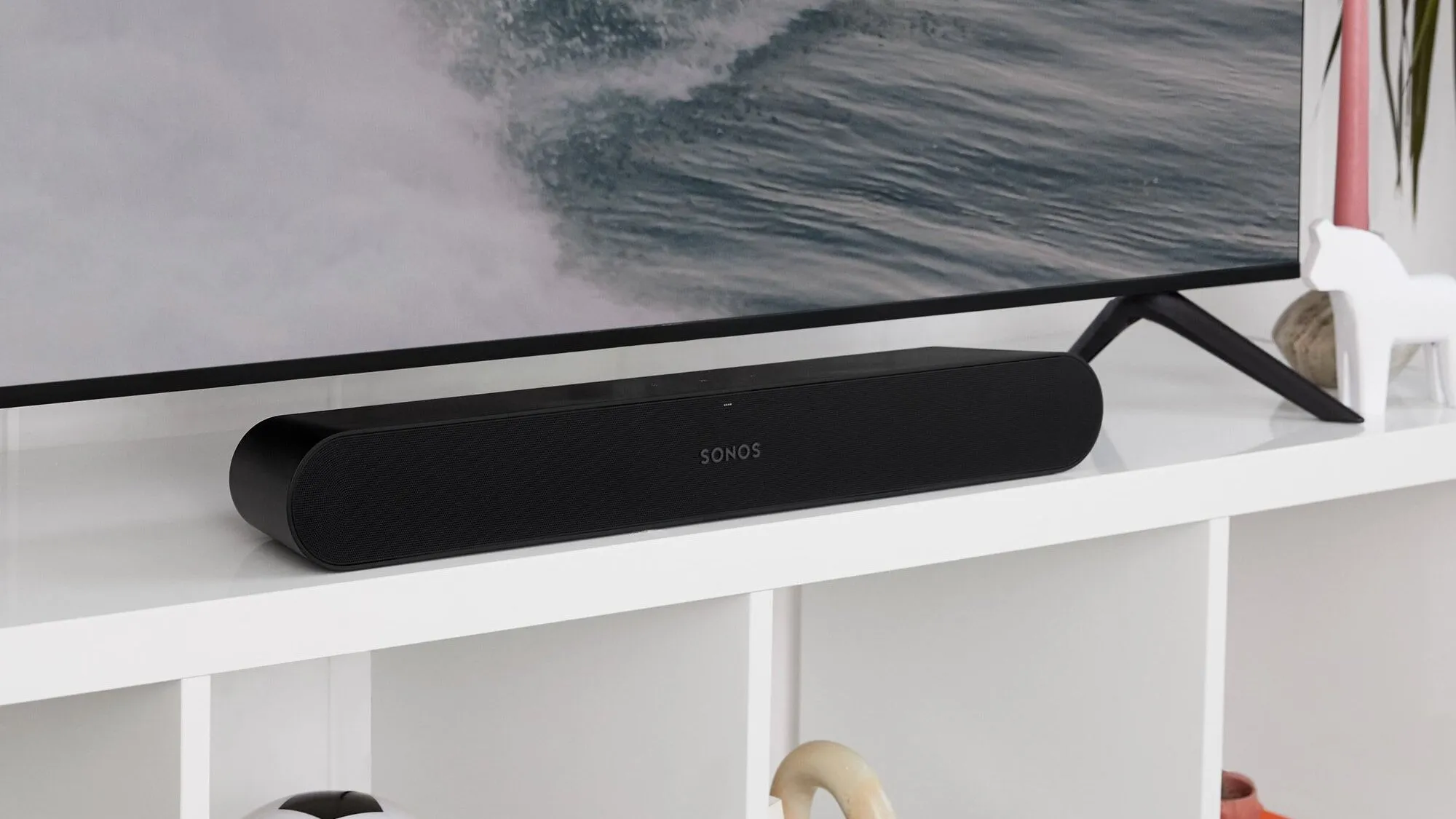
The Sonos Ray is the smallest and cheapest soundbar Sonos makes. At $349, it looks like an easy way into Sonos, but it’s really pitched at the TV that doesn’t get much attention: the one on a dresser in the bedroom, in the study or in a kids’ playroom, where the TV’s own speakers sound thin.
That’s the only job it does well. The Ray gets you into Sonos’s multiroom system for the lowest price, but it gets there by dropping HDMI eARC, the connection a modern home theatre is built around, and Dolby Atmos, the other thing Sonos does best. Those are exactly what a main TV needs, so it’s the wrong pick for one. If you want Sonos for your main TV, the Sonos Beam (Gen 2) at $799 is where the range really starts. If your budget is closer to the Ray’s, it goes further outside Sonos: a soundbar with HDMI eARC and a dedicated subwoofer, or a pair of powered bookshelf speakers, is a better buy for films and music alike.
Where the Ray does make sense is a home that already has Sonos speakers, wants to keep everything in the one app, and needs something for a secondary TV like those above. This page covers what the Ray does, what it gives up against the Beam, and why adding a sub or rear speakers to it later rarely pays off. It sits within our guide to the best Sonos speakers, which covers the whole range.
Why the missing HDMI eARC matters
The Ray connects to the TV with an optical cable only. HDMI eARC is the connection the Beam and every Sonos soundbar above it uses, and it does more than carry sound: it’s how the TV and soundbar share one remote and switch on and off together, and it carries Dolby Digital Plus, the format most streaming services use for films and shows.
Optical carries Dolby Digital, DTS and stereo audio, which covers everyday TV, but it can’t carry Dolby Digital Plus or Dolby Atmos. The Ray gets around the remote problem with an infrared receiver that responds to your TV remote, and it works, but it’s a workaround for something HDMI handles on its own.
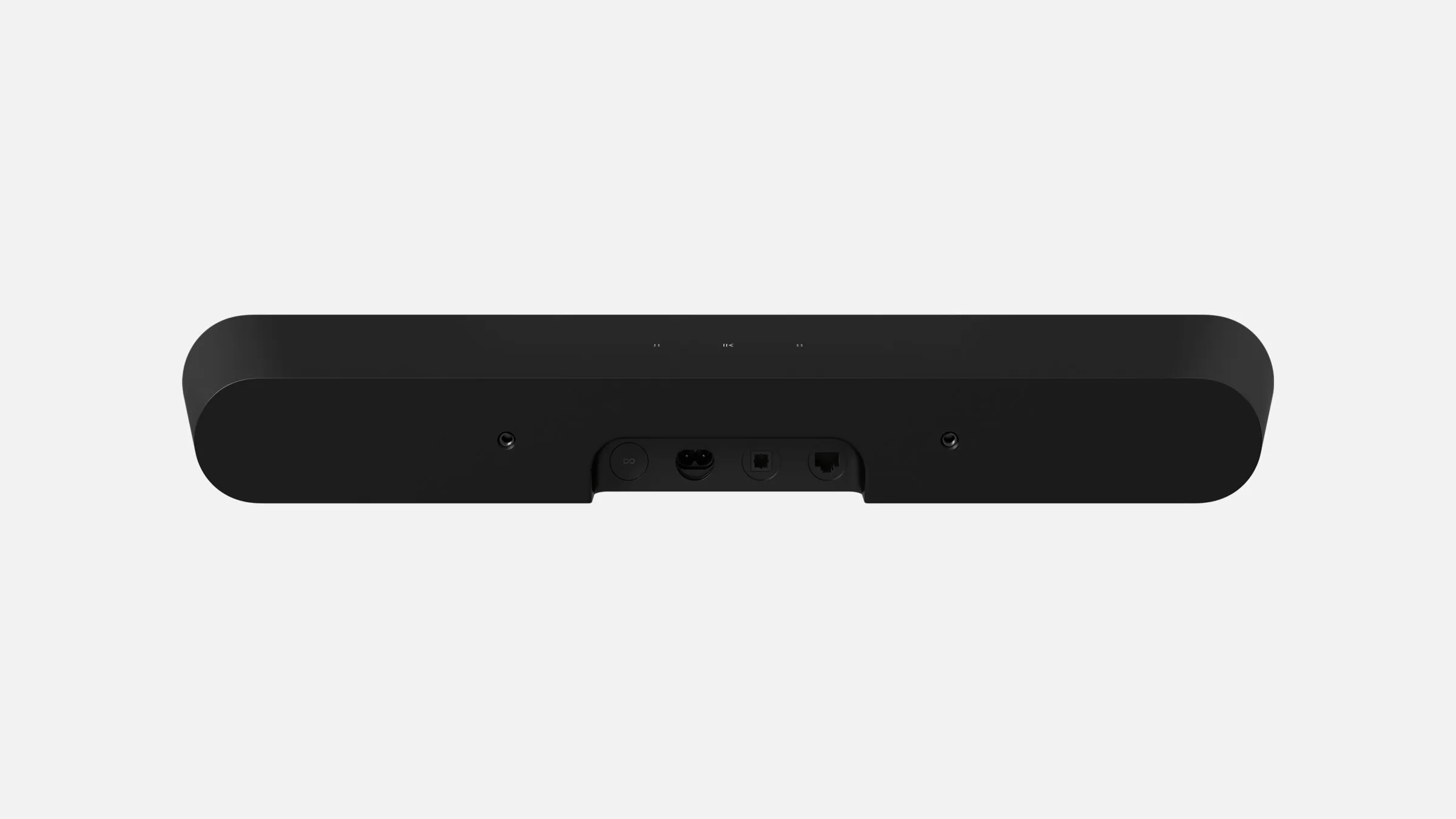
The back of the Ray, with the optical input in place of HDMI. Image: Sonos
For a main TV, that’s a big miss. You’re buying a soundbar to last through at least one more TV, and an optical-only soundbar is already behind the TVs it’s meant to sit under.
What its speakers can and can’t do
The Ray’s job is to fix what a TV’s built-in speakers do worst, and dialogue is the main one. Its two tweeters and two midwoofers all face straight out into the room, and Speech Enhancement lifts voices when they get buried under music or effects. For news, sitcoms and kids’ shows, that’s most of what you need.
Bass and scale are where the hardware runs out. Two midwoofers and a bass port in a 557 mm box can only move so much air, against the Beam’s four midwoofers and three passive radiators, so explosions, film scores and music have less weight to work with. The Ray also has no Dolby Atmos, so the sound stays at the front of the room. Atmos is what lets a soundbar spread sound wider and higher than the bar itself, and it’s the main reason a good soundbar feels bigger than the TV it sits under. Without it, the Ray is better TV speakers rather than a home theatre.
Where the Ray makes sense: a Sonos home’s spare TV
If you already have Sonos speakers around the house, the Ray earns its place on a small, secondary TV. It joins the same Sonos app as everything else, groups with other rooms for music, and plays through AirPlay 2 and Spotify Connect when the TV is off. For a kids’ playroom, where the audience wants the cartoon loud enough and nothing more, or a bedroom TV used mostly for late-night viewing, that convenience matters more than anything the Ray leaves out.
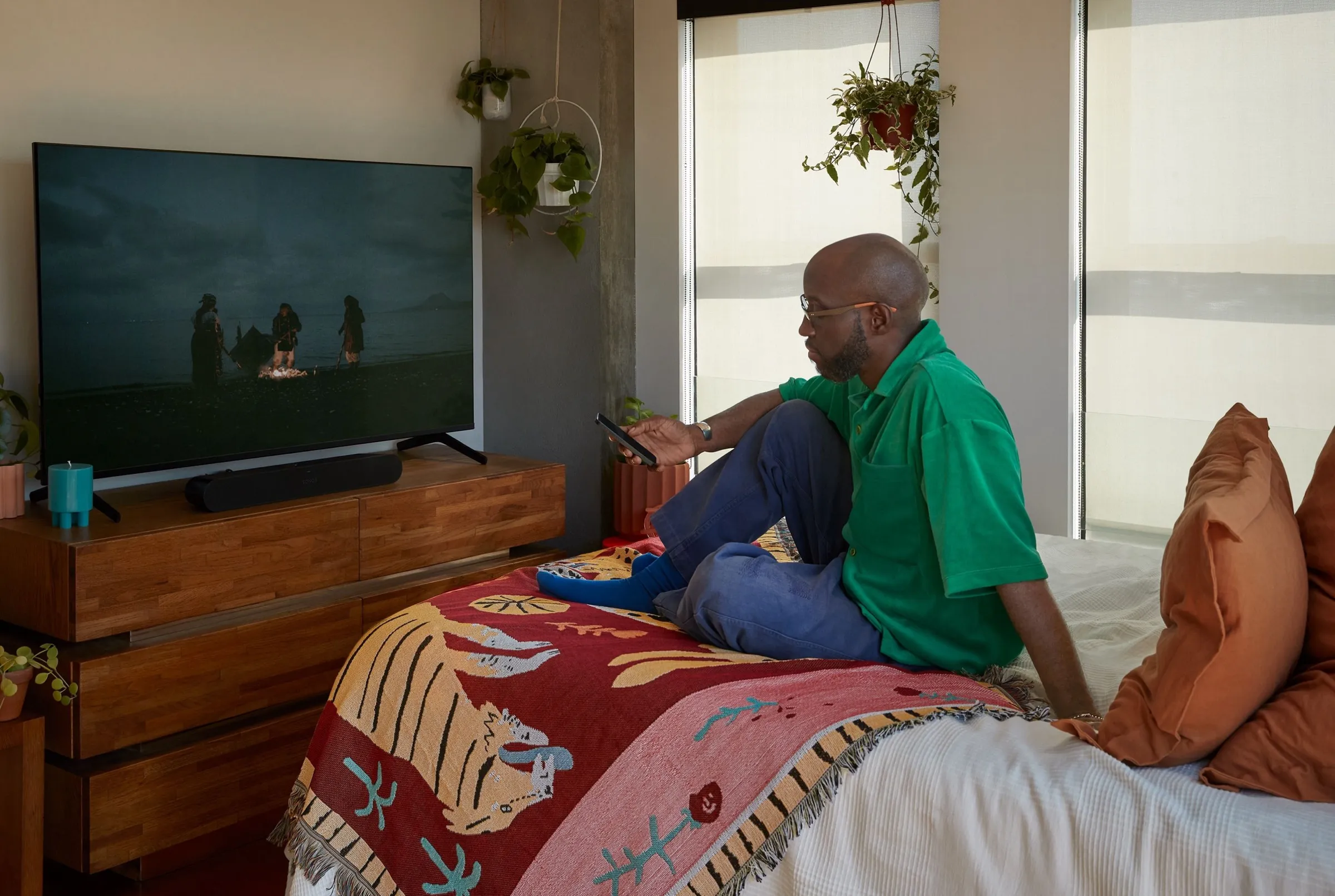
The Ray is small enough for a dresser or a shelf under a small TV. Image: Sonos
It’s also easy to fit. The Ray is 557 mm wide, 70 mm tall and weighs 1.9 kg, and it comes in black or white. Every driver faces forward, and Sonos says that avoids interference from nearby surfaces even inside a TV stand, so it can sit on a shelf or in an open cabinet. A wall mount costs $69. Night Sound evens out loud scenes so you can keep the volume down late at night. Trueplay, which tunes the sound to the room using a phone’s microphone, needs an iPhone or iPad. The full specs are on Sonos’s Ray page.
Why the Beam is the better buy
The Beam (Gen 2) costs $799, more than twice the price, and fixes most of the Ray’s problems. It connects over HDMI eARC (with an optical adapter in the box for older TVs), and it supports Dolby Atmos, using its drivers to create virtual height effects. It also has a far-field microphone array and works with Alexa and Google Assistant. The Ray has no microphones, so voice control needs a separate device, such as an Amazon Echo or Google Nest speaker.
| Sonos Ray | Sonos Beam (Gen 2) | |
|---|---|---|
| Price (RRP) | $349 | $799 |
| TV connection | Optical | HDMI eARC (optical adapter included) |
| Dolby Atmos | No | Yes (virtual height) |
| Microphones and voice assistant | No | Yes (Alexa, Google Assistant) |
| Amplifiers and drivers | 4 amps, 4 drivers | 5 amps, 5 drivers, 3 passive radiators |
| Size (H x W x D) | 70 x 557 x 93 mm | 68 x 651 x 100 mm |
Don’t build a system on the Ray
Sonos sells the Ray in bundles: with a Sub Mini for $1,048, or with a pair of Era 100 speakers as rears for $987. Both are a waste of money. Adding a sub or rears makes the Ray louder and fuller, but it can’t fix the foundation: the system is still on an optical connection, with no Atmos.
The same budget goes much further on a better soundbar. The Ray and Sub Mini bundle costs more than a Beam (Gen 2) on its own, and the Ray and Era 100 bundle is within about $100 of the Beam Ultra at $1,099, which adds upward-firing speakers for real Dolby Atmos. Either Beam gives you HDMI eARC and Atmos from day one, and you can still add a sub and rears later. If there’s any chance you’ll want a bigger system, start with a Beam.
Price and availability
The Ray’s RRP is $349 from Sonos Australia, and it’s often discounted during Sonos’s sales. A lower price doesn’t change the verdict, though: it’s still optical-only with no Atmos. The Ray went on sale worldwide in June 2022 and is still Sonos’s entry-level soundbar, with no successor announced.