Rolex Yacht-Master II: The Watch for the Start Line
How a regatta countdown works, why Rolex moved it from the Ring Command bezel to the pushers in 2026, and what the steel and gold models cost in Australia.
A sailing race doesn’t start at a set time on the clock. It starts with a countdown, usually five minutes, marked by flags and sound signals from the committee boat. Boats can’t stop and wait at the line, so they circle and jostle behind it, trying to time their run to cross at full speed the moment the gun goes. Cross early and you’re forced to turn back; cross late and you’ve given away the lead before the race has begun. Knowing exactly how much time is left is what makes a good start.
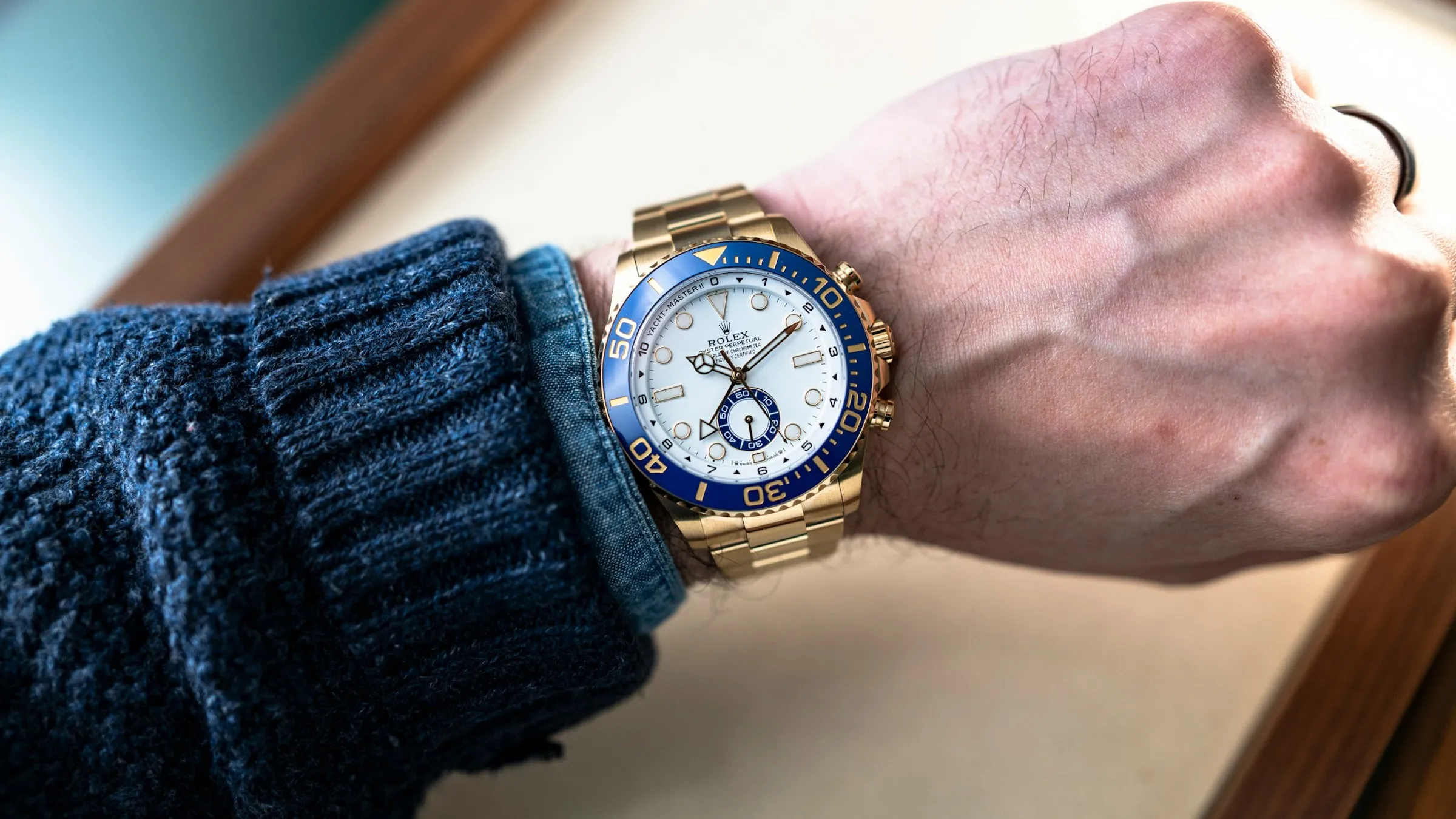
The Yacht-Master II is the Rolex made for those minutes. Launched in 2007, it’s a 44mm regatta chronograph with a programmable countdown that remembers its length from race to race. Rolex rebuilt it in 2026 with a new calibre and a countdown set from the pushers instead of the bezel. The steel model costs $33,900, and it suits sailors and anyone who likes a complicated tool watch. To see where it sits in the range, read our guide to the best Rolex watches.
Why a race start needs a countdown
Most races follow the start sequence in World Sailing’s Racing Rules of Sailing. A warning signal goes five minutes before the start, a preparatory signal at four minutes, a long sound at one minute, and then the start itself. Each is a flag with a sound, and the flag is what counts. A race’s own instructions can change the length, which is why a countdown that suits one regatta won’t suit every one.
The rule on crossing early is strict. A boat with any part of its hull over the line at the start signal is recalled, and has to get back behind the line and start again while the rest of the fleet sails away. A watch started on the first signal tells the skipper how many minutes and seconds they have, and if it was started a moment early or late, it can be corrected on the next signal.
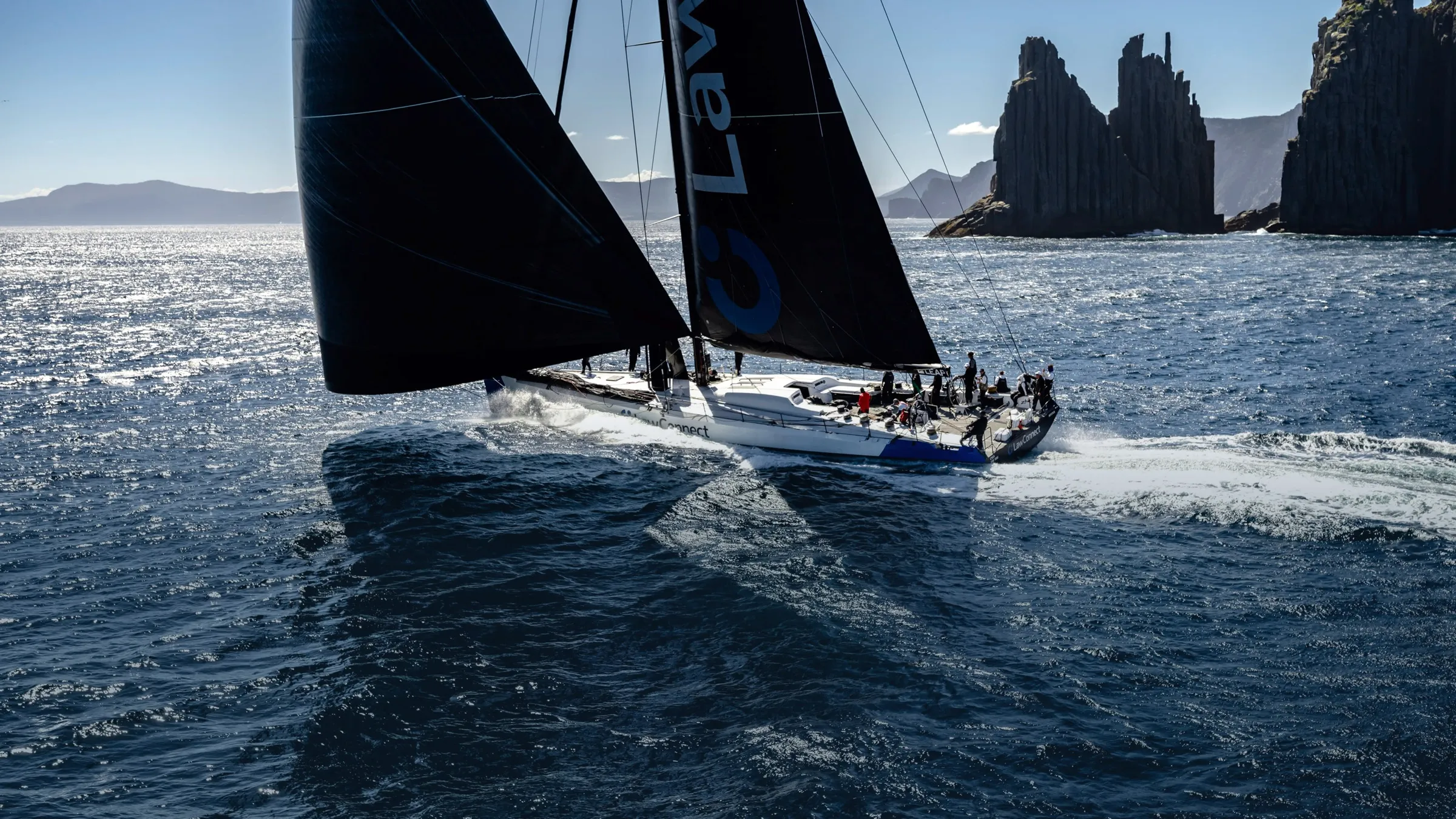
A maxi yacht off Tasman Island in the Rolex Sydney Hobart Yacht Race. Image: Rolex
Rolex’s ties to sailing go back to the New York Yacht Club in 1958, and the Yacht-Master tells that story. The Yacht-Master II is the watch for this one job.
How the 2007 Yacht-Master II worked
When it arrived in 2007, Rolex called the Yacht-Master II the world’s first programmable countdown with a mechanical memory. It’s a chronograph, but instead of counting up from zero, its main job is counting down to the start, with a memory that holds the countdown’s length so the next race needs no setting.
The bezel did the programming. Rolex called it the Ring Command bezel and said it literally acted as the key to the countdown: turned, it worked with the calibre 4161 movement inside to let you set the countdown and synchronise it with the race. Hodinkee describes the steps: turn the bezel 90 degrees to the left, set the countdown with the crown, anywhere from one to 10 minutes, then screw the crown down and turn the bezel back to prime it.
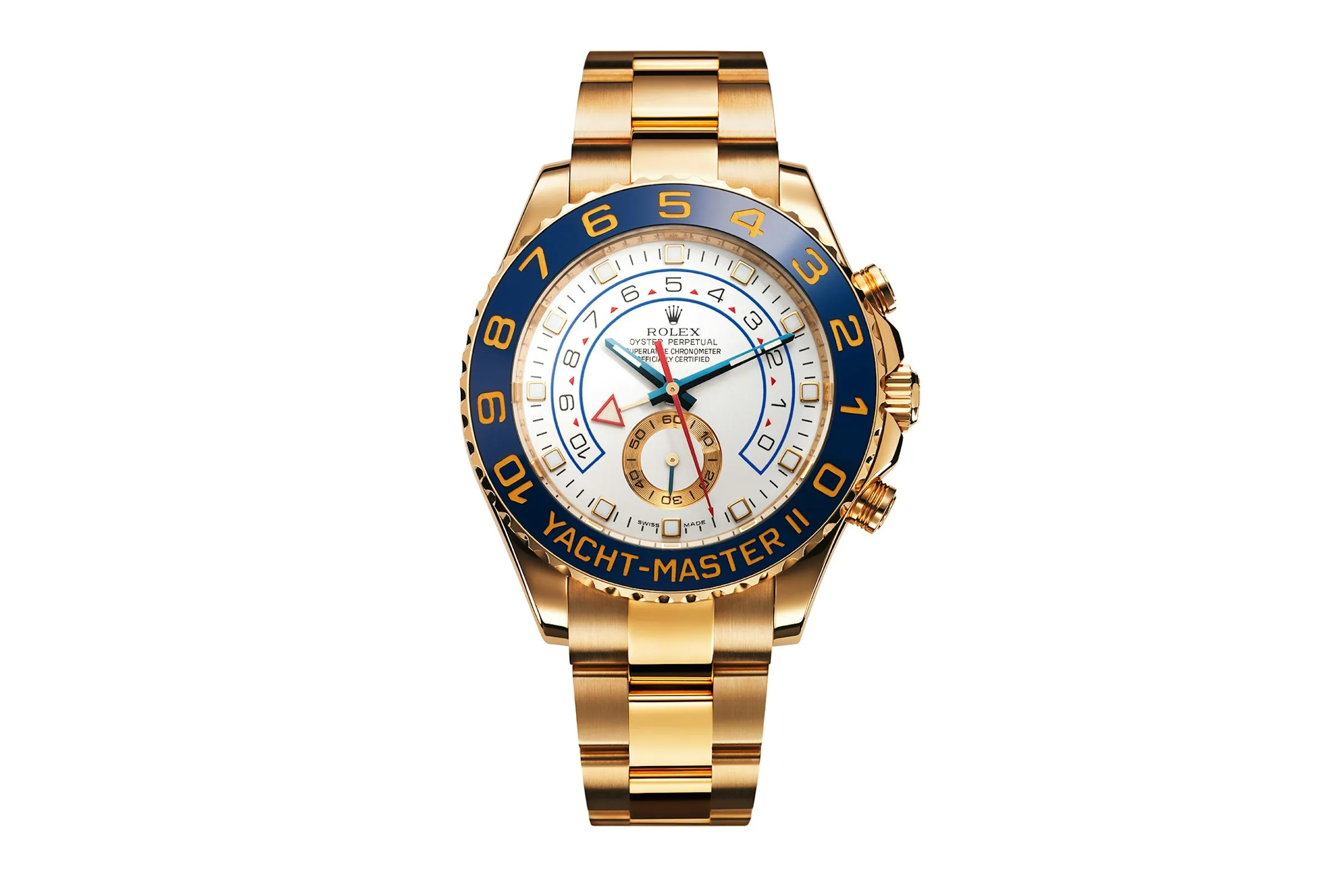
The first-generation Yacht-Master II in yellow gold, ref. 116688, with its countdown scale on the dial and the numbered Ring Command bezel. Image: Rolex, via Hodinkee
What changed in 2026, and why it matters
The new Yacht-Master II takes the bezel out of the countdown. Everything is now done with the two pushers on the side of the case. Each press of the lower pusher adds a minute to the countdown, so setting it is a matter of counting presses, with no bezel to turn first. The memory still holds the length you set, and after a reset the minute hand returns to it, ready for the next race.
On the water it works like this. Press the upper pusher on the first signal and the countdown starts. If you were early or late, press the lower pusher on the next signal: the seconds hand jumps back to zero and keeps running, and the minute hand snaps to the nearest whole minute. At the start the minute hand stops on zero, while the seconds hand runs on until you stop it with the upper pusher.
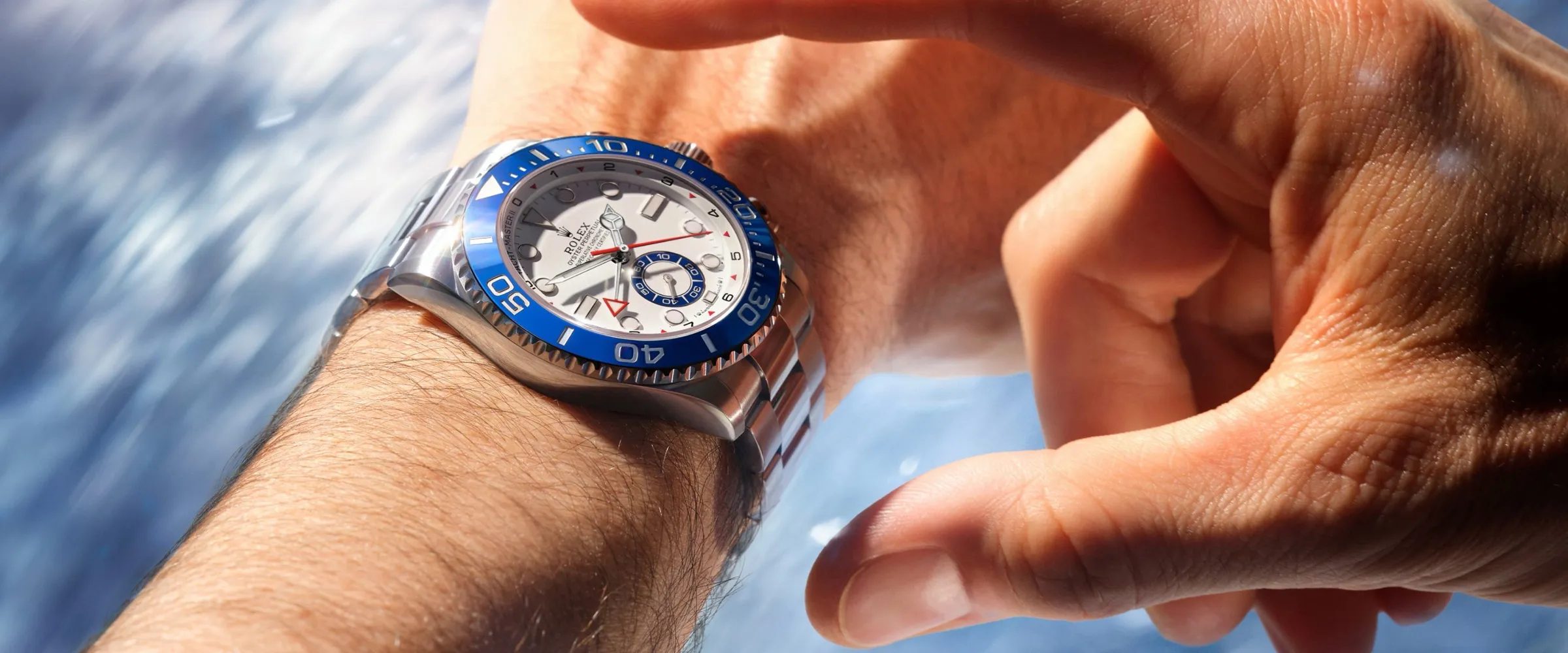
The new-generation Yacht-Master II, presented in 2026, with its regatta countdown set from the lower pusher. Image: Rolex
The way you read it changed too. The countdown scale has moved off the dial to a flange, the angled ring between the dial and the crystal, marked from 10 minutes down to 0 with a triangle at each half-minute; Rolex has filed a patent application for it. The countdown hands now turn counterclockwise, which Rolex says is a first for the brand, so they travel down the scale towards zero rather than up it. With the bezel set to its neutral position, its first half reads seconds, so the last 30 seconds before the start can be read off the bezel at a glance.
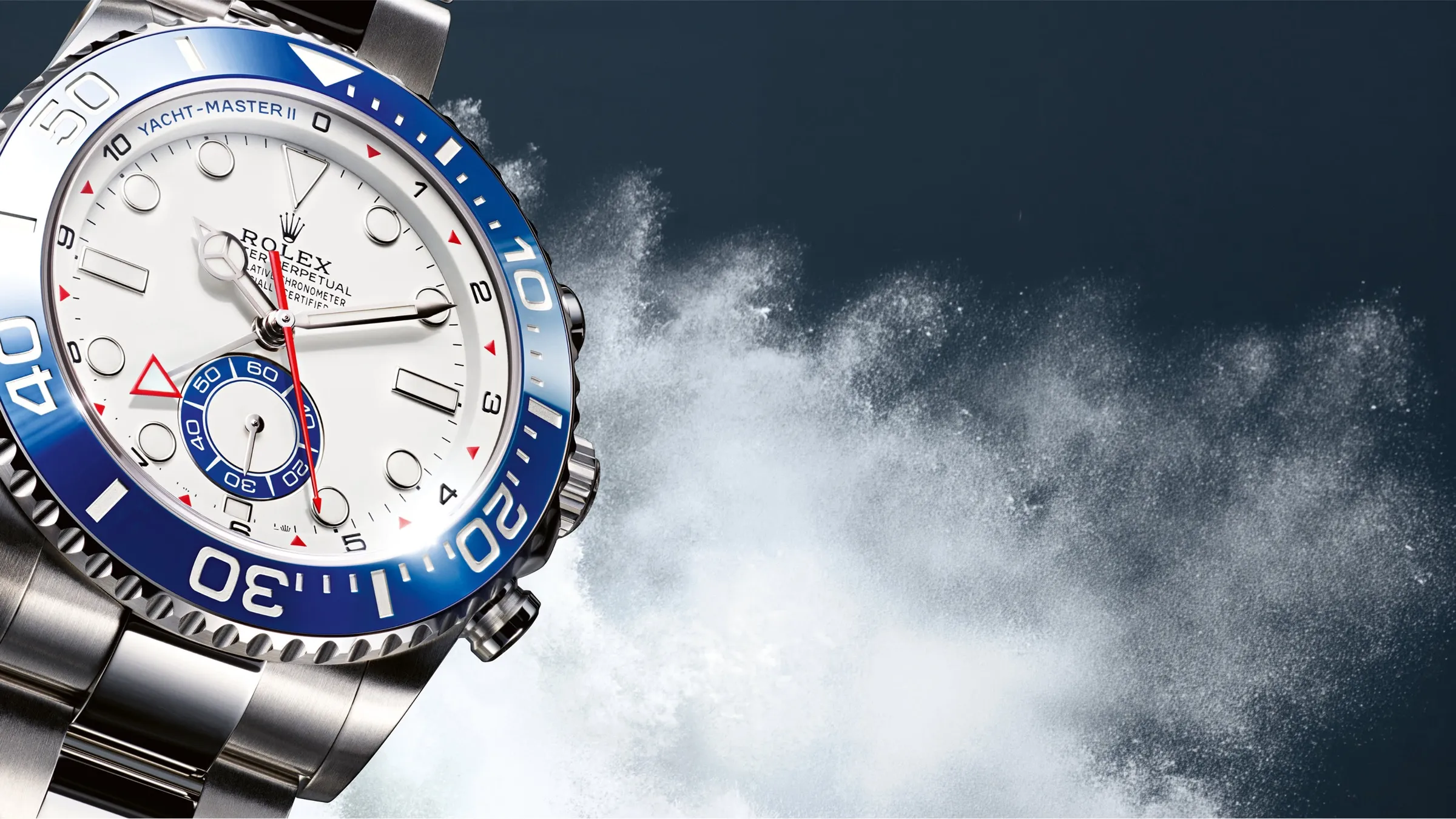
The 2026 Yacht-Master II dial, with the countdown scale on the flange and the blue Cerachrom bezel. Image: Rolex
Smaller changes follow the sailing theme. The pushers are shaped like the winches on a yacht, the middle case has been restyled, the bracelet is slightly broader and the Oysterlock clasp is slimmer. It’s water resistant to 100m, the same as the Yacht-Master.
Inside is a new movement, calibre 4162, made only for this watch. It’s an evolution of the 4161 with Rolex’s Chronergy escapement, a Parachrom hairspring and about 72 hours of power reserve. Rolex certifies it as a Superlative Chronometer, accurate to within two seconds a day either way once cased.
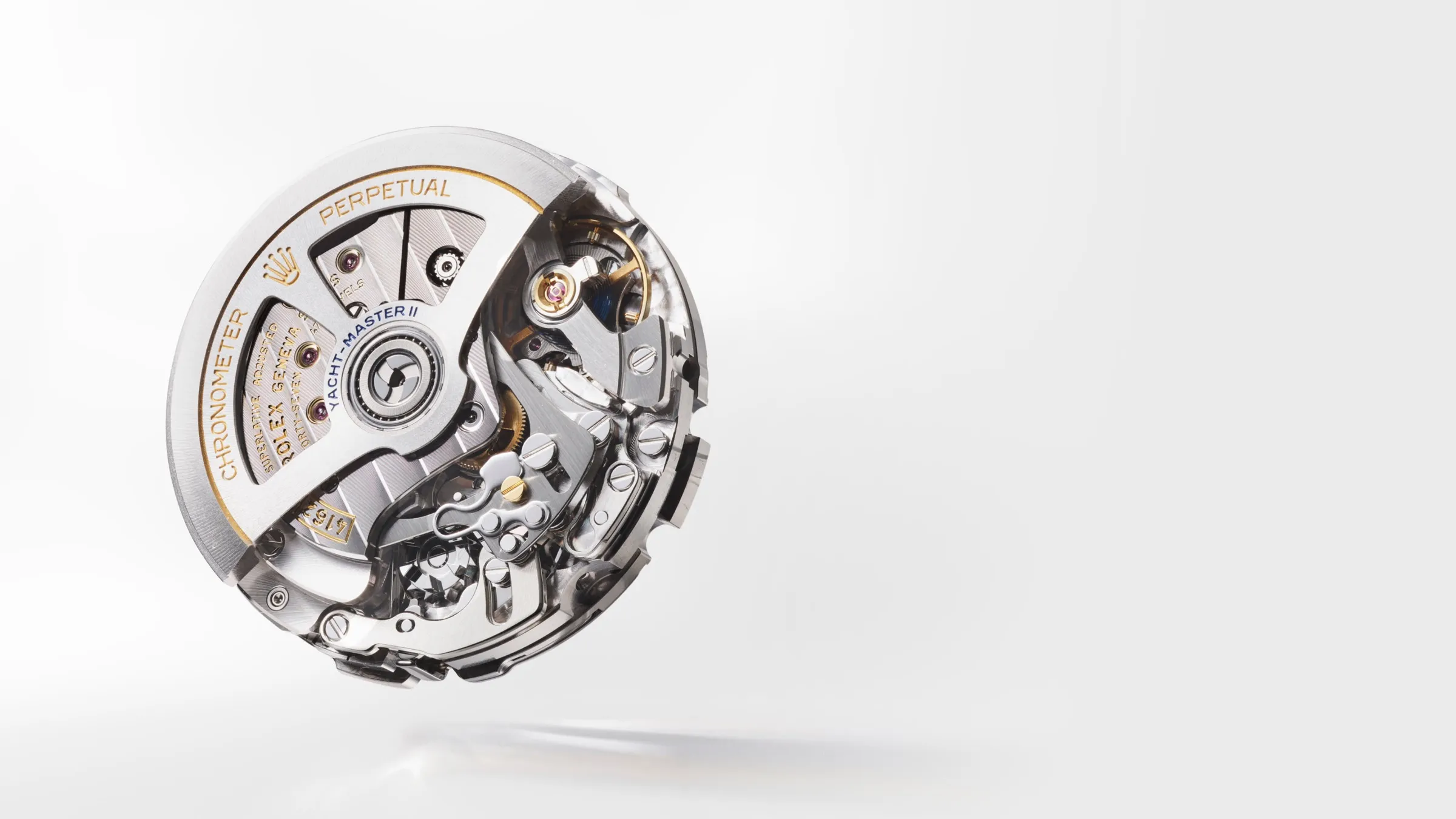
Calibre 4162, the movement behind the countdown. Image: Rolex
The two models and Australian prices
The new Yacht-Master II comes in two versions, both 44mm with a white matt dial and a blue Cerachrom ceramic bezel insert, on an Oyster bracelet. Prices are from Rolex’s Australian site.
| Reference | Material | Price |
|---|---|---|
| 126680 | Oystersteel | $33,900 |
| 126688 | 18 ct yellow gold | $101,600 |
Rolex sells only through its authorised retailers, and the retailer locator on its site lists them.
Who should buy one, and the alternatives
The Yacht-Master II makes the most sense for someone who races, because the countdown is the whole watch. It also suits anyone who likes a complicated watch, one whose pushers do more than start and stop a timer. At 44mm it’s a big watch and needs a wrist to match. The steel model is the one to buy; at three times the price, the gold one is for buyers who want precious metal first.
If you sail but don’t race, the Yacht-Master is the better watch. Its 60-minute bezel times a leg between buoys, it comes in 37, 40 and 42mm, and the Rolesium 40 costs $22,100. If you want a chronograph without the regatta function, the Cosmograph Daytona is 40mm and starts at $28,200 in steel.