Rolex Cosmograph Daytona: The Racing Chronograph, and What the Bezel Is For
The Daytona's story as Rolex tells it, from the 1963 Cosmograph to the 2026 Rolesium model, why it has screw-down pushers and a speed scale on the bezel, and the Australian range from $28,200.
Rolex has been a partner of Daytona International Speedway since the Florida track opened in 1959, when it was billed as the fastest circuit in the United States. Four years later, Rolex launched the Cosmograph, a chronograph built for racing drivers. Early on, it added the word “Daytona” to the dials of some watches sold in America, and over time the name became standard.
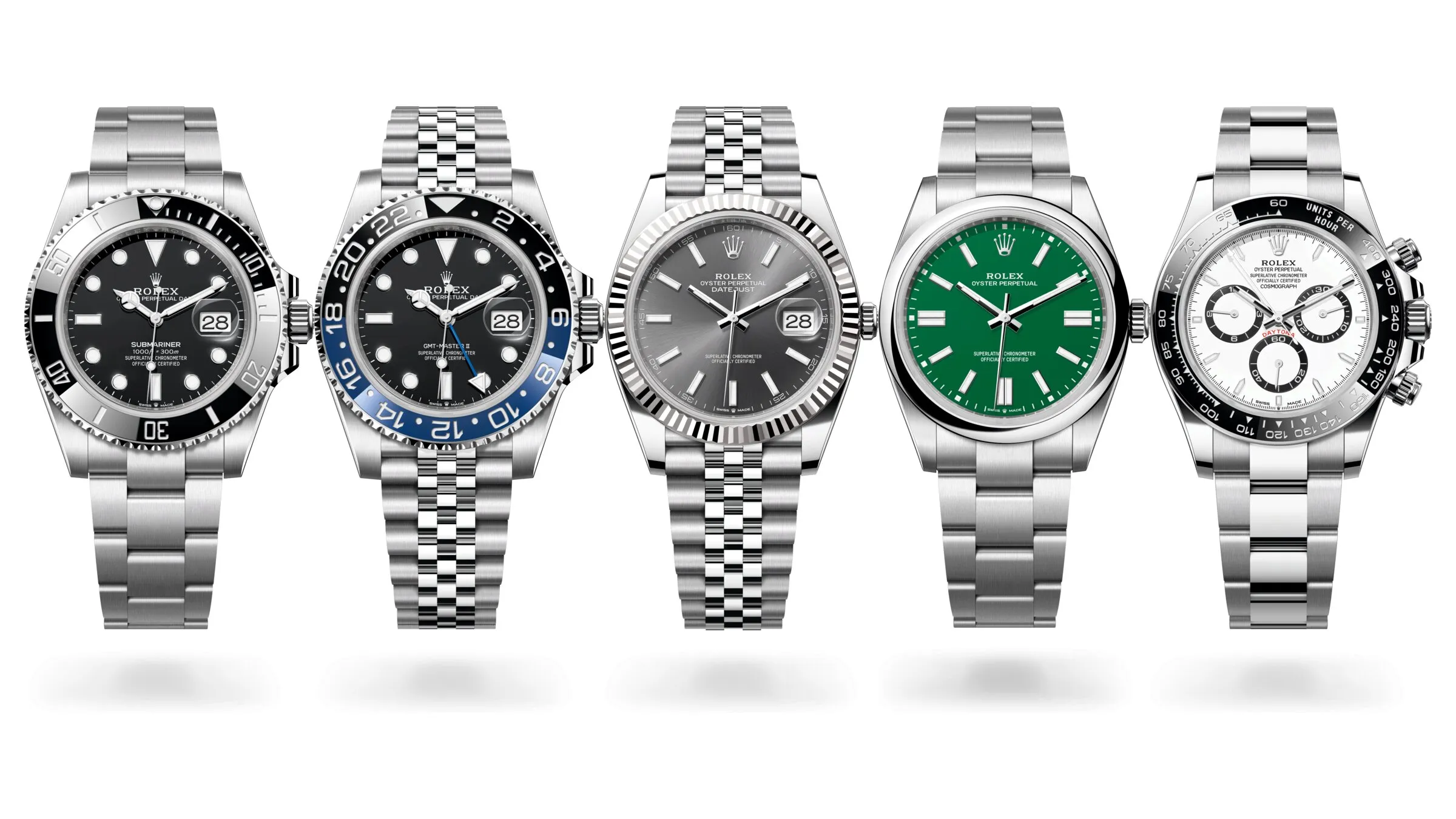
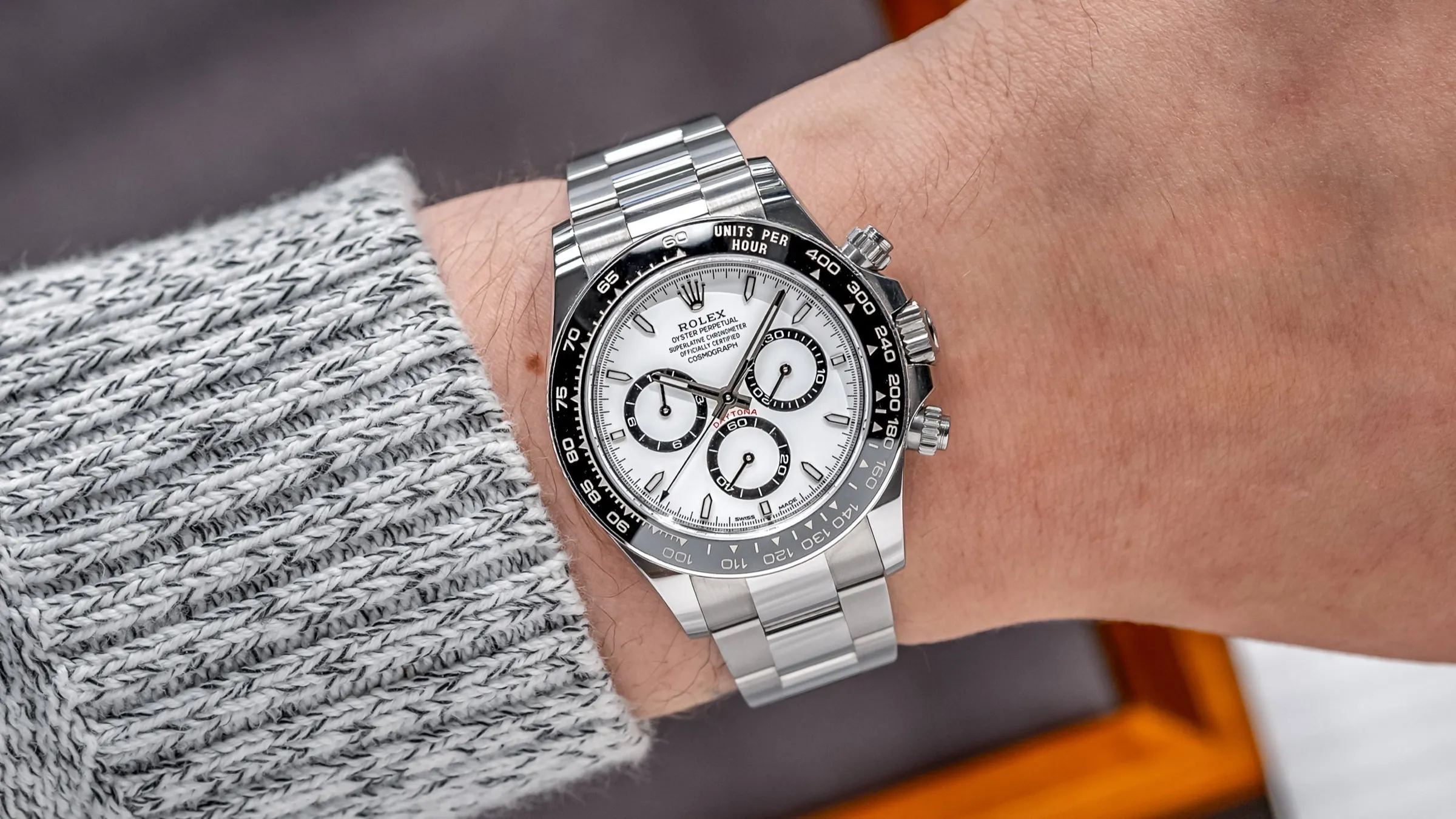
Today’s Cosmograph Daytona is a 40mm self-winding chronograph with a ceramic speed scale on the bezel. It comes in steel, gold, platinum and, since 2026, a mix of steel and platinum, with the steel model priced at $28,200. It’s the Rolex to choose if you want a working timer on your wrist with a motor-racing story behind it. To see where it sits in the range, read our guide to the best Rolex watches.
From Cosmograph to Daytona
The 1963 watch was sold as the Cosmograph, and Rolex doesn’t tell a story of how the Daytona name was chosen beyond its link with the speedway and those American dials. What it does tell is how closely the watch and the racing have stayed together since. The speedway’s best-known race is the Rolex 24 At DAYTONA, a 24-hour endurance race held there each January, and its winners receive an engraved Daytona. Rolex also made the Daytona the official watch of the 24 Hours of Le Mans in 2001.
The point of the watch was practical. A driver or a team in the pits needs to time laps and work out speeds, and in the early 1960s that meant a mechanical chronograph you could read at a glance.
Why there’s a speed scale on the bezel
The numbers around the bezel are a tachymetric scale, which Rolex introduced with the Daytona in 1963. They run from 400 down to 60, spaced unevenly, and they turn the chronograph into a speedometer. Start the chronograph as you pass one marker, stop it at the next marker a kilometre or a mile on, and the seconds hand points to your average speed in kilometres or miles an hour.
The sum behind it is simple: there are 3,600 seconds in an hour, so a kilometre covered in 30 seconds is 120km/h, and one covered in 45 seconds is 80km/h. The scale stops at 60 because anything slower takes more than a minute, longer than one sweep of the seconds hand.
From 1965 the Daytona had a black Plexiglas bezel with a white scale. Since 2011 Rolex has fitted its Cerachrom ceramic bezel, made in one piece with the numerals coated in platinum. Rolex says ceramic is virtually scratchproof and its colour isn’t faded by sunlight, both useful on a bezel you never turn and expect to read for decades.
Why the pushers screw down
The two buttons beside the crown start, stop and reset the chronograph. Every pusher is a way into the case, and a stray knock can start the timer by accident. In 1965 Rolex gave the Daytona screw-down pushers to solve both problems, and added “Oyster” to the dial to mark that the watch was now as well sealed as its other Oyster models.
They still screw down today, and so does the crown, which uses Rolex’s Triplock system with three seals. Together they make the Daytona water resistant to 100 metres. To use the chronograph you unscrew the pushers first, which suits a watch that times things now and then rather than all day.
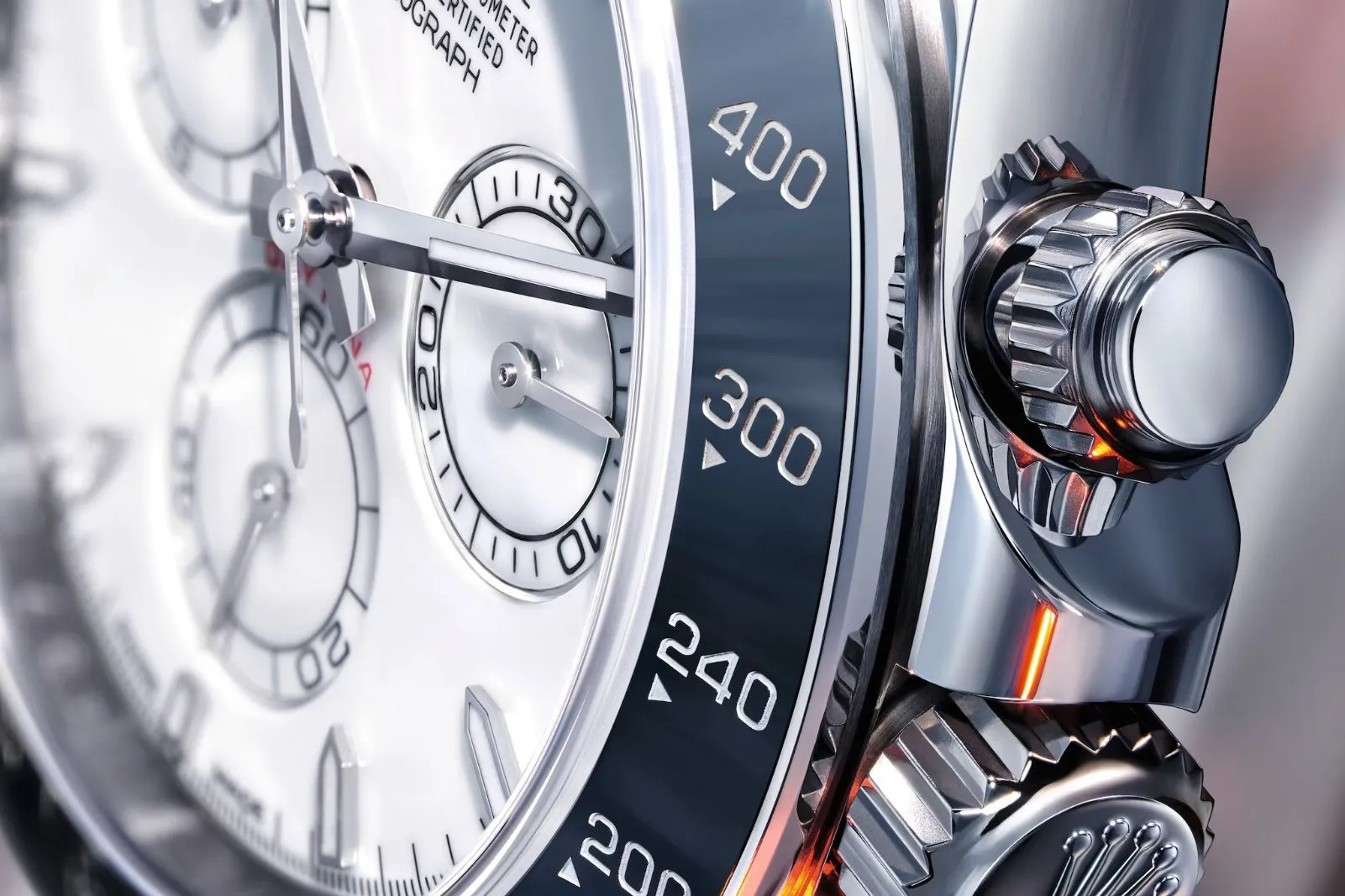
The speed scale on the Rolesium Daytona’s ceramic bezel, with a screw-down pusher and the Triplock crown beside it. Image: Rolex
The movement: from hand-wound to Calibre 4131
The first Daytonas were hand-wound. Rolex’s first self-winding Daytona used the Calibre 4030, and in 2000 it brought out the 4130, its own automatic chronograph movement, with fewer parts than its predecessor and the first Parachrom hairspring Rolex made itself.
The current Daytona arrived in 2023 with the Calibre 4131. It runs for about 72 hours and is a Superlative Chronometer, which Rolex tests to within two seconds a day either way once it’s in the case. The chronograph runs through a column wheel and a vertical clutch, which engages the timer by friction rather than meshing gears, so the seconds hand starts without a jump and the movement isn’t affected however often you use it.
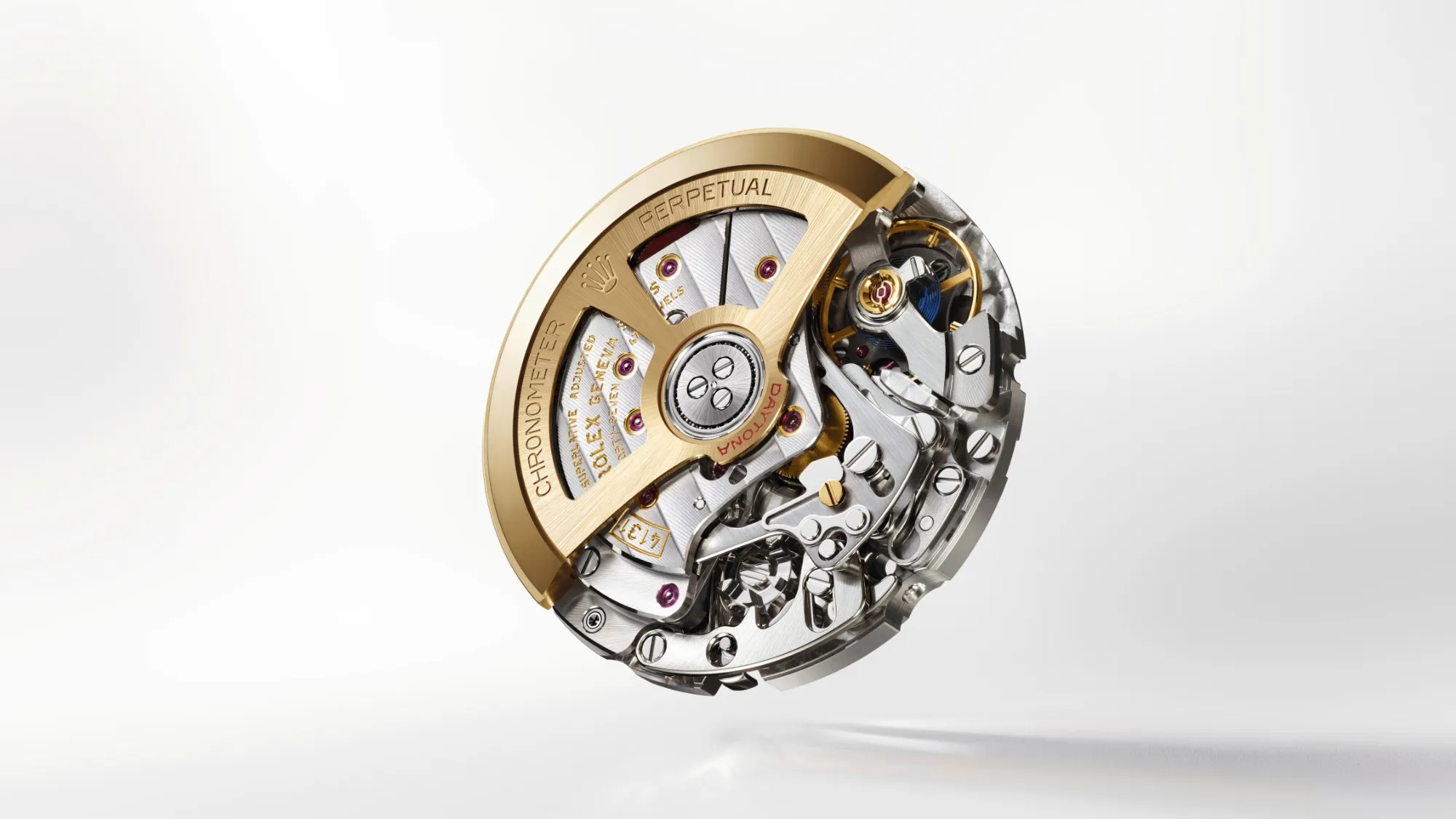
The Calibre 4131, with its cut-out gold winding rotor. Image: Rolex
The dial layout follows from what a race needs. The centre hand counts the chronograph seconds, the counter at three o’clock adds up to 30 minutes and the one at nine adds up to 12 hours, long enough for a full stint and then some. The small dial at six is the running seconds of the watch itself. The gold and platinum models have a clear case back that shows the movement; the steel one doesn’t.
The range and Australian prices
Every Daytona in the Australian range is 40mm with the Calibre 4131, so the choice comes down to the metal, the dial and the bracelet. The rubber-like Oysterflex strap, which Rolex added to the Daytona in 2017, is offered only on the gold models. These are Rolex’s Australian RRPs at the time of writing:
| Daytona | Reference | RRP |
|---|---|---|
| Oystersteel, black ceramic bezel, white or black dial | 126500LN | $28,200 |
| Steel and yellow gold (yellow Rolesor), Oyster bracelet | 126503 | from $41,100 |
| Yellow gold, Oysterflex | 126518LN | from $71,400 |
| Everose or white gold, Oysterflex | 126515LN, 126519LN | from $75,100 |
| Yellow gold, Oyster bracelet | 126508 | from $92,500 |
| Everose or white gold, Oyster bracelet | 126505, 126509 | from $99,000 |
| Platinum, ice-blue dial, chestnut-brown bezel | 126506 | from $141,500 |
Gem-set models run from $134,700 to $270,000.
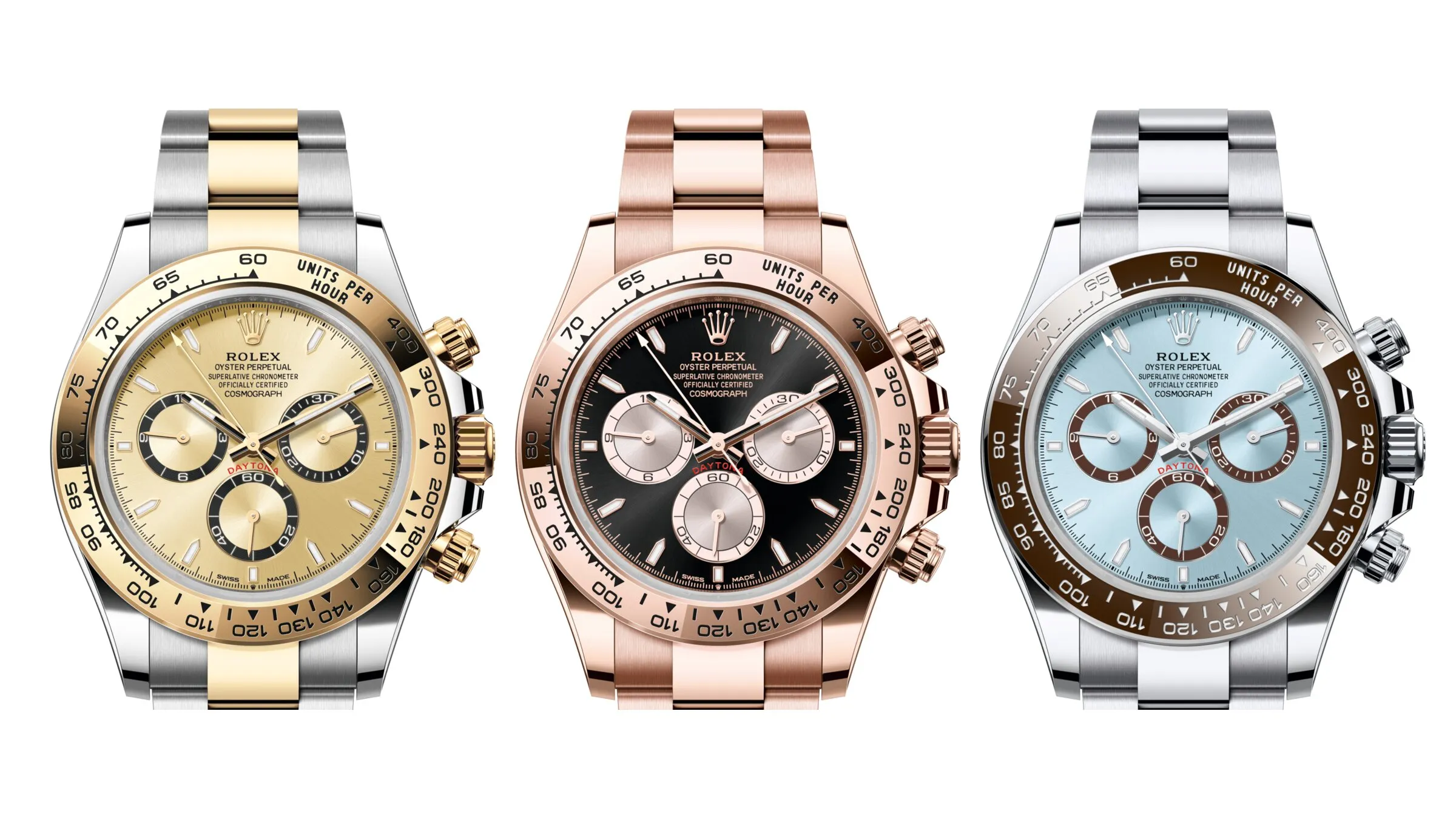
The Daytona in yellow Rolesor, Everose gold and platinum. Image: Rolex
In September 2026 Rolex added the first Rolesium Daytona, which combines an Oystersteel case with a platinum bezel. It has a white grand feu enamel dial, an anthracite ceramic bezel and a clear case back. Its tachymetric scale has horizontal numerals, as on the original 1963 watch. It wasn’t on Rolex’s Australian price list at the time of writing.
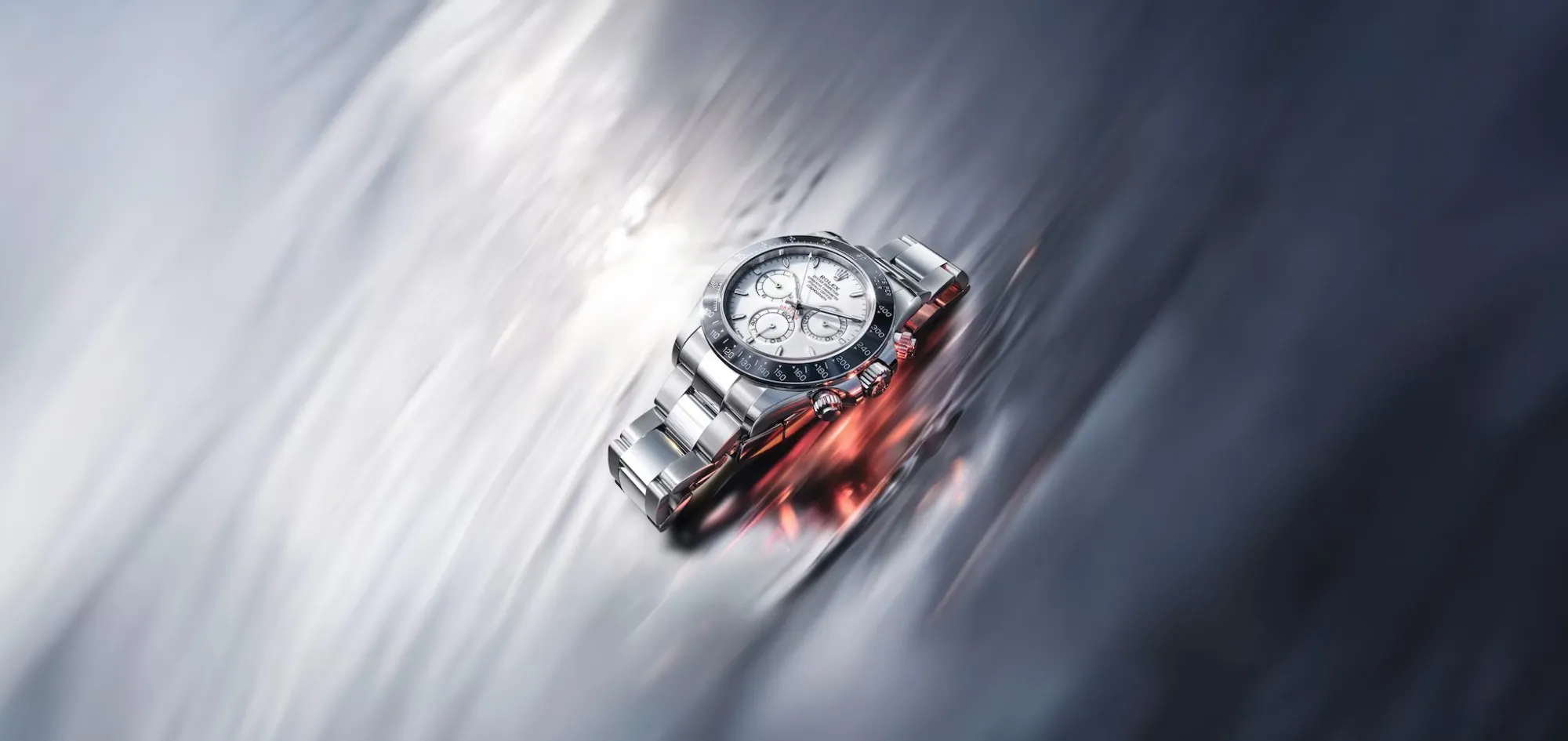
The Rolesium Daytona of 2026, in Oystersteel with a platinum bezel and a white enamel dial. Image: Rolex
Which Daytona to buy, and the alternatives
The steel Daytona is the one to choose for the watch as it was meant to be: a racing chronograph in steel, at home with a T-shirt or a suit. White dial or black is a matter of taste, and both cost $28,200. After a year of wearing one, Teddy Baldassarre’s reviewer found the current case wears a touch larger than the previous 116500, and its thinner hour markers make the dial easier to read than before. The gold models on Oysterflex are the lighter-wearing way into precious metal, at well under the price of the same watch on a gold bracelet. The platinum model, with its ice-blue dial, is for someone who wants the most Rolex makes of a chronograph.
The Tudor Black Bay Chrono comes from the other company Rolex’s founder, Hans Wilsdorf, set up. It’s a racing chronograph with a tachymeter and screw-down pushers too, plus 200 metres of water resistance, from $9,680, about a third of the price of a steel Daytona. The Omega Speedmaster Moonwatch is the other classic chronograph, with a story about space rather than the race track, from $12,350.
If you don’t need a chronograph, the Submariner is Rolex’s other steel sports watch, from $16,850, and the Explorer II puts its 24-hour hand to use for travellers and explorers.
Rolex sells only through authorised retailers, and the retailer finder on Rolex’s website lists those near you.