Hans Wilsdorf: The Salesman Who Built Rolex and Tudor
From a London office in 1905 to the Oyster, Tudor and a charitable foundation that still owns Rolex: the story of the man behind the crown, and which parts of it are legend.
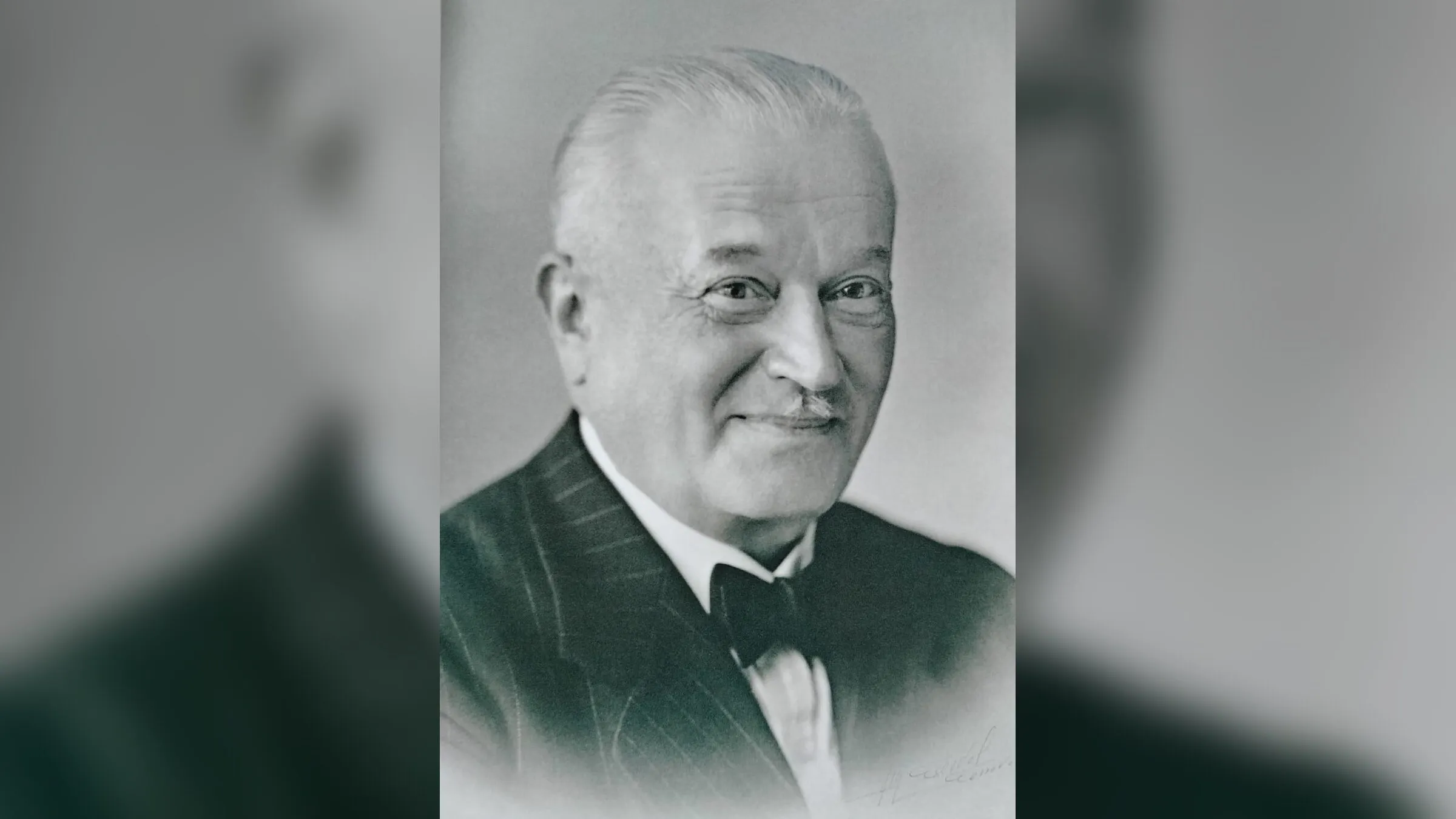
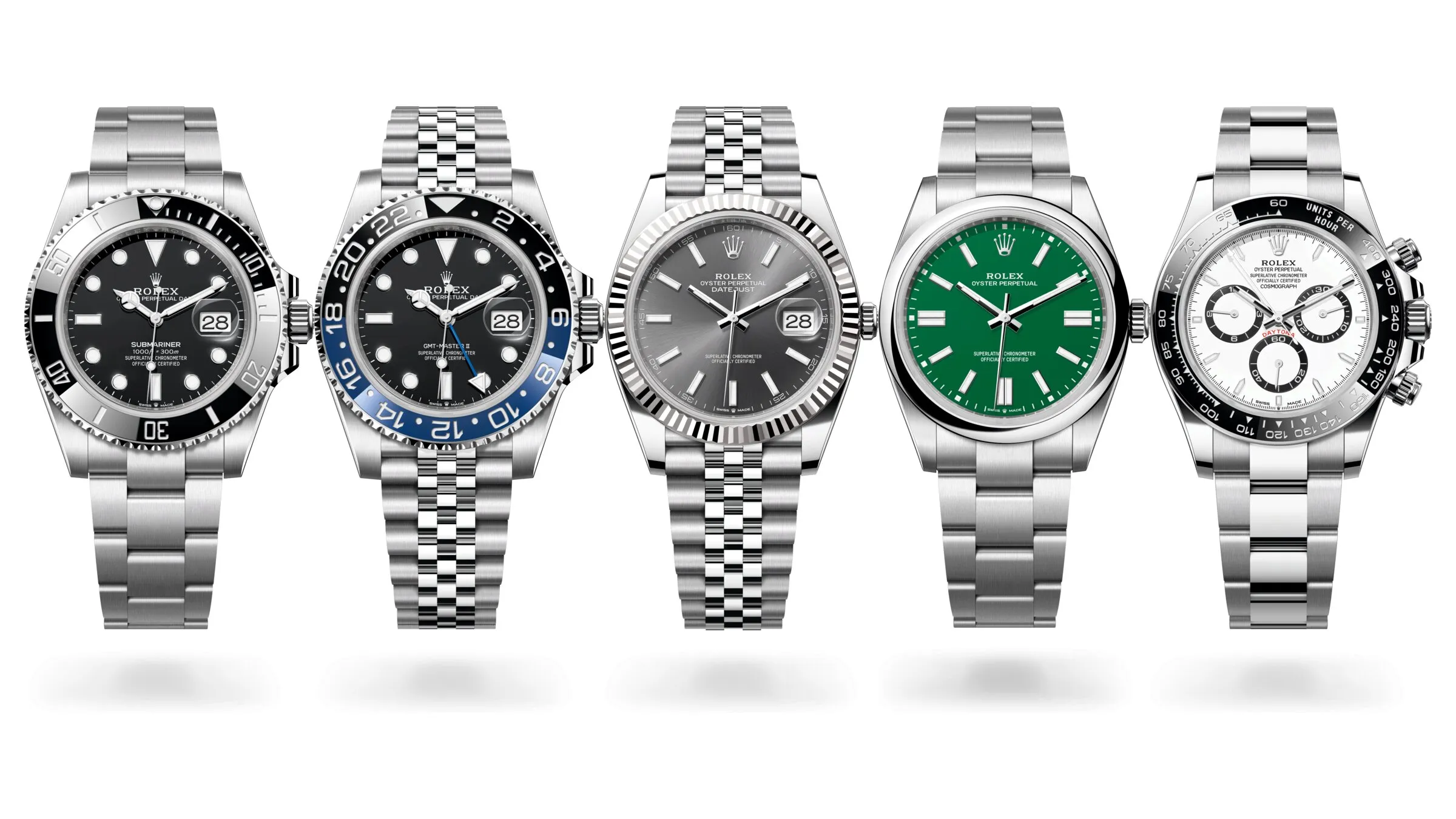
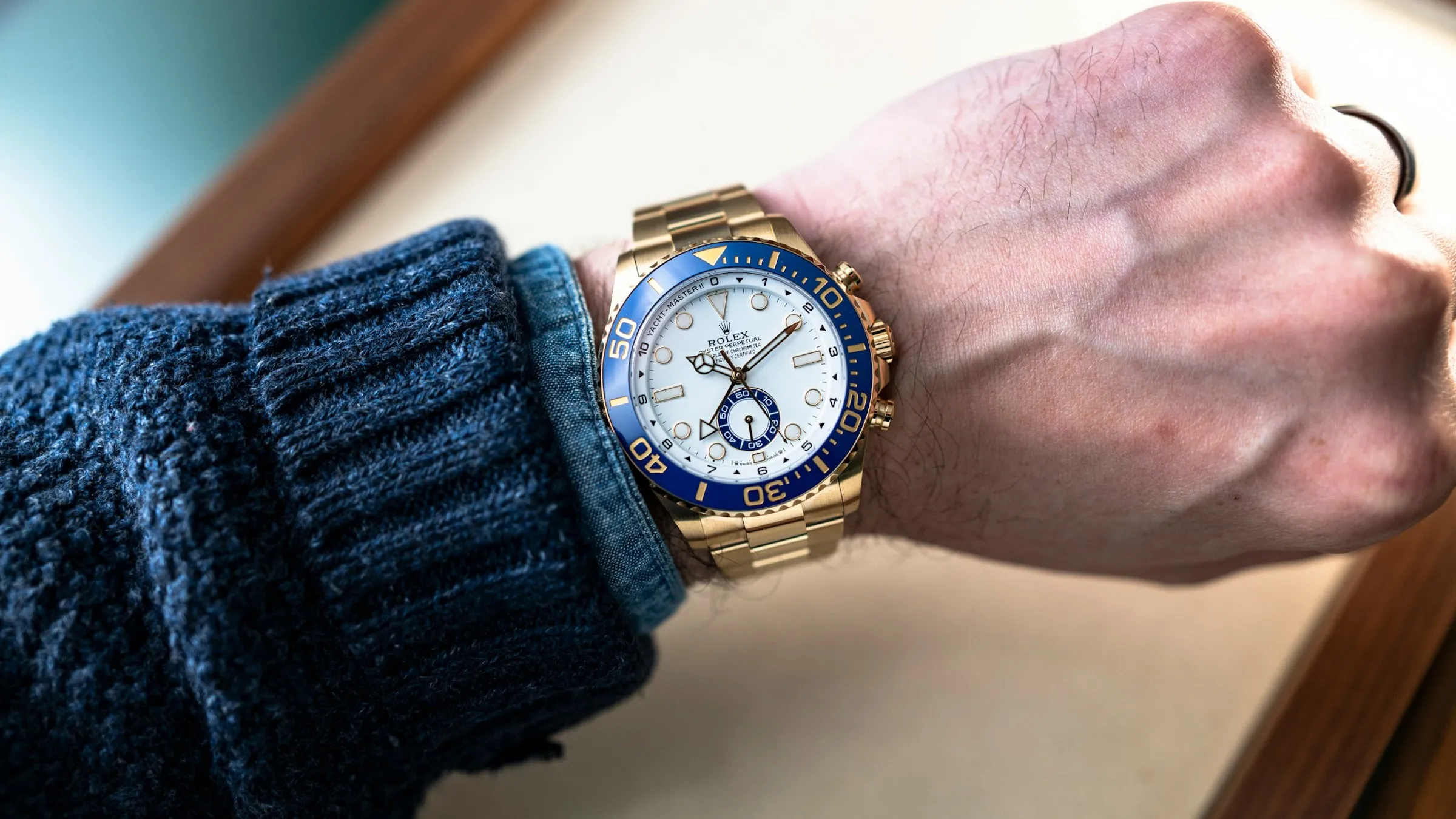
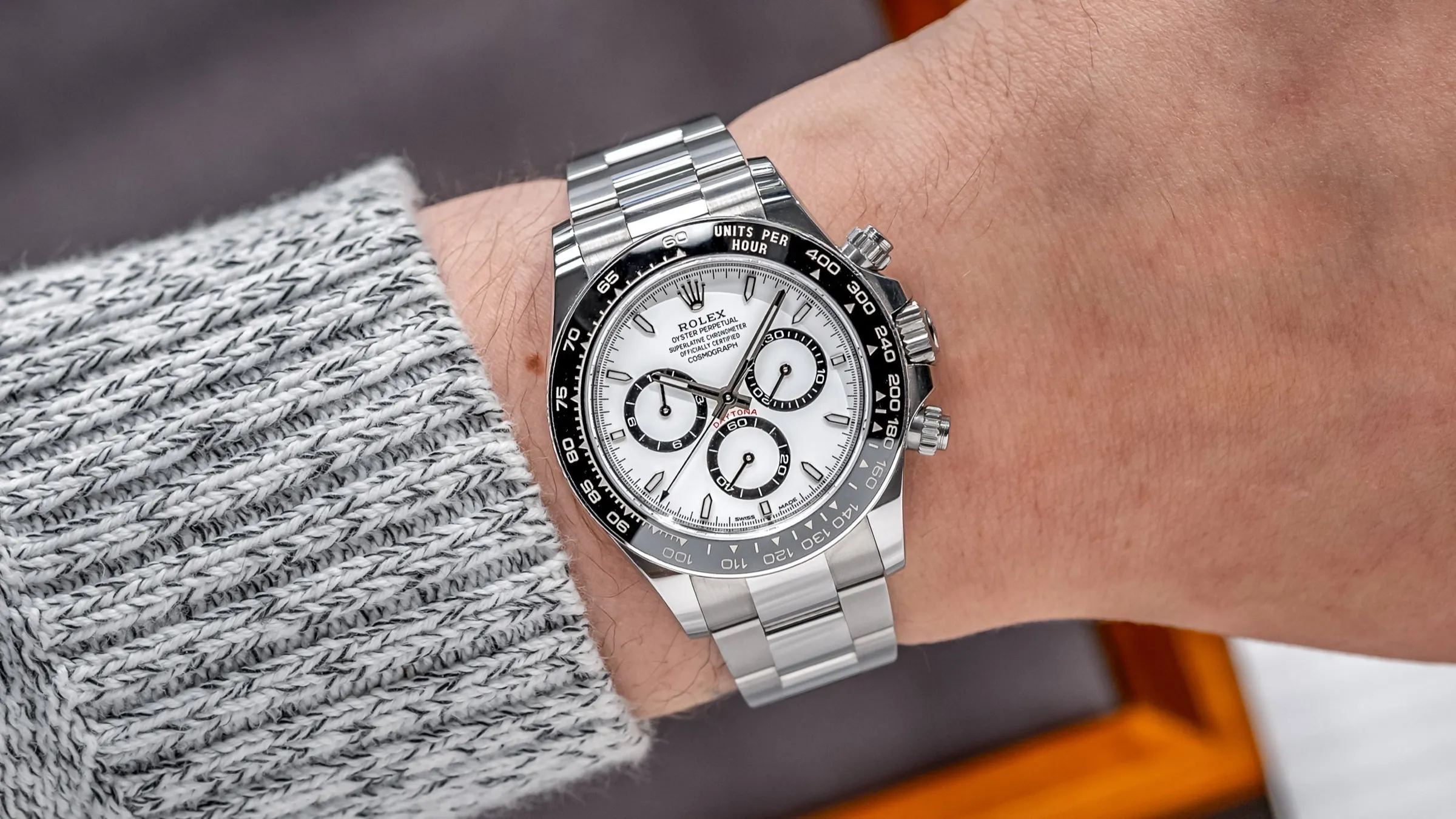
Rolex is the most recognised watch name in the world, known for rugged, precise watches built to be worn every day. Its sister brand, Tudor, offers the same dependability at a lower price. Both were founded by Hans Wilsdorf, a man who never made a watch in his life.
Wilsdorf was a salesman. He bought movements from Swiss makers, chose a name that would sit neatly on a dial, and chased the certificates that proved a wristwatch could keep accurate time. When it did, he paid for front-page ads to tell the world. The strategy worked so well that Rolex became a premium name, priced beyond many of the buyers it had won over.
Ever the salesman, Wilsdorf answered with Tudor, pairing Rolex’s cases and bracelets with cheaper off-the-shelf movements so more people could afford the same reliability. Every watch in our Rolex and Tudor guides, from the Oyster Perpetual to the Black Bay GMT, traces back to those decisions.
An orphan who learned watches from the sales desk
Wilsdorf was born in Bavaria in 1881 and orphaned at 12. By his own account, written in a memoir Rolex published in 1946, he grew up in Kulmbach, was sent to boarding school after his parents died, and took his first job in the watch trade in 1900 as an English-speaking clerk at an exporter in La Chaux-de-Fonds, one of the Swiss watchmaking towns.
That job is the key to everything that followed. He learned watches from the commercial side: how they were bought, checked and shipped, and what buyers in different countries wanted. He spoke the languages and understood the markets, and he took that to the biggest market of the day.
London, 1905: selling a watch nobody trusted
In 1905, aged 24, Wilsdorf set up a company in London to distribute watches, trading as Wilsdorf & Davis with his partner Alfred Davis. Gentlemen of the time carried pocket watches. Wristwatches existed, but Rolex itself says they weren’t very precise, and nobody serious relied on one.
Wilsdorf’s bet was that they would, if the watch kept good time. He fitted his watches with small, precise movements bought from a watchmaking firm in Bienne, in Switzerland, and cased and sold them in Britain. He didn’t make the movement, and he didn’t need to. He needed a reason for people to believe in it.
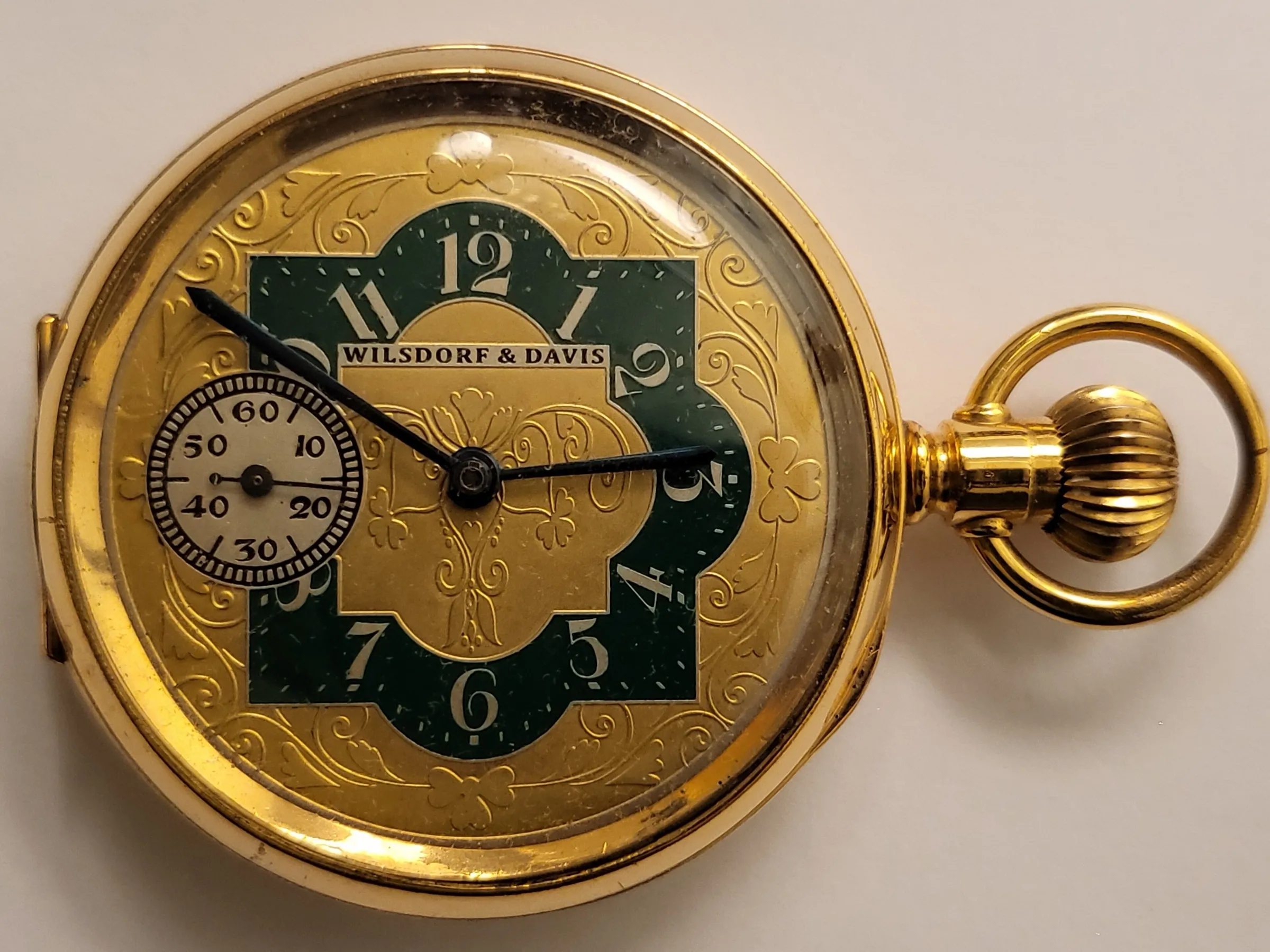
A Wilsdorf & Davis pocket watch from the firm’s London years. Photo: And3451, CC BY-SA 4.0, via Wikimedia Commons
A name you can say in any language
In 1908 he registered the name Rolex. It meant nothing, which was the point: a short word that looked the same in every country, said the same in every language and fitted neatly on a small dial.
Wilsdorf’s own story is that he tried combining the letters of the alphabet every way he could, ended up with about a hundred names, and liked none of them. Then, riding on the top deck of a horse-drawn omnibus along Cheapside in the City of London, the word came to him. It’s a good story, and it’s his. Nobody else was on that bus to confirm it.
Proving a wristwatch could keep time
A name is only worth something if the product behind it holds up, and Wilsdorf’s answer was paperwork. In 1910 a Rolex became, by Rolex’s account, the first wristwatch to earn a Swiss chronometer certificate from the official rating centre in Bienne, proof that a watch on the wrist could be as precise as one in a waistcoat pocket.
Four years later he went further. In 1914 Kew Observatory, near London, gave a Rolex wristwatch a class A precision certificate, a rating that until then had gone to marine chronometers, the big clocks ships used to navigate. For a salesman, a certificate like that is gold: it’s an independent judge saying your watch is as good as the best, and you can put that in an advertisement.
Leaving London for Geneva
The First World War changed the business. Wilsdorf & Davis became The Rolex Watch Company, and by 1919 Wilsdorf had moved the company to Geneva, where Montres Rolex SA was registered in 1920.
The Oyster, and the swim that didn’t finish
Precision was one problem with early wristwatches. Dust and water were another, because a watch on the wrist met both in a way a pocket watch never did. In 1926 Rolex launched the Oyster, with its bezel, case back and winding crown screwed down tight against the case. Wilsdorf named it for the shellfish, which he said could stay “an unlimited time under water without detriment to its parts”.
The idea of a waterproof watch wasn’t new. The Swiss historian Pierre-Yves Donzé points out that inventors had been at it for decades, and that Rolex bought waterproof-case patents from makers in the Jura and used several suppliers. What Wilsdorf did better than anyone was make the public notice.
In 1927 Mercedes Gleitze became the first British woman to swim the English Channel, on 7 October. A fortnight later she set out again on what was billed as a vindication swim, in colder water, with a Rolex Oyster on a ribbon round her neck. That second swim, on 21 October, didn’t finish: she abandoned it after more than ten hours. The watch, Sotheby’s notes, was still running.
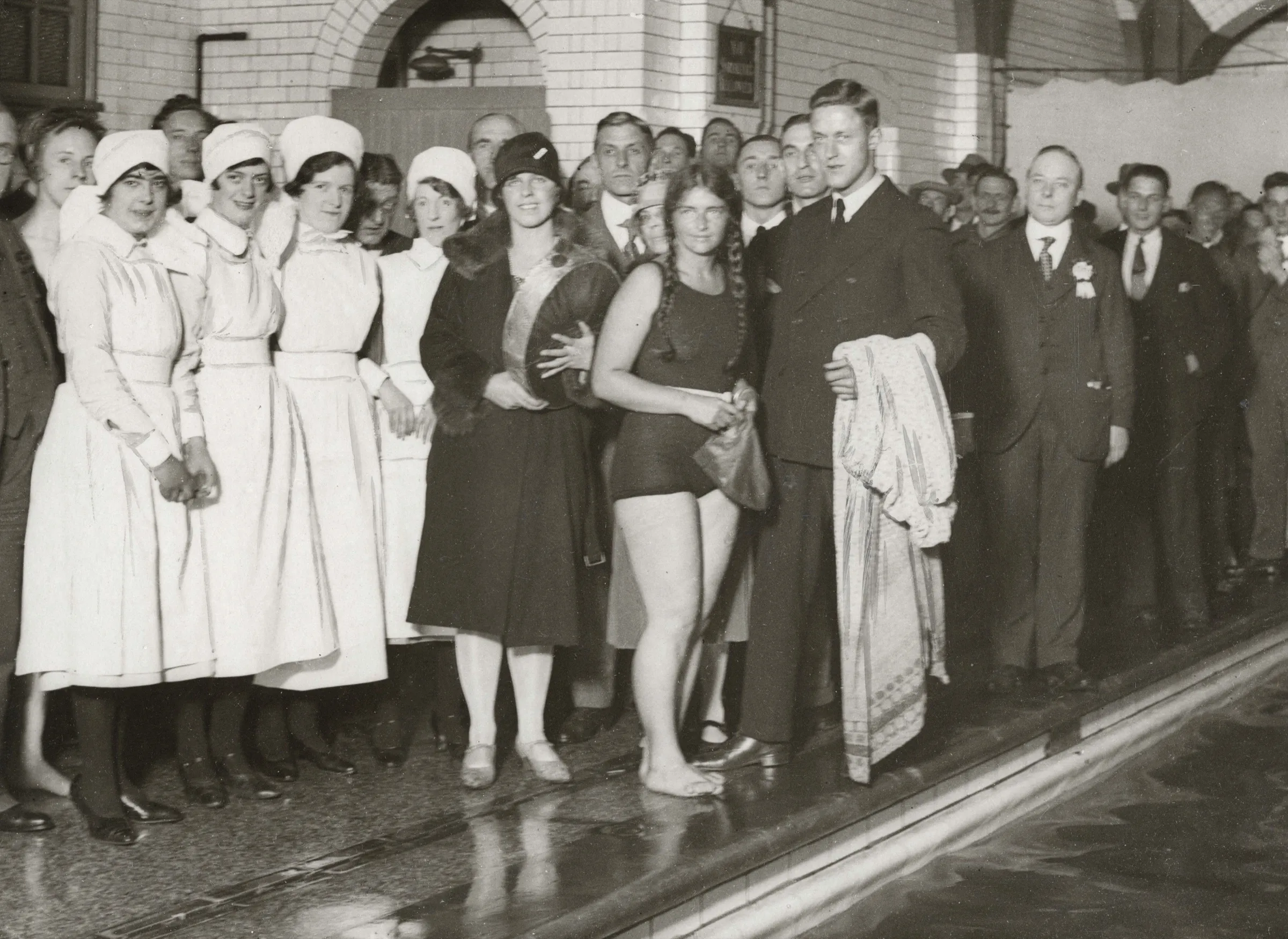
Mercedes Gleitze among supporters in 1927, the year she swam the Channel. Photo: Spaarnestad Photo archive, public domain
Wilsdorf didn’t need the swim to succeed, only the watch. Rolex bought the front page of the Daily Mail to announce the Oyster’s triumph, under the line “The Rolex wrist watch: the world’s best by every test”. Rolex’s own history still says the watch crossed the Channel. That ad is where Rolex dates its habit of putting its watches on the wrists of explorers, athletes and adventurers, the people it now calls Testimonees.
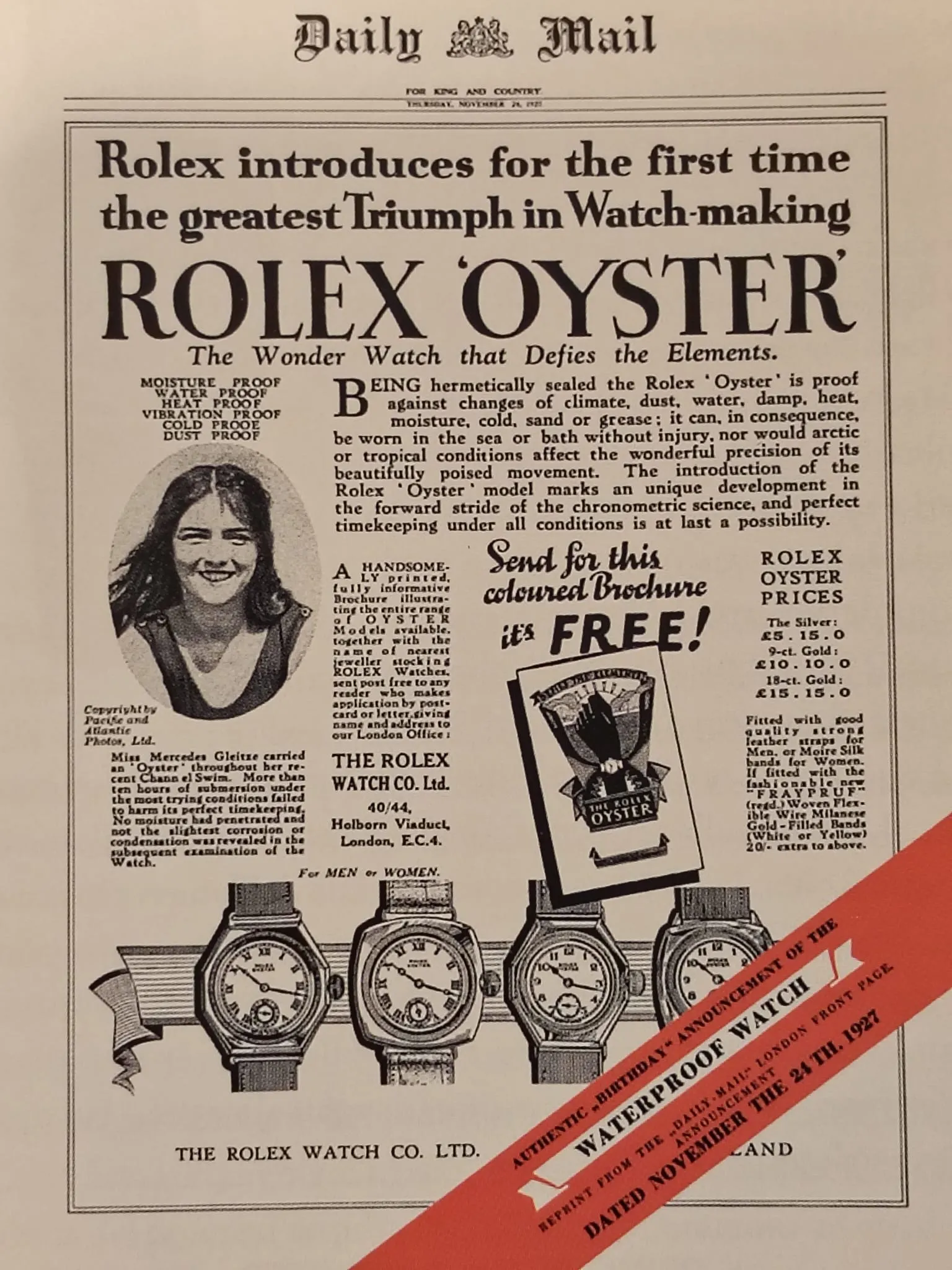
The 1927 Daily Mail advertisement for the Rolex Oyster. Photo: EMore98, CC BY-SA 4.0, via Wikimedia Commons
The firsts kept coming. In 1931 Rolex patented the Perpetual rotor, a freely turning weight that winds the watch as the wrist moves, and the “Perpetual” still printed on Rolex dials. In 1945 it added the Datejust, by Rolex’s account the first self-winding wrist chronometer to show the date in a window on the dial.
Tudor: a Rolex at “a more modest price”
Wilsdorf’s second brand started quietly. In February 1926 a Geneva dealer, Veuve de Philippe Hüther, registered the name “The TUDOR” on his behalf, and on 15 October 1936 the trademark passed to Wilsdorf himself. The name nodded to the English royal house, and early dials carried a Tudor rose inside a shield.
His reasoning, in Tudor’s telling, was pure salesmanship. He had long wanted a watch his agents could sell at “a more modest price” than a Rolex, with the same dependability. On 6 March 1946 he set up Montres Tudor SA as its own company, with Rolex guaranteeing the technical quality and handling distribution and after-sales service.
That arrangement is still the logic of Tudor today. A Black Bay 58, Ranger or Pelagos borrows the Rolex playbook of a tough Oyster-style case and a story about explorers and divers, at about half the price of the Rolex equivalent.
Watches for prisoners of war
The most human story about Wilsdorf comes from the Second World War. Rolex let British servicemen held in German prison camps order a watch and pay for it once the war was over. Wilsdorf wrote that they shouldn’t even think about settling up while the war was on.
One of them was Corporal Clive Nutting of the Royal Corps of Signals, held at Stalag Luft III, the camp later made famous by the Great Escape. In 1943 he ordered a Rolex Oyster chronograph, reference 3525, and it reached him in the camp. In August 1945, free again, he wrote to Wilsdorf about having it serviced and paying for it. The letters and the watch were sold by Antiquorum in 2007. How many watches went to prisoners in all isn’t known, but Antiquorum’s catalogue says the offer was open to nearly 10,000 captured officers at that camp alone.
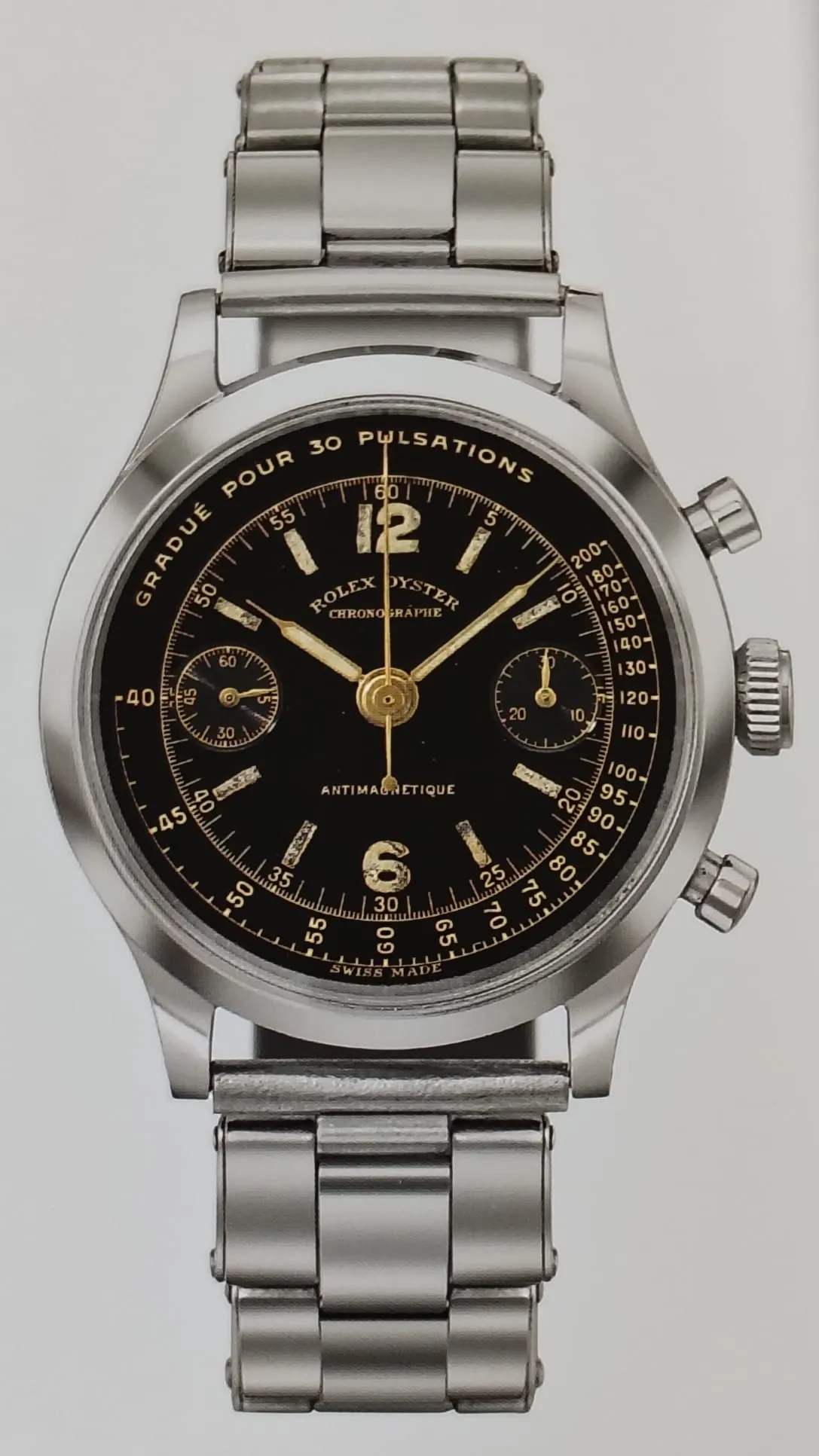
A 1940s Rolex Oyster chronograph, reference 3525. Photo: EMore98, CC BY-SA 4.0, via Wikimedia Commons
It was generous, and it was also good business. Men who came home with a Rolex that had reached them behind the wire had every reason to think well of the company that sent it.
Why Rolex has no shareholders
Wilsdorf’s first wife, Florence, died in 1944. In 1945 he set up the Hans Wilsdorf Foundation in Geneva, and Rolex says to this day that it is owned by that foundation. Its stated purpose is to fund charitable, educational and cultural causes, mainly in Geneva, and to oversee the Rolex group as its founder intended.
That’s why Rolex answers to no shareholders, publishes no accounts. Wilsdorf died in Geneva on 6 July 1960, aged 79. The company he left behind still sells the way he did: a short name, independent proof that the watch is good, and a famous wrist to wear it.