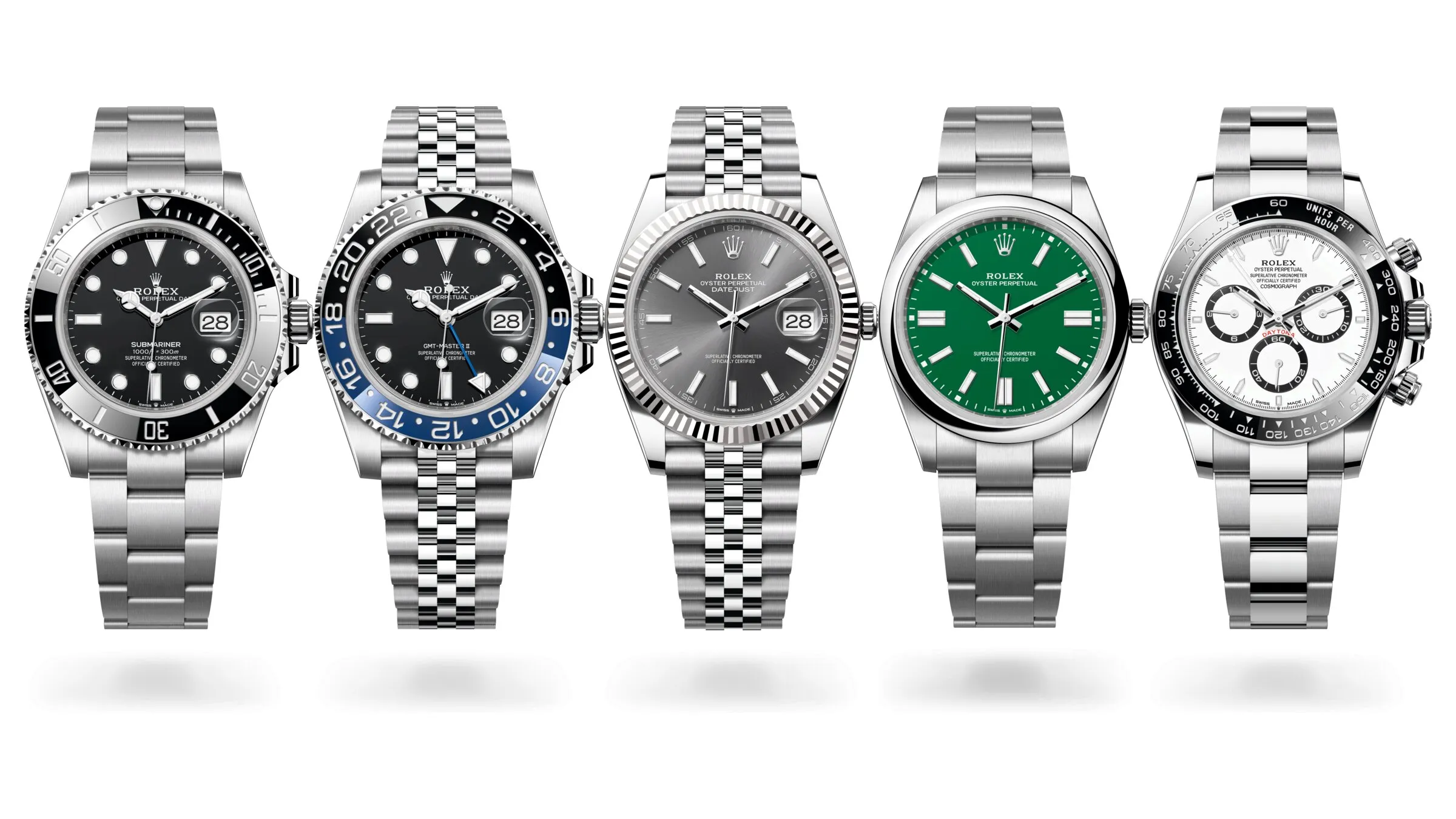
Rolex Datejust: The Everyday Rolex That Works With a Suit
Why the Datejust has a magnified date, a fluted bezel and a five-link bracelet, and which of the 36 and 41 mm models Rolex sells in Australia is worth buying.
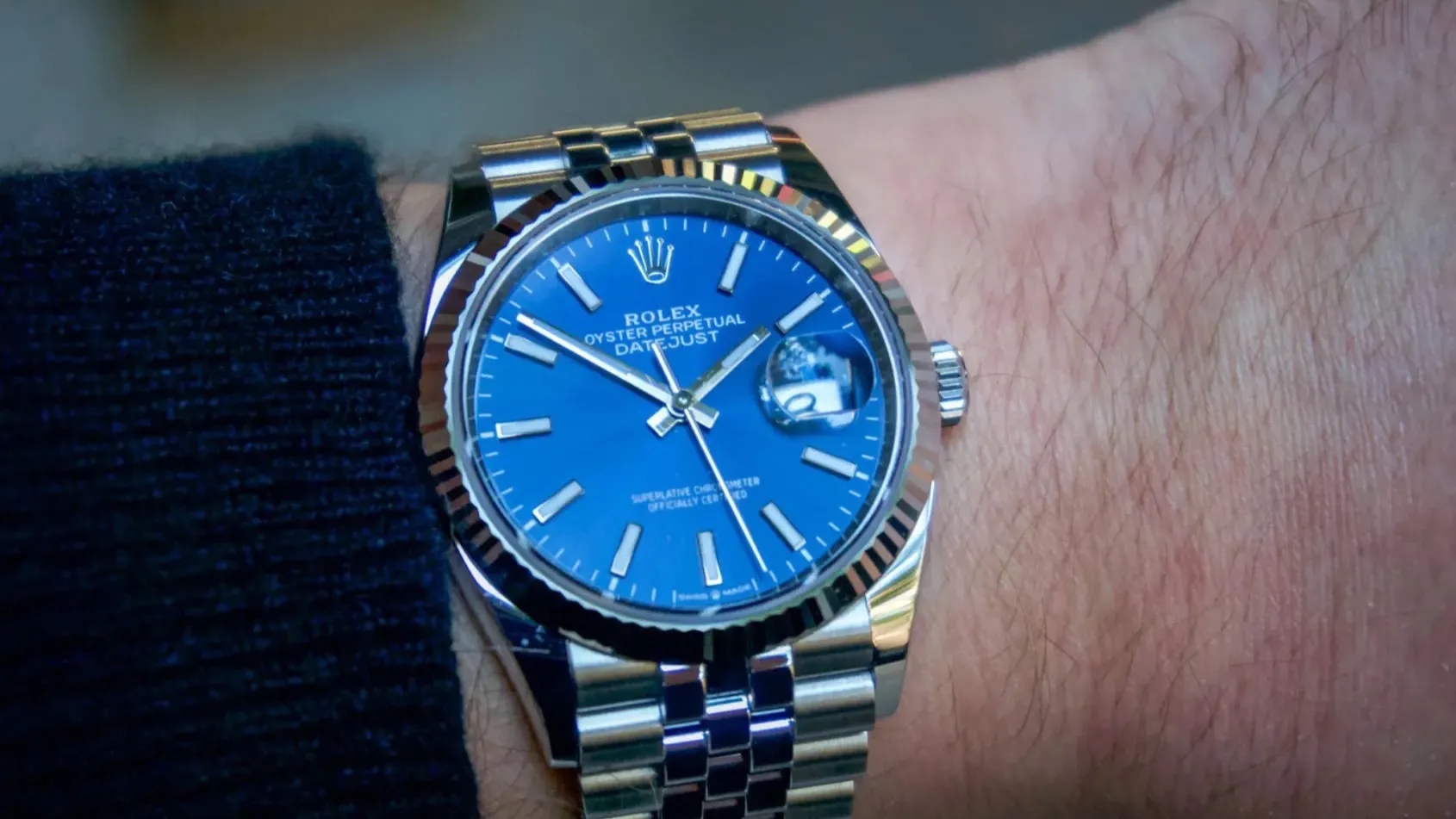
Rolex turned 40 in 1945 and marked it with a new watch. The Datejust, Rolex says, was the first self-winding waterproof chronometer wristwatch to show the date in a window at 3 o’clock on the dial, and the name says exactly that. Until then a watch that showed the date did it with an extra hand pointing to numbers round the edge of the dial. The window was cleaner, and Rolex says it went on to become the watchmaking standard.
The idea hasn’t changed since. The Datejust is still the Rolex for someone who wants one watch to do everything: it sits under a shirt cuff at a wedding, looks right with a suit at work and doesn’t look precious on the weekend. It’s also the Rolex with the most choices, in two main sizes, two bezels, two bracelets and several metals, and each of those choices goes back to something Rolex did between the 1920s and the 1950s. Our guide to the Rolex range covers where it sits among the other models.
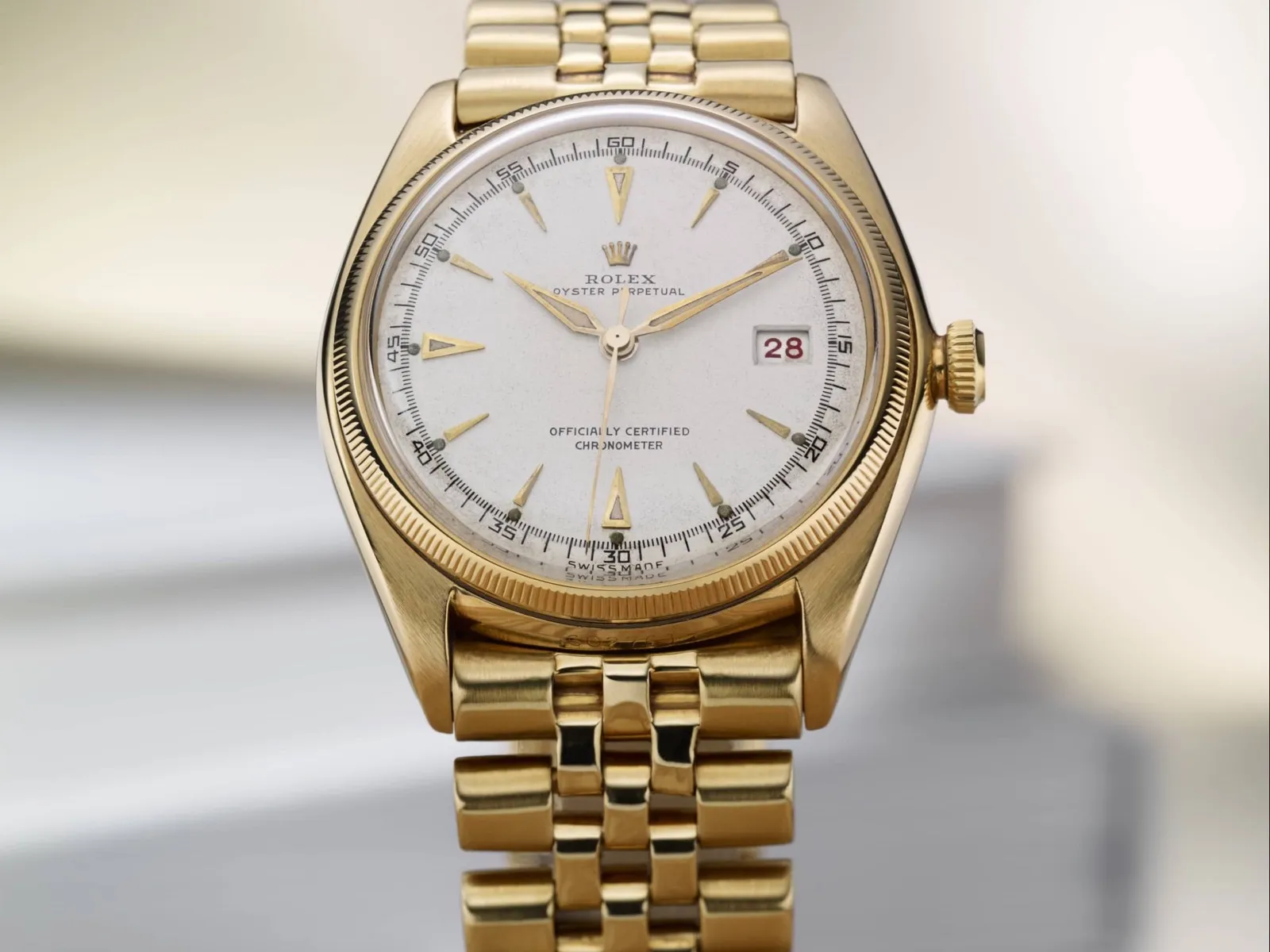
The first Datejust of 1945, in gold with a fluted bezel and a Jubilee bracelet. Photo: Rolex
Why the Date Sits Under a Magnifier
The small bubble over the date is the Cyclops lens, named after the one-eyed giant of Greek myth. Rolex added it to the crystal in 1953 to make the date easier to read and it has become the Datejust’s signature. The date itself became faster in the same decade, when Rolex made it jump to the next day in an instant at midnight, a change it went on to use across its range.
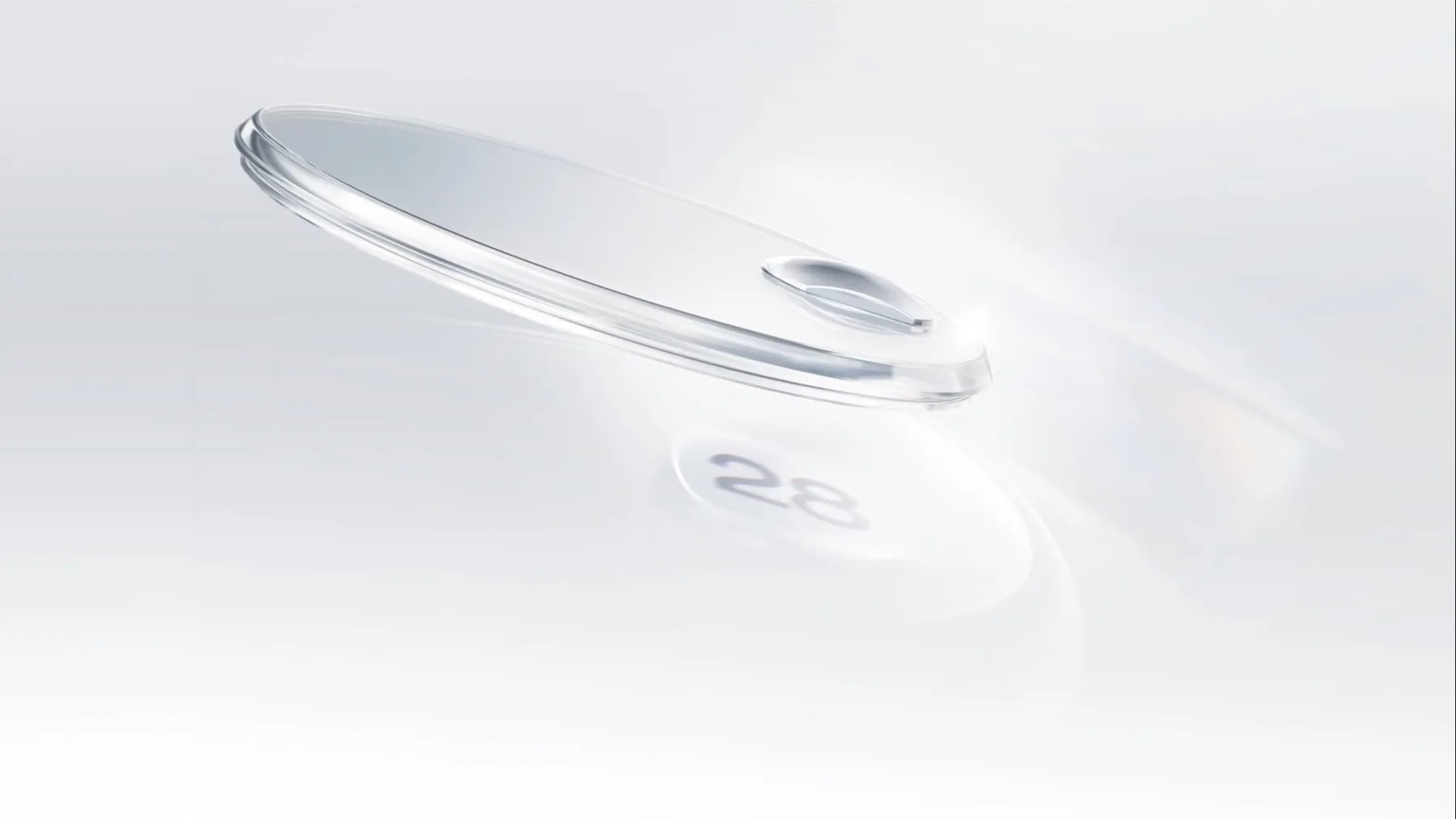
The sapphire crystal with its Cyclops lens over the date. Image: Rolex
Both are still there on the current Datejust. The crystal is sapphire with the Cyclops over the date, and the movement is Rolex’s calibre 3235 in both main sizes. It winds itself as you wear it, keeps going for about 70 hours off the wrist and is tested by Rolex to within two seconds a day either way after it’s cased.
Why the Bezel Is Fluted
The ridged bezel is older than the Datejust. Rolex introduced it on the Oyster in 1926, Rolex’s first waterproof case, where the flutes let the bezel be screwed down tight against the case. The Datejust launched with one in 1945, and its descendants are still waterproof to 100 metres.
On the current models the fluted bezel is 18 ct white gold, which is why Rolex sells those versions as “Oystersteel and white gold”, and its ridges catch the light in a way a plain bezel doesn’t. The alternative is a smooth polished steel bezel, which keeps the watch quieter and costs less.
Why the Bracelet Has Five Links
Rolex made the Jubilee bracelet especially for the Datejust’s launch. Its five small links per row make the watch dressier than Rolex’s other bracelet, the three-piece Oyster, and let it drape more softly round the wrist. The Oyster’s broad flat links read as sportier, and it’s the bracelet on the Submariner and Oyster Perpetual. Both close with a folding Oysterclasp with an Easylink that lets out about 5 mm of extra length.
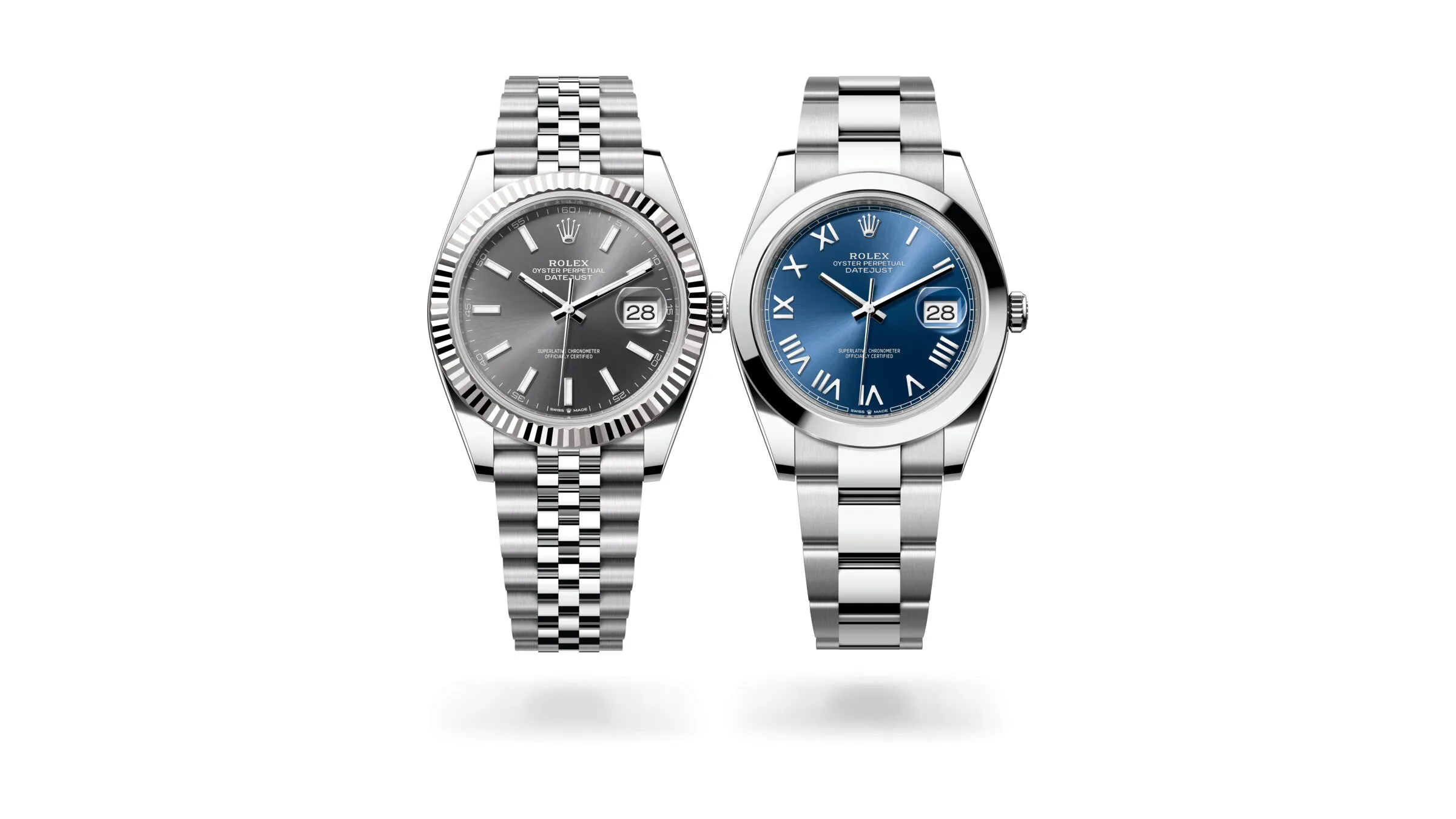
Fluted bezel on a Jubilee bracelet (left) and smooth bezel on an Oyster bracelet. Image: Rolex
Why So Many Are Two-Tone
The first Datejusts were made only in gold. Rolex had developed Rolesor, its name for a watch that combines steel and gold, in the 1930s, and Rolesor Datejusts started appearing in the 1950s.
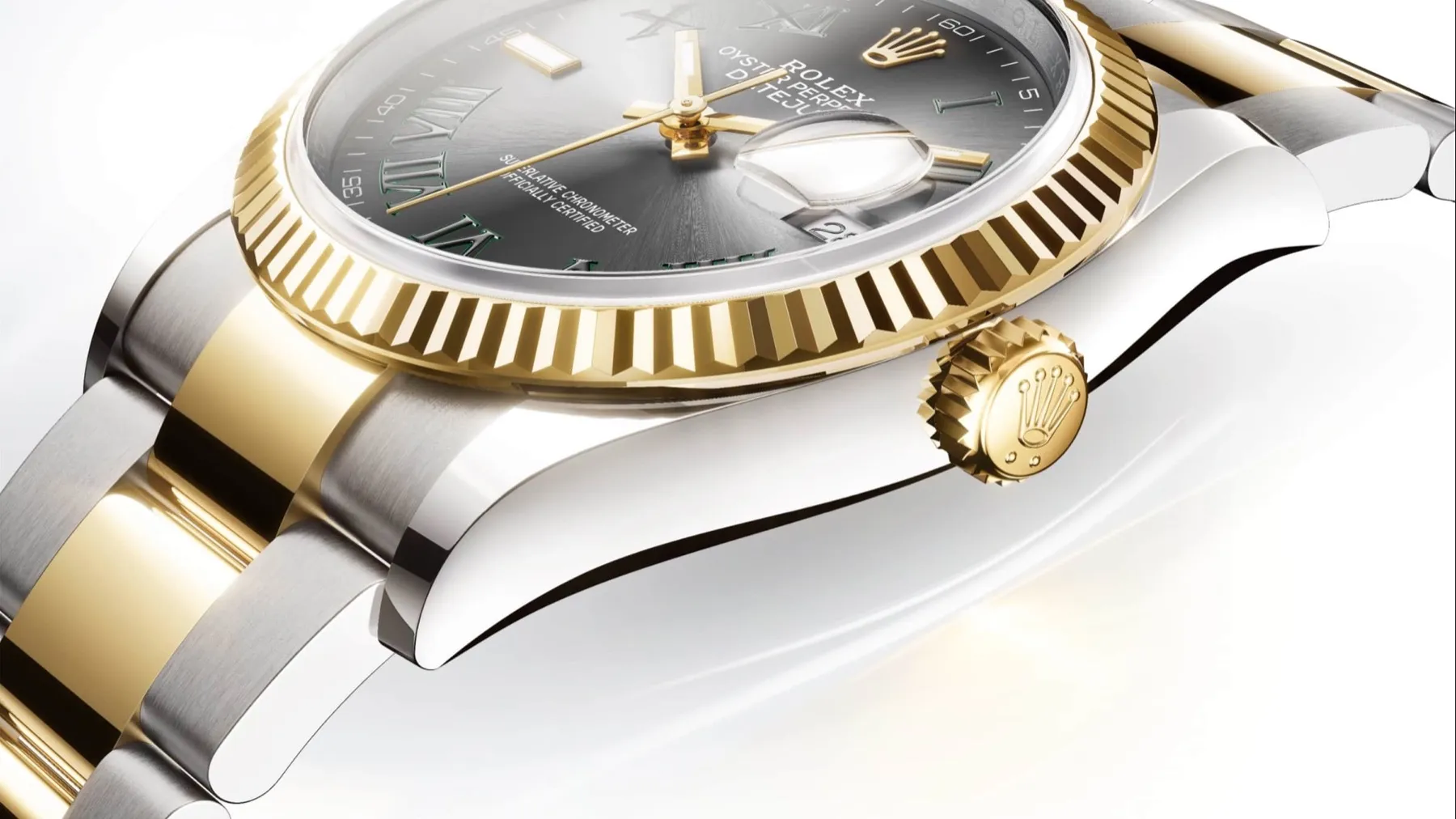
A Datejust in Yellow Rolesor, with the fluted bezel, crown and centre links in 18 ct yellow gold. Image: Rolex
The fluted white gold bezel is the subtle version of that idea. The louder versions pair steel with an 18 ct yellow gold or pink Everose gold bezel, crown and parts of the bracelet. In Australia they start at $25,300 for a Datejust 36 in yellow gold and steel, $28,400 for a Datejust 41 in the same and $32,800 for a Datejust 41 in Everose gold and steel. They suit someone who already wears gold.
36 or 41 mm
The 36 mm is the original Datejust size. The 41 mm matches the Submariner’s diameter and suits someone used to a larger watch or with a wider wrist. Rolex doesn’t publish thickness or lug-to-lug length, but Monochrome measured both: the 36 is 11.8 mm thick and 43.1 mm from lug to lug, and the 41 is 11.6 mm thick and 47.4 mm. So the bigger watch isn’t any thicker. It’s longer on the wrist, and the lug-to-lug length is the number to check against your own wrist. The movement, water resistance and clasp are the same in both.
Rolex also makes a Datejust 31 (from $13,250 in steel) and a large range of gold and gem-set models up to about $100,000; they’re beyond what this guide is for.
The Datejust Range in Australia
You can’t mix bezels and bracelets freely in Australia. Rolex’s local catalogue lists the steel smooth-bezel Datejust in both sizes on the Oyster bracelet only, so if you want a Jubilee you’re also buying the fluted white gold bezel. These are the steel and white gold bezel models listed on rolex.com at the time of writing:
| Model | Bezel | Bracelet | Dials | Price |
|---|---|---|---|---|
| Datejust 36 (126200) | Smooth steel | Oyster | Silver | $13,700 |
| Datejust 36 (126234) | Fluted white gold | Jubilee | Silver, slate, mint green | $16,950 |
| Datejust 41 (126300) | Smooth steel | Oyster | White, bright blue | $14,900 |
| Datejust 41 (126334) | Fluted white gold | Oyster | Green ombré | $19,600 |
| Datejust 41 (126334) | Fluted white gold | Jubilee | Slate, bright black | $19,950 |
The 36 mm fluted model also comes in diamond-set versions from $21,000, and that’s the only way to get a fluted Datejust 36 on an Oyster bracelet here.
Which Datejust to Buy
For a watch that has to work with a suit, buy the Datejust 36 with the fluted bezel on a Jubilee bracelet, at $16,950. It’s the combination the Datejust launched with in 1945, at its original size, and it’s $3,000 less than the same look at 41 mm. If you’d rather a bigger watch, the 41 on a Jubilee at $19,950 is the same idea with a longer case.
If the watch will spend more time with a polo than a tie, the smooth-bezel Datejust 41 on an Oyster bracelet at $14,900 is the better buy. It’s the cheapest 41, the plainest Datejust and the one that sits most easily with casual clothes. The smooth 36 at $13,700 does the same at the smaller size, though only with a silver dial.
Datejust, Oyster Perpetual or Omega
The Oyster Perpetual is the Datejust’s simpler sibling and the cheaper way into Rolex: $11,200 for the 36 and $11,750 for the 41. It drops the date, so there’s no Cyclops lens, and it uses calibre 3230 instead of 3235. It comes only with a domed steel bezel on the Oyster bracelet. Against the smooth-bezel Datejust, the OP saves $2,500 at 36 mm and $3,150 at 41 mm. Buy it if you won’t miss the date and the watch will mostly be worn casually; buy the Datejust if you want the date or a watch dressy enough for a suit.
Outside Rolex, Omega’s two everyday watches are the closest rivals. The Constellation is the dressier one, at $12,975 for the 41 mm steel model on its bracelet, about $1,900 less than a Datejust 41. The Aqua Terra costs $11,750 at 41 mm on its steel bracelet and is waterproof to 150 metres, half as much again as the Datejust. Neither has the Datejust’s fluted bezel and Jubilee bracelet, which are the reasons most people buy one.
Buying a Datejust in Australia
New Rolex watches are sold only through Official Rolex Retailers, and each comes with a five-year international guarantee from the date of purchase. Rolex’s retailer locator lists them, with stores in Sydney, Melbourne, Brisbane, Perth and Adelaide. Ask a retailer how long the model you want will take.
Rolex Certified Pre-Owned is the other official route. Those watches are at least two years old, are sold by Official Rolex Retailers that are part of the programme and come with a two-year international guarantee. It’s worth asking about if you’re after a dial or bracelet combination that’s no longer in the current catalogue.