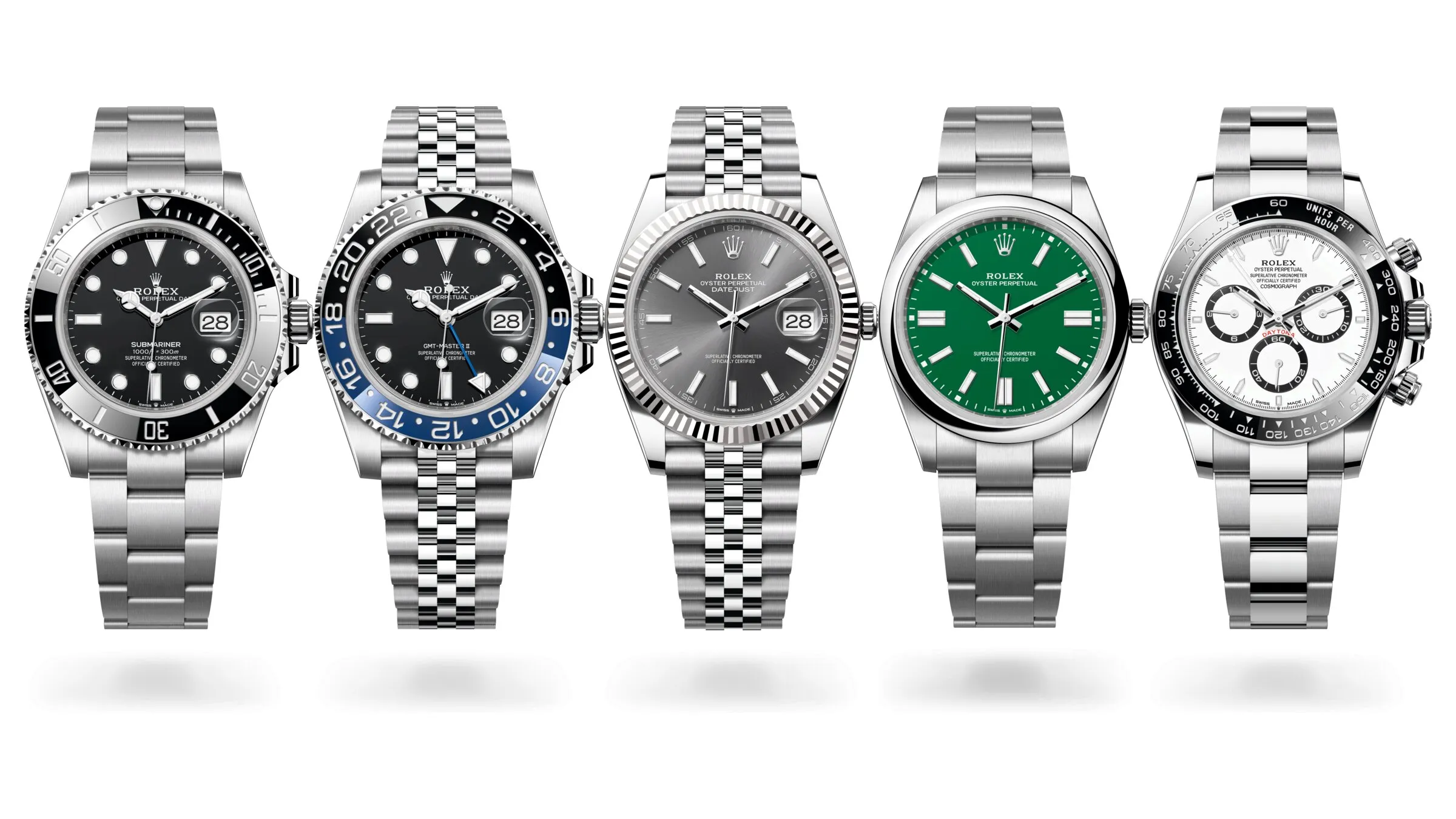
Rolex Submariner: The 1953 Dive Watch, and Which One to Buy
Why the bezel turns one way, why the crown has three seals and what changed in 2020, then the Australian range from $16,850 and whether the Date is worth $2,100 more.
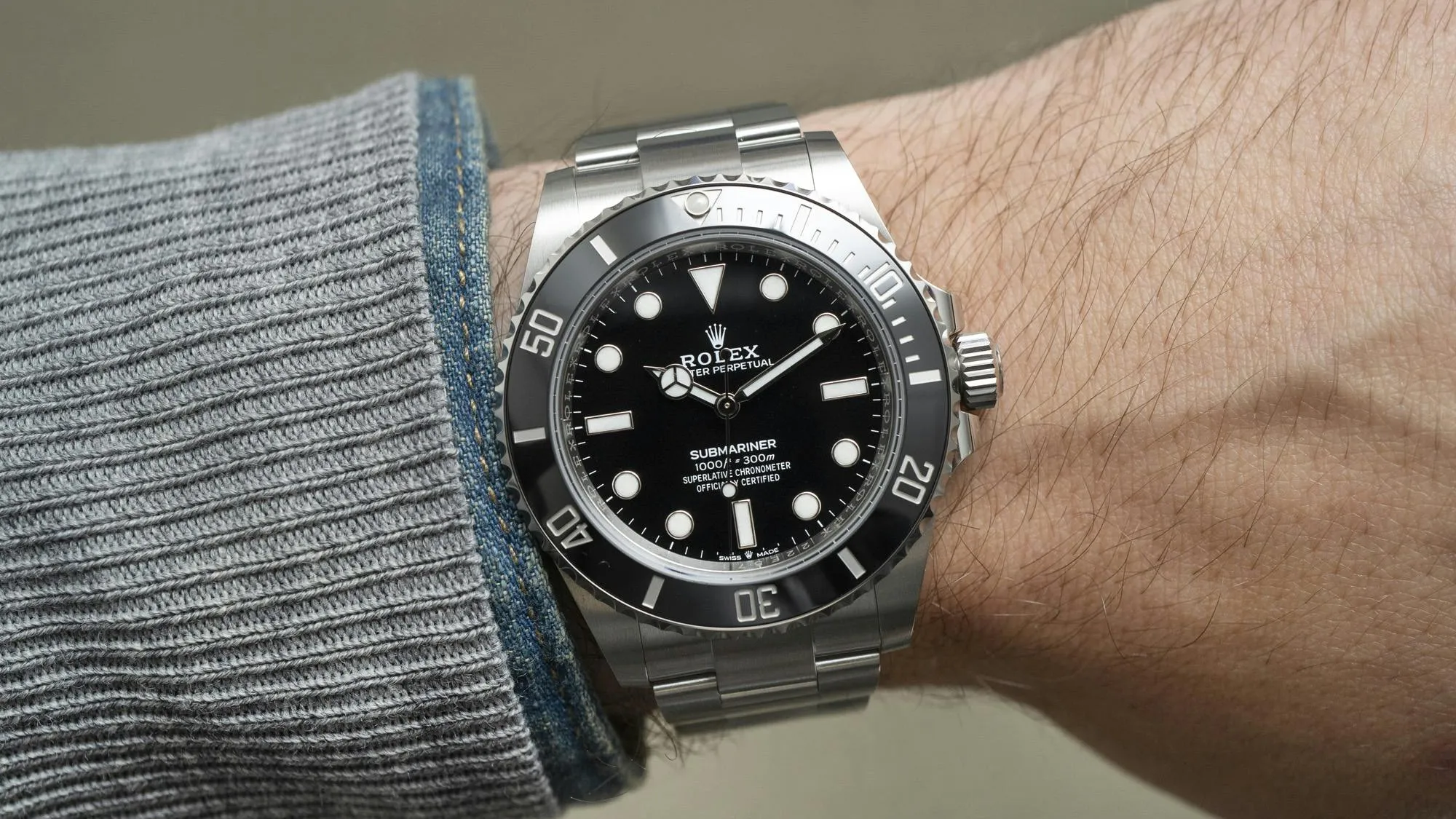
In 1952, Royal Navy divers working from HMS Reclaim in Loch Fyne wore Rolex Oyster Perpetuals to depths of 73 metres, and the watches stayed dry. Scuba diving was taking off, the first diving schools were opening, and Rolex used what it learned to build a watch for the new sport. The Submariner arrived in 1953, waterproof to 100 metres, with a rotating bezel for timing a dive.
It’s now rated to 300 metres and has become the watch people mean when they say they want one good Rolex. It still dives, but most Submariners spend their lives in offices and restaurants, worn with suits and T-shirts alike. The current range starts at $16,850 for the steel model without a date, which is the one most people should buy. It’s one of the models in our guide to which Rolex to buy.
A watch for the 1950s diving boom
Rolex had been chasing a waterproof wristwatch for decades before the Submariner. Its 1922 “Submarine” sealed an ordinary watch inside a second, hinged case, which kept the water out but meant opening the outer case just to wind it. The answer came in 1926 with the Oyster, whose bezel, case back and crown all screw down against the case. Every Submariner is built on that case.
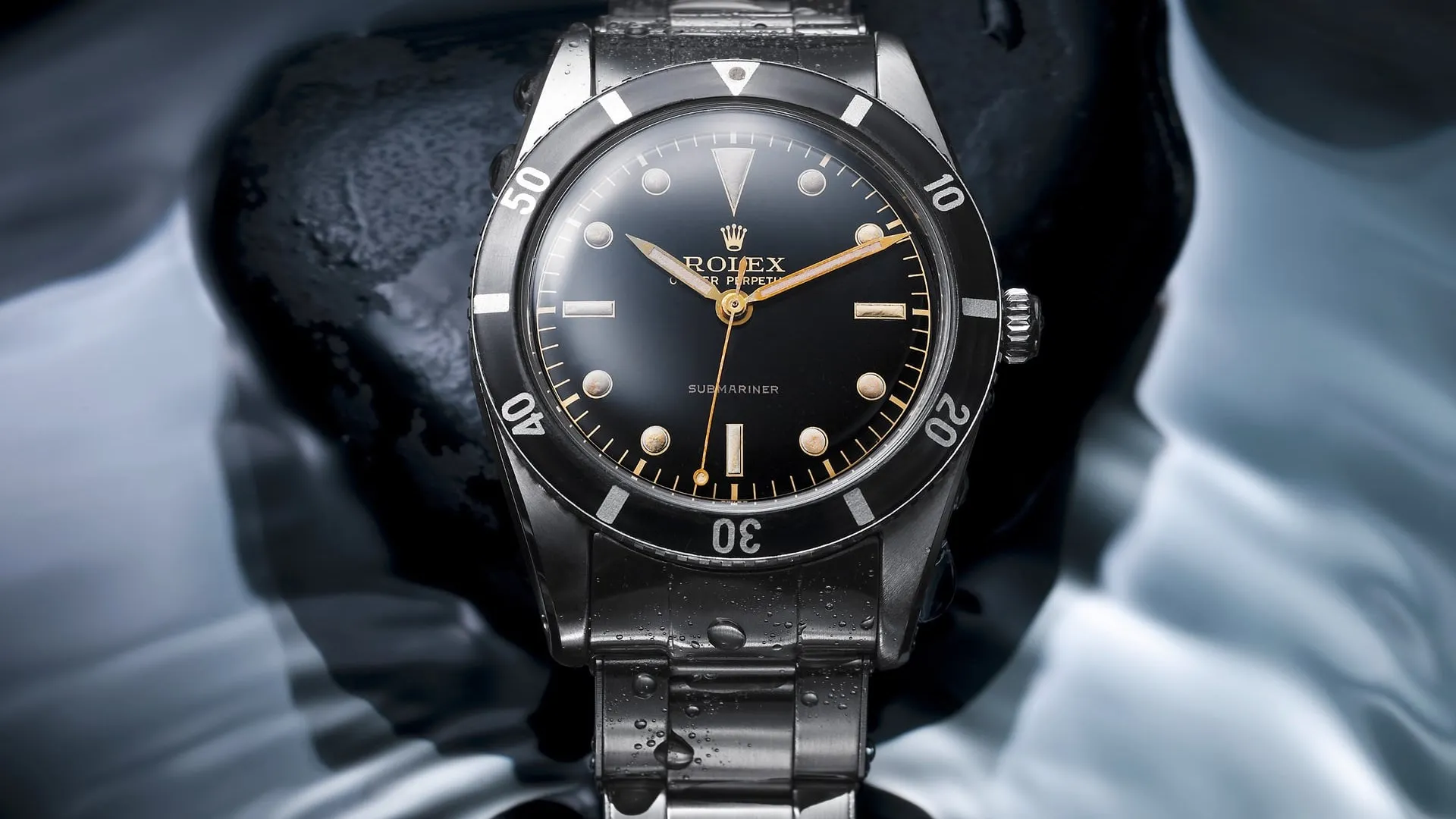
An early Submariner from the 1950s. Photo: Rolex
When Rolex developed the Submariner, it asked a working diver to test it. Rolex says Dimitri Rebikoff, an engineer and underwater photographer, made 132 dives with the prototype at depths of 12 to 60 metres and judged it had everything a diver needed. His one change was to the marker at the top of the bezel: he wanted a white triangle in place of the red one, so it was easier to see underwater.
The Submariner soon left the water. Sean Connery wore one in the first James Bond film in 1962, and in 1969 Rolex added the Submariner Date and a yellow-gold version, turning a diving instrument into a range.
Why the bezel turns one way
The bezel is how a diver keeps track of time underwater. Before going down, you line up its triangle with the minute hand, and the 60-minute scale then shows how long you’ve been under, which tells you when to start the ascent and how long to wait at each decompression stop. A click mechanism stops the bezel turning the wrong way, and the knurled edge gives a grip even through gloves. Rebikoff’s white triangle is still there, with a luminous capsule in it for the dark.
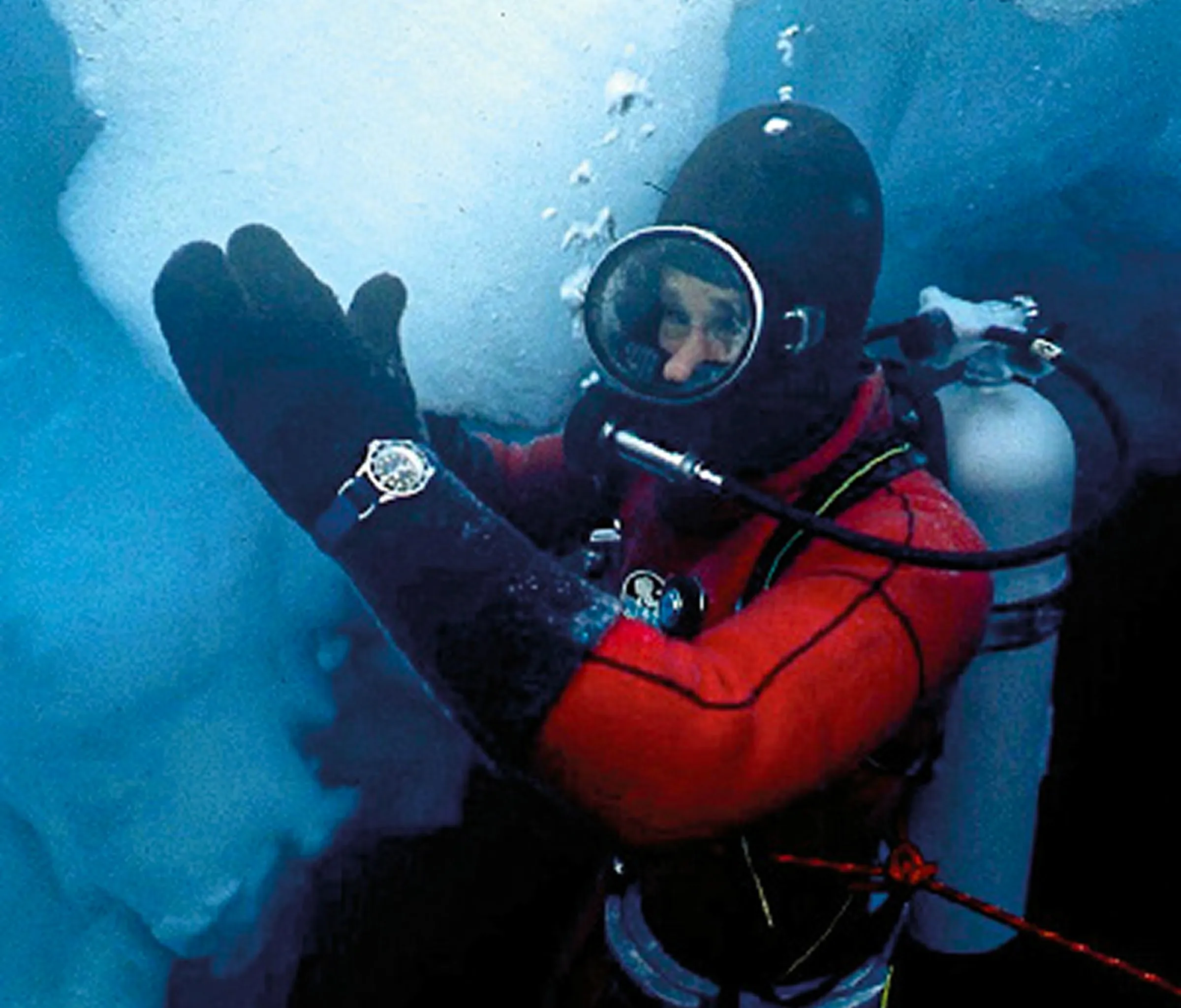
A diver wearing a Submariner under the North Pole ice in 1974. Photo: Rolex
On land the same bezel times a parking meter, a roast in the oven or a meeting that’s running long, which is a big part of why the Submariner works as an everyday watch.
Why the crown has three seals
The crown is the weak point of any waterproof watch, because it has to pass through the case. Rolex’s thinking, as it puts it on its Triplock page, went in stages. The 1926 screw-down crown guarded against water getting in. The Submariner’s early Twinlock crown added a second sealed zone, in case a gasket failed on a dive. Triplock, introduced on the deeper-diving Sea-Dweller in 1970 and on the Submariner from the early 1970s, added a third, so the watch stays sealed even if the crown somehow unscrews itself.
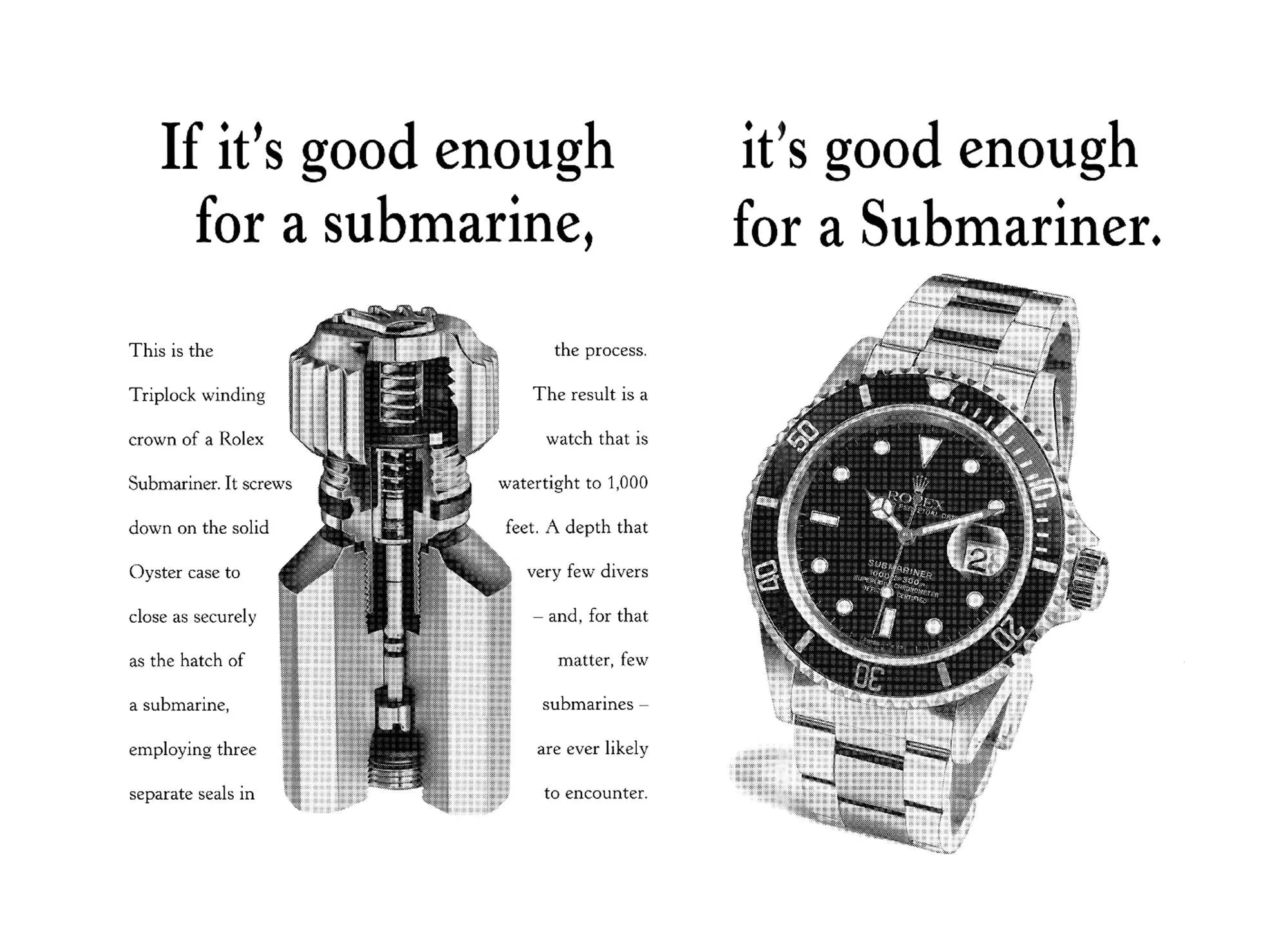
A Rolex advertisement explaining the Triplock crown. Image: Rolex
Rolex also gave the Submariner crown guards, shoulders on the case either side of the crown that take the knocks before it does. Its timeline dates them to 1959, and they’ve since spread to most of Rolex’s sports watches. In the early 1970s Rolex worked with Comex, the French commercial diving company, whose divers wore Submariners on the job and helped Rolex test its watches in pressure tanks.
Why the bezel and markers look the way they do
The bezel insert is Cerachrom, Rolex’s ceramic. Older Submariners had aluminium inserts that scratched and faded, which collectors now prize as patina but a diver would call wear. Rolex introduced Cerachrom on the GMT-Master II in 2005, then fitted it to the Submariner Date and, in 2010, to the no-date Submariner.
The hands and hour markers are filled with Chromalight, a luminous material Rolex developed and introduced in 2008. It looks white in daylight and glows blue in the dark, storing light and releasing it slowly. The case and bracelet are Oystersteel, Rolex’s name for the 904L steel it first used on the Submariner Date in 1985.
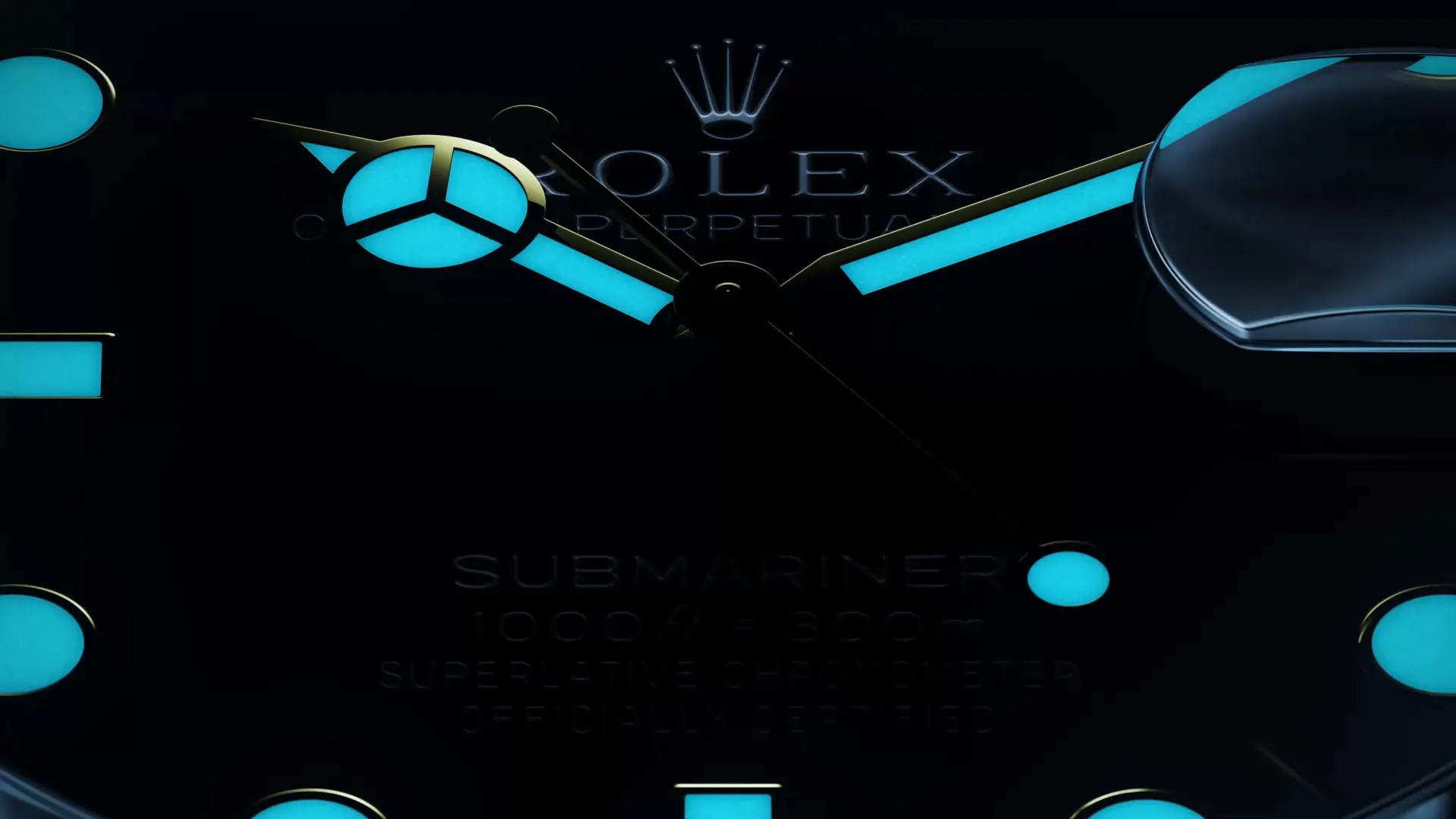
Chromalight glowing blue on a Submariner dial. Image: Rolex
Why the clasp extends
A dive watch has to fit over a wetsuit as well as a bare wrist. The Submariner’s Oyster bracelet has a Glidelock clasp, introduced in 2008, which slides out in small notches without tools. It suits a diver pulling the watch over a suit sleeve, and it suits anyone whose wrist swells on a hot Australian afternoon. A second catch, Oysterlock, stops the clasp opening by accident.
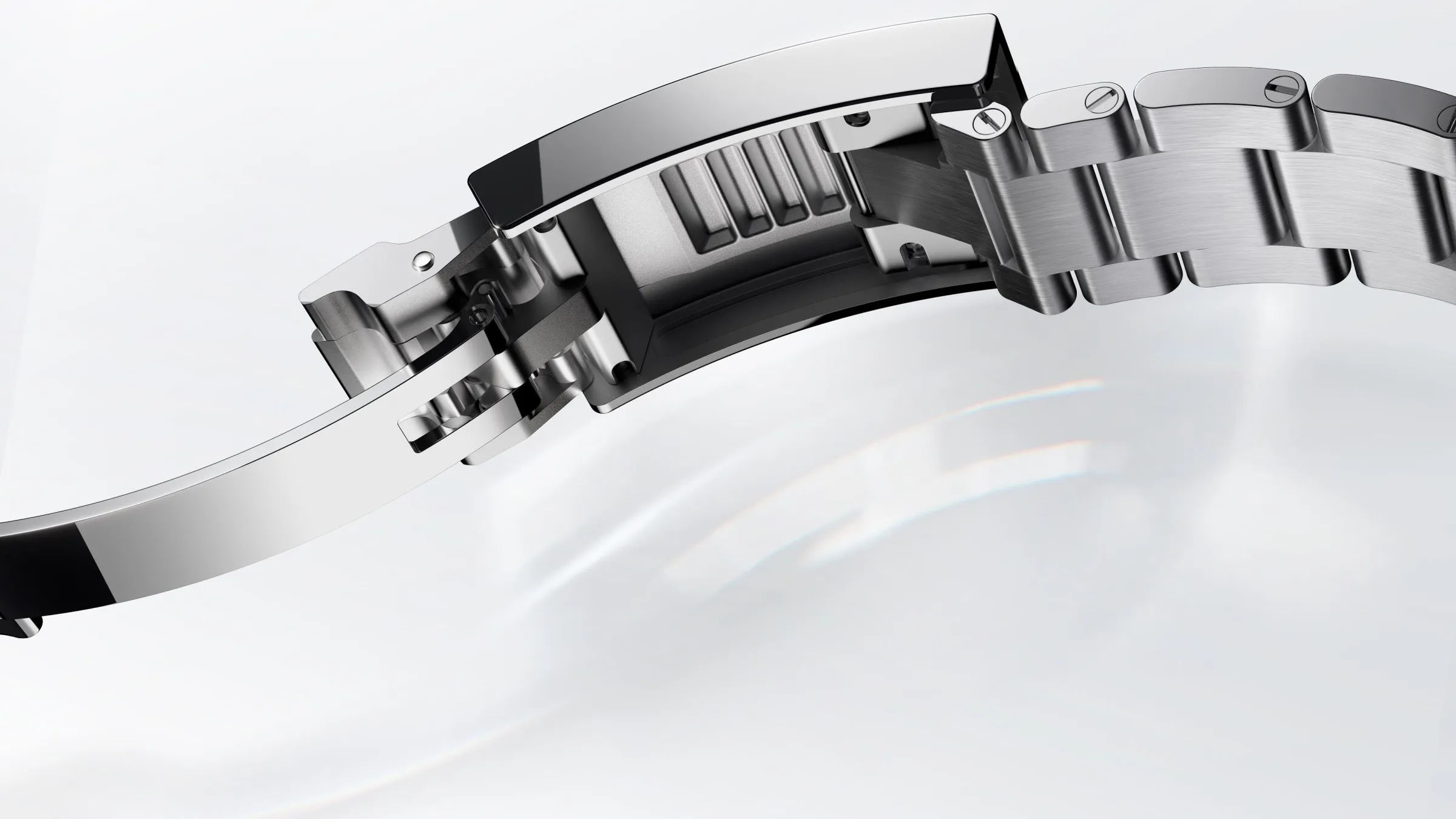
The Glidelock clasp opened out to lengthen the bracelet. Image: Rolex
The 41mm Submariner of 2020
The current Submariner arrived in 2020. Rolex redesigned the case with slightly different proportions, a slimmer bracelet and new movements: calibre 3230 in the Submariner and 3235 in the Submariner Date, both with a longer power reserve. According to Watchonista, the case grew from 40mm to 41mm, the lugs widened from 20mm to 21mm, and the power reserve went from about 48 hours to about 70. In practice that means it keeps running through a weekend off the wrist, and the bracelet sits more in proportion with the case.
Like every current Rolex, it’s certified as a Superlative Chronometer, which Rolex rates at -2 to +2 seconds a day once the movement is cased.
The range and Australian prices
Every current Submariner shares the 41mm Oyster case, the 300-metre rating, the Cerachrom bezel, the Triplock crown and the Glidelock clasp. What changes is the date window, the bezel colour and how much gold is involved. Rolex lists seven references in Australia:
| Model | Reference | Case | RRP |
|---|---|---|---|
| Submariner, black | 124060 | Oystersteel | $16,850 |
| Submariner Date, black | 126610LN | Oystersteel | $18,950 |
| Submariner Date, green bezel | 126610LV | Oystersteel | $19,850 |
| Submariner Date, black or blue | 126613LN, 126613LB | Oystersteel and yellow gold | $32,500 |
| Submariner Date, black or blue | 126618LN, 126618LB | Yellow gold | $85,300 |
Prices are Rolex’s Australian list prices at the time of writing. They change from time to time, so check before you buy.
No date or Date: what $2,100 buys
The Submariner and Submariner Date are the same watch in almost every way. The only real difference is the date at three o’clock, under the Cyclops lens Rolex introduced in 1953 to make the date easier to read.
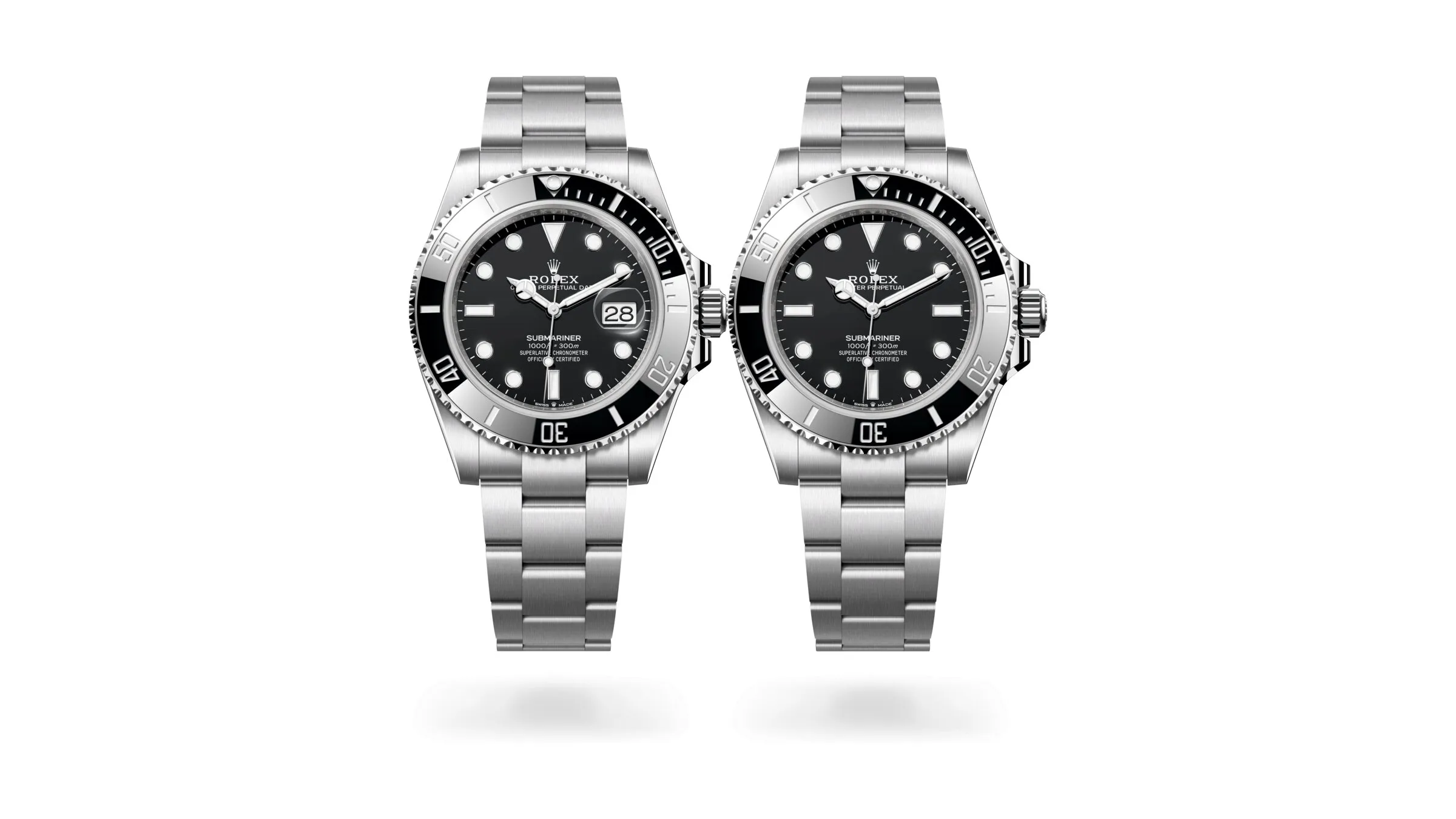
Submariner Date (left) and Submariner without a date. Image: Rolex
That window is the case for and against the Date. If you glance at your watch to write the date on a form or an invoice, it earns its $2,100. If you don’t, the no-date is the better-looking watch: the dial is symmetrical, the crystal is flat, and it’s the closest thing in the range to the 1953 original.
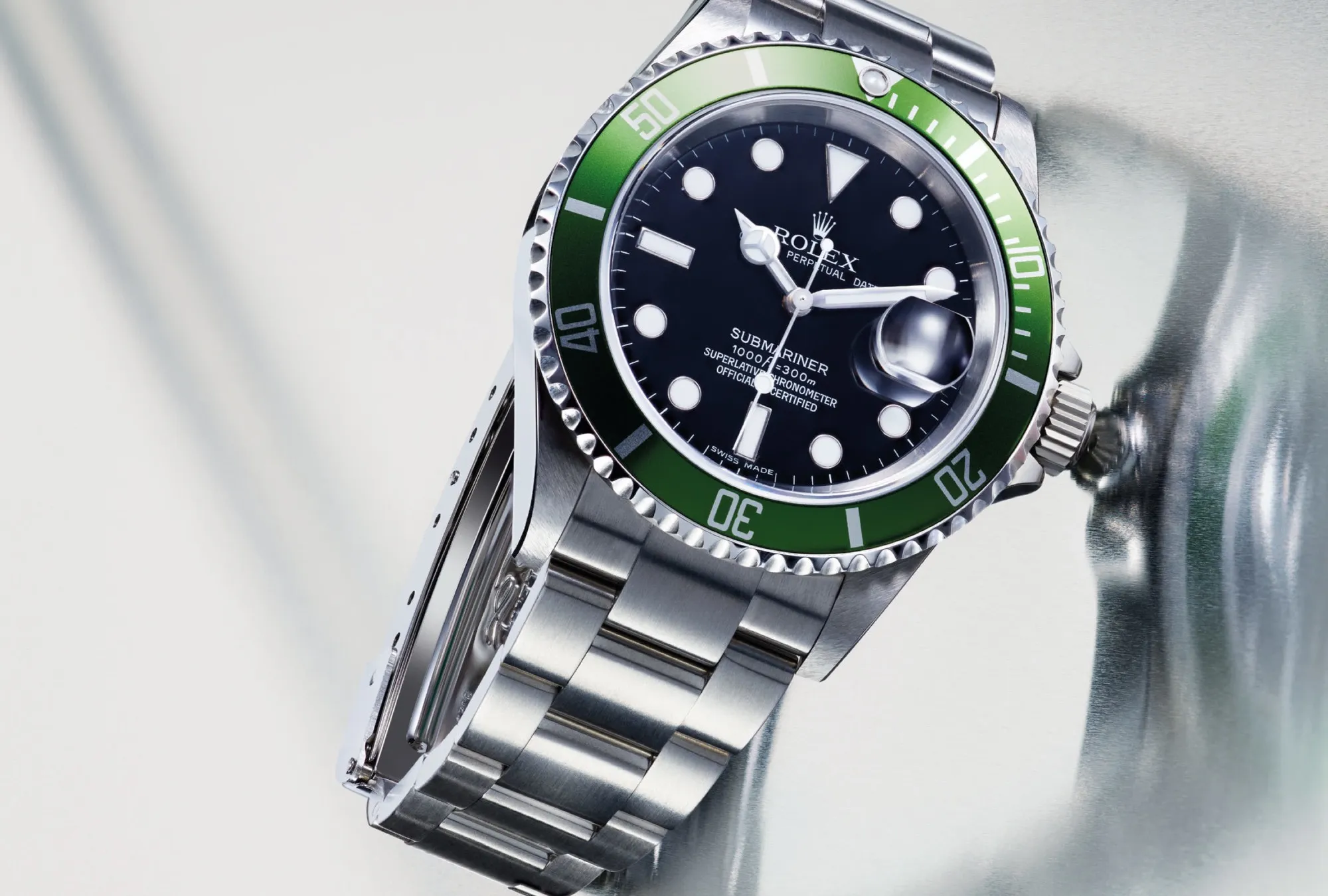
The green-bezel Submariner Date, reference 16610LV. Photo: Rolex
The green bezel goes back to the Submariner’s 50th anniversary in 2003, when Rolex gave the Submariner Date a green insert for the first time. Today’s version, the 126610LV, costs $900 more than the black Date and pairs a green Cerachrom bezel with a black dial. It’s the one to pick if you want the Date and something a little less expected than all-black.
Steel is the Submariner to wear every day
Two-tone Rolesor, Rolex’s mix of Oystersteel and yellow gold, takes the Submariner Date to $32,500, close to double the steel version. Solid yellow gold is $85,300. Both are fine watches, but they change what the Submariner says. In steel it’s a tool that happens to be beautifully made; in gold it’s jewellery that happens to be waterproof. For a watch you’ll wear in the pool and to the office in the same week, steel is the one.
Buying a Submariner in Australia
New Rolex watches are sold only through Official Rolex Retailers, listed city by city on Rolex’s retailer locator. A watch bought from one comes with Rolex’s five-year international guarantee from the date of purchase.
For a used Submariner with a factory guarantee, look for Rolex Certified Pre-Owned. These are watches at least two years old, sold only by Official Rolex Retailers displaying the programme’s plaque, with a two-year international guarantee. Ask your nearest retailer whether they take part, and about availability before you set your heart on a particular reference. The Rolex buying guide covers how buying works in more detail.
Which Submariner to buy
Buy the steel Submariner without a date, the 124060, at $16,850. It’s the purest version of a design Rolex has refined since 1953, and the cheapest way into the range. Pay $2,100 more for the Submariner Date only if you’ll use the date every day, and $900 on top of that for the green bezel if all-black feels too familiar. Leave the two-tone and gold versions to people who want a Rolex to look like a Rolex from across the room.
If you travel often or keep in touch with people overseas, the GMT-Master II is the better daily watch. Its extra hand and 24-hour bezel track a second time zone, it starts at $19,700 in steel, and its 40mm case is a touch smaller. It’s waterproof to 100 metres rather than 300, which makes no difference unless you dive.
If $16,850 is more than you want to spend, Tudor, the second company Hans Wilsdorf founded, makes the closest alternatives. The Black Bay 58 is a 39mm steel diver at $7,500 on a steel bracelet, and the titanium Pelagos is $8,470. Neither has the Submariner’s finish or name, but both do the same job for about half the price.