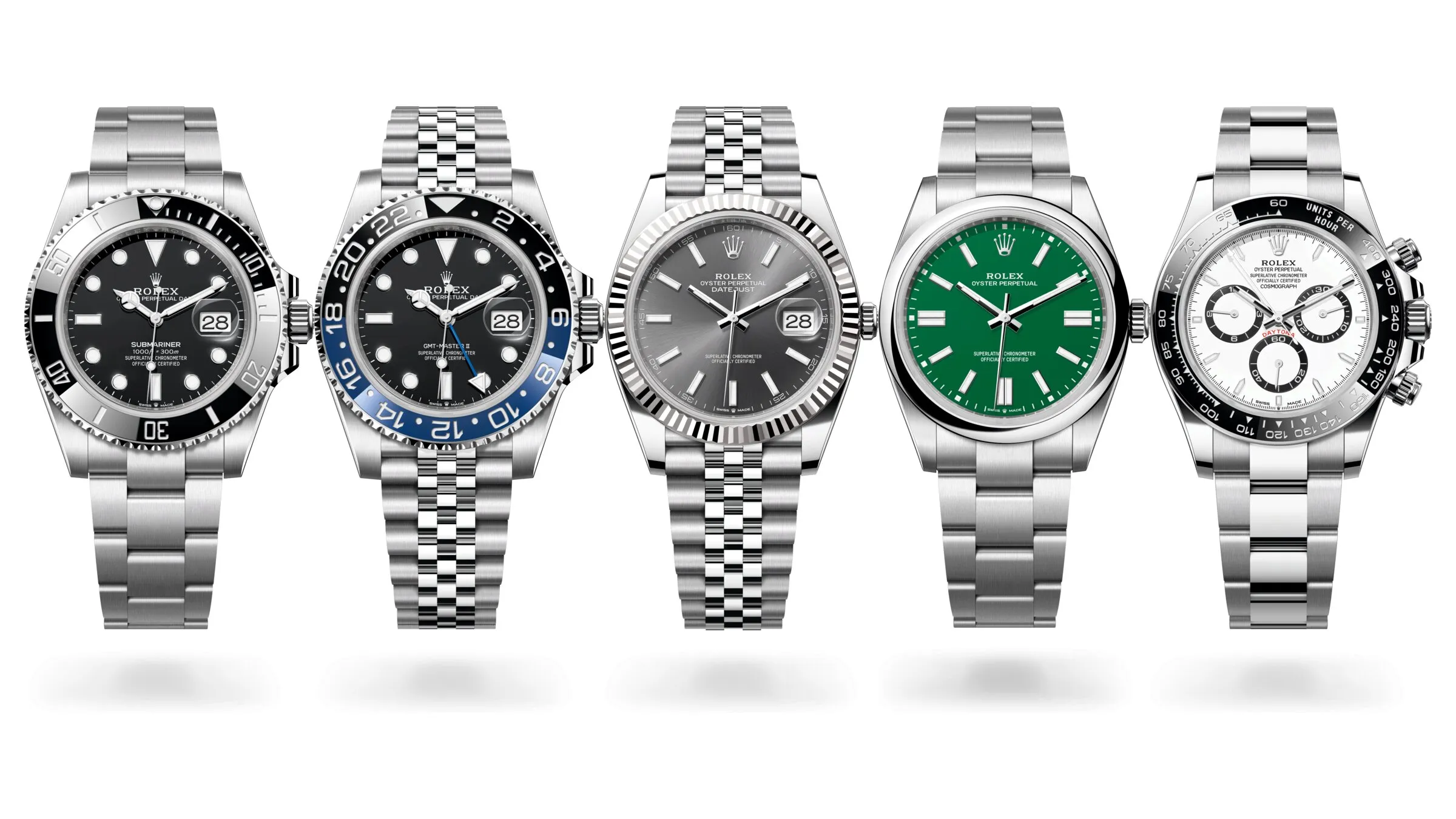
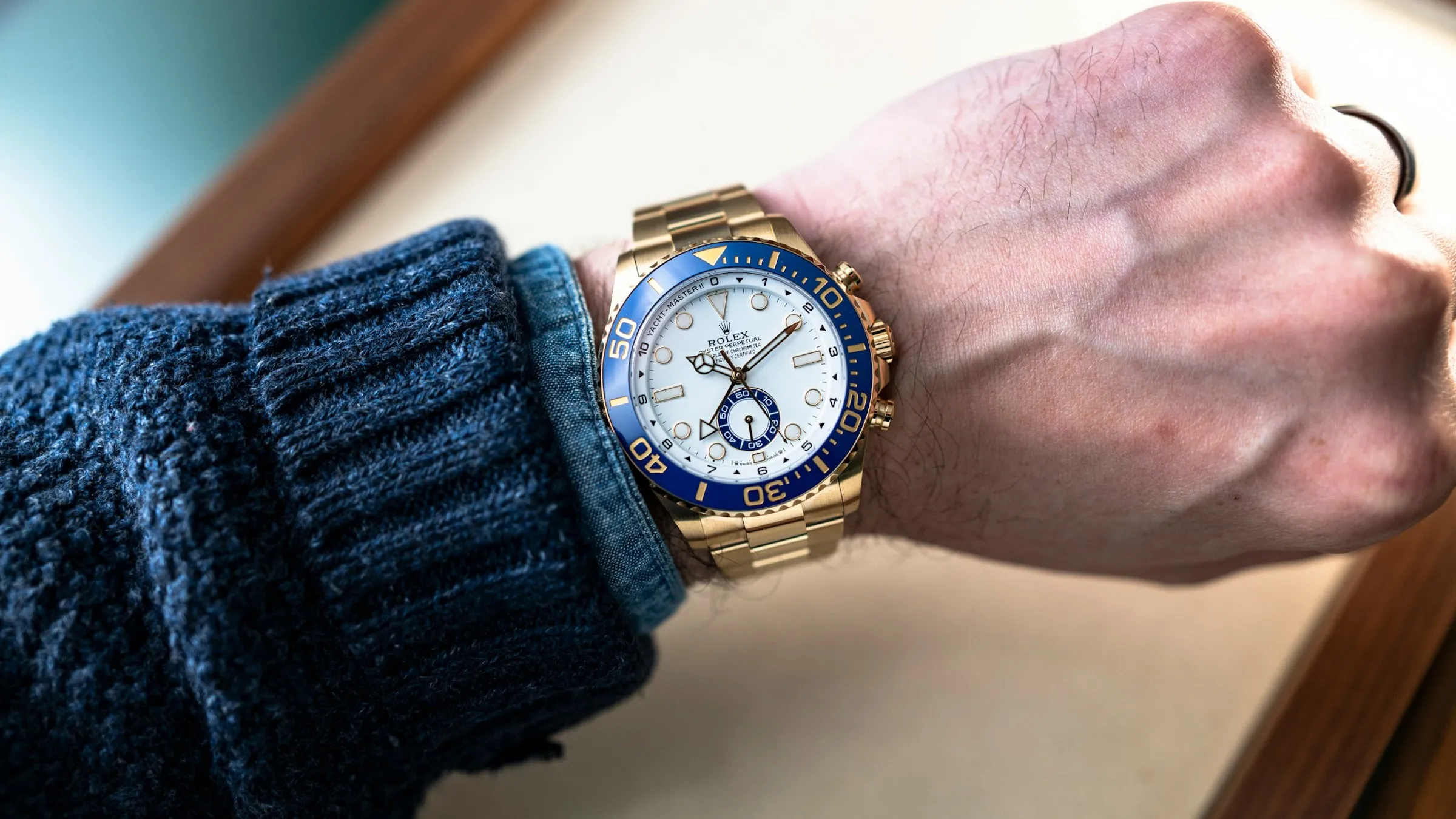
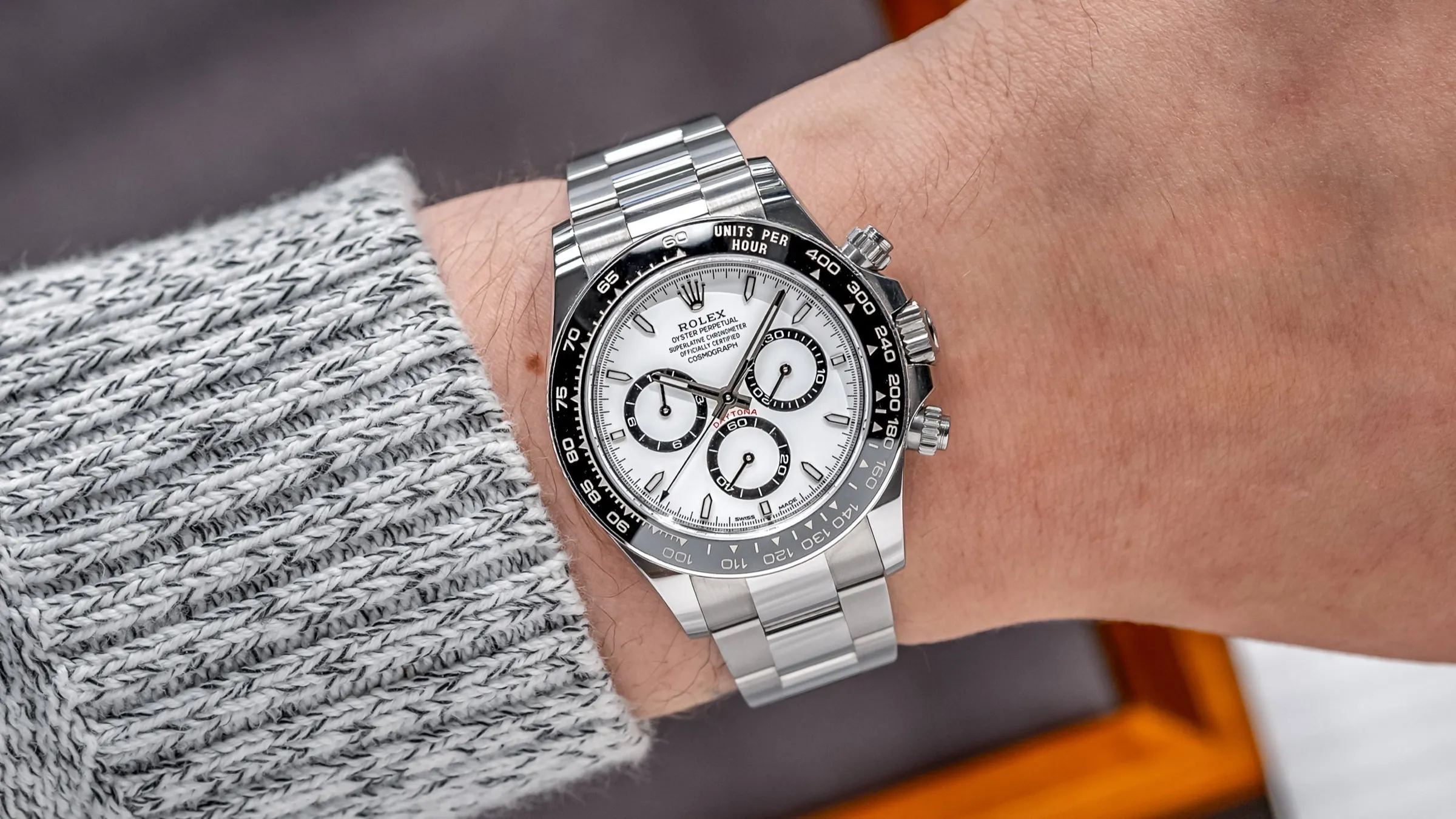
Rolex GMT-Master II: Pan Am's Watch, and Which Bezel to Buy
Where the 24-hour hand, the jumping hour hand, the ceramic bezel and the left-handed model come from, plus the Australian range from $19,700 and the Tudor that costs $7,430.
In the 1950s, airlines started flying long-haul routes across oceans and continents without stopping, and the people in the cockpit suddenly had to keep track of several time zones at once. Rolex’s answer was the GMT-Master, named for Greenwich Mean Time, the world’s reference time until 1972. In 1955 it became the official watch of Pan Am, whose pilots wore it on the flight deck and in Rolex’s advertising.
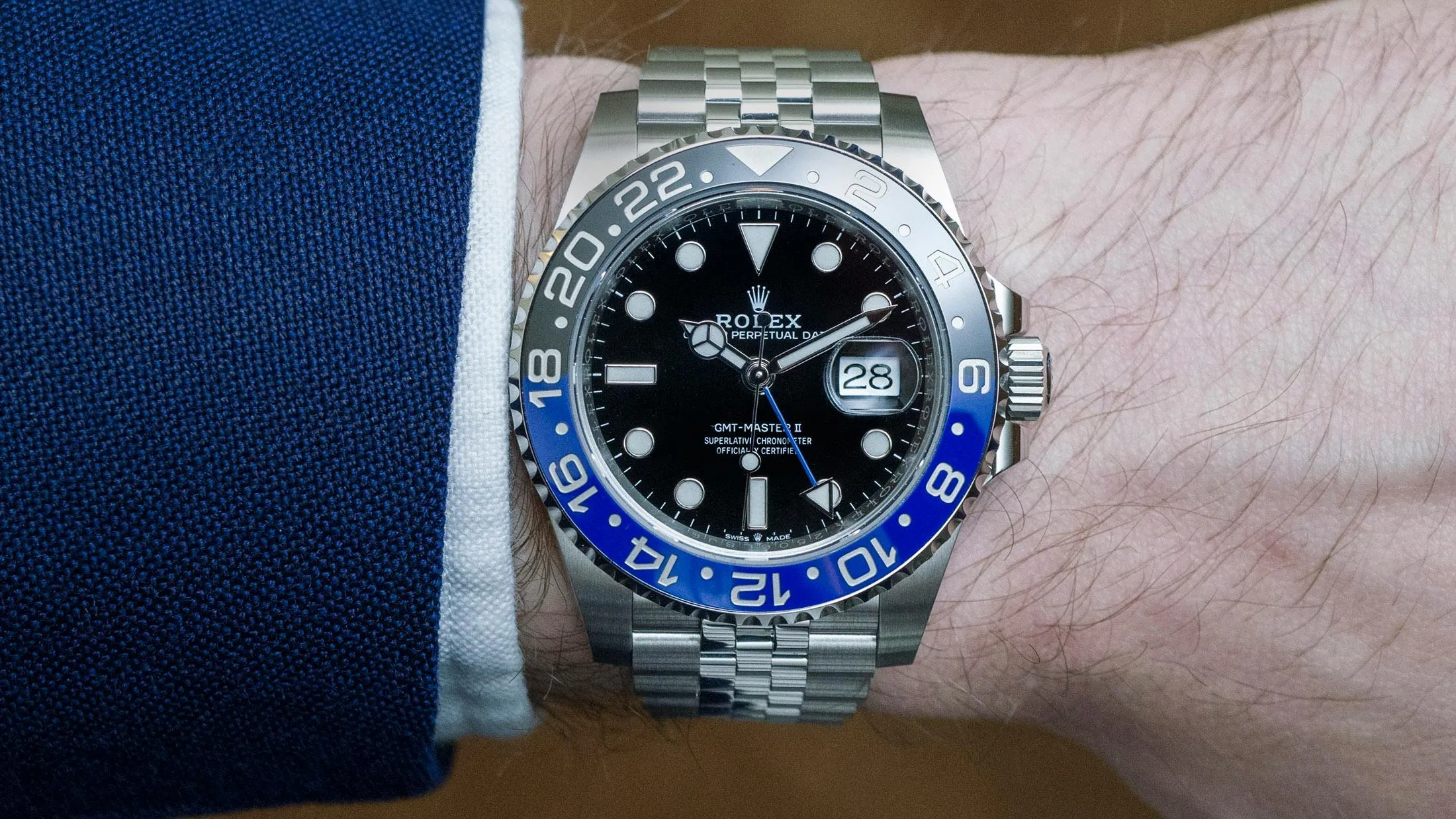
The GMT-Master II carries that job on. It’s a 40mm steel sports watch that shows two time zones at a glance, with a two-colour ceramic bezel that’s one of the most recognisable designs in watchmaking. It suits anyone who flies often, has family overseas or works with a team in another city, and it’s one of the models in our guide to the best Rolex watches.
A watch for the jet age
The GMT-Master added a fourth hand to the dial. It goes round once every 24 hours instead of twice, and points to a 24-hour scale on the bezel. Set it to home time and it stays there, while the hour and minute hands follow wherever you’ve landed, so a glance tells you whether it’s a sensible hour to call home. The bezel turns both ways, so you can line it up with whichever zone you want to track.
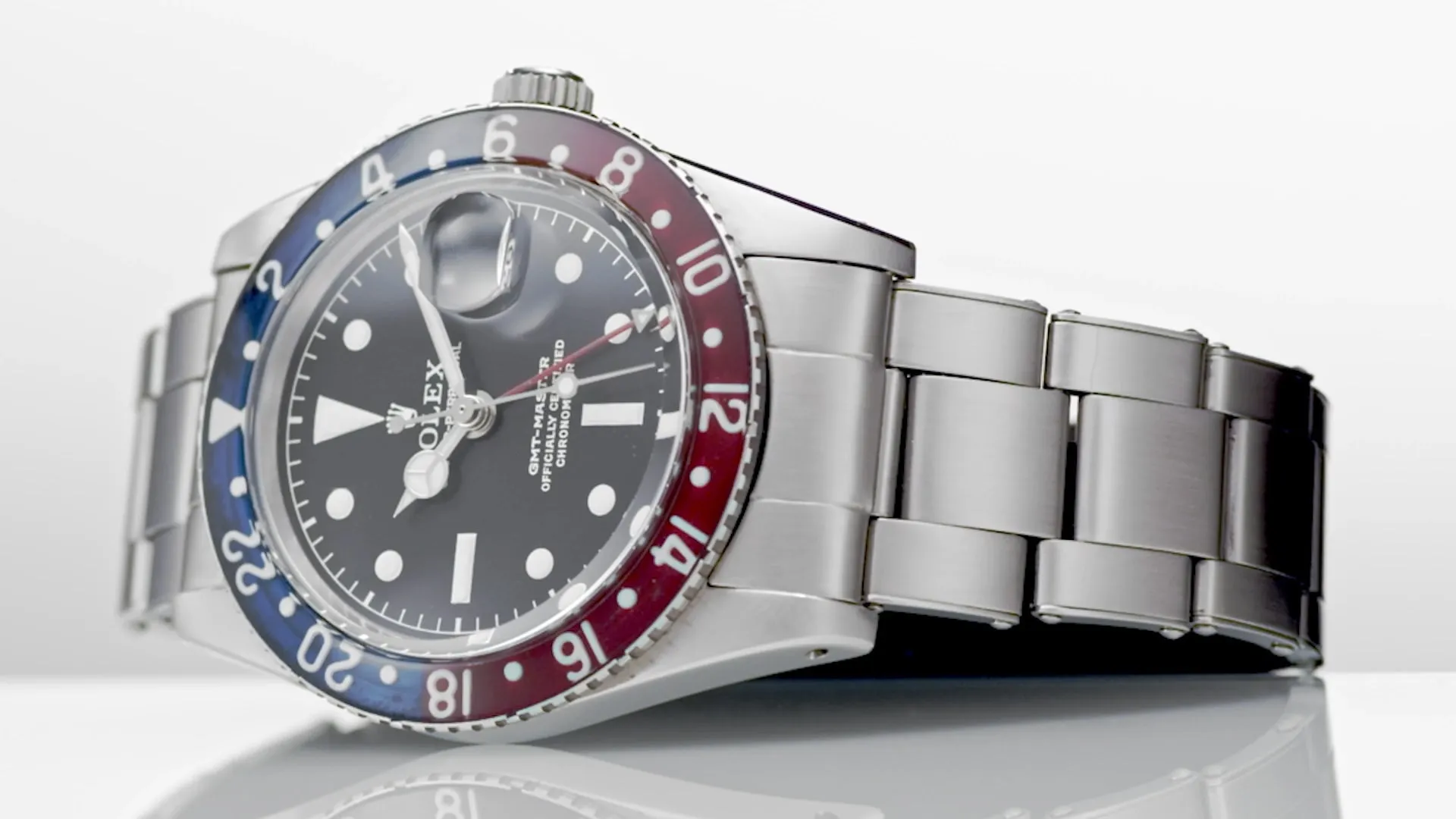
An early GMT-Master with the red-and-blue bezel. Image: Rolex
Rolex’s own history of the watch leans on the pilots who wore it. When Pan Am flew its first non-stop service from New York to Moscow, Captain C. N. Warren relied on his GMT-Master and said afterwards that “the flight itself was navigated by Rolex”.
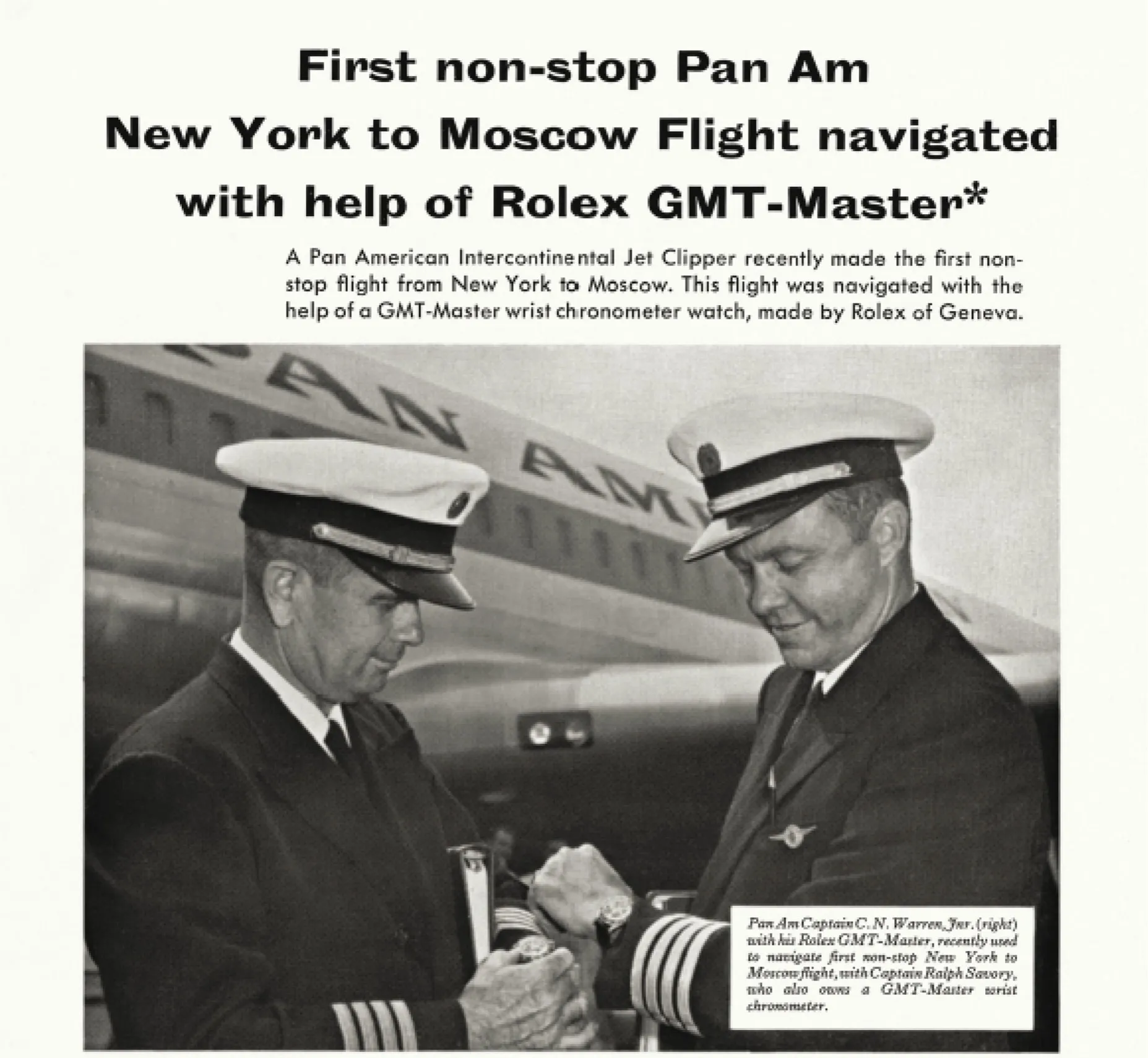
Rolex’s advertisement for Pan Am’s first non-stop New York to Moscow flight, with Captain C. N. Warren (right) and Captain Ralph Savory. Image: Rolex
Why the hour hand jumps
The original GMT-Master was set like an ordinary watch, which is slow when you change zones every few days. In 1982 Rolex gave it a new movement that let the hour hand be set on its own, independently of the minute hand and the 24-hour hand, and renamed it the GMT-Master II.
That’s still how it works. When you land, you pull out the crown and jump the local hour hand forwards or backwards an hour at a time. The minute and seconds hands keep running and the 24-hour hand stays on home time, so the watch keeps its accuracy through the change. The date follows the local hour hand, so it’s right for wherever you are.
Today’s movement is Rolex’s calibre 3285. Its Parachrom hairspring and Chronergy escapement both resist magnetic fields, shock absorbers protect the balance, and it has about 70 hours of power reserve, enough to take it off on Friday night and find it still running on Monday. Rolex certifies each watch to within two seconds a day, fast or slow. The case is waterproof to 100m.
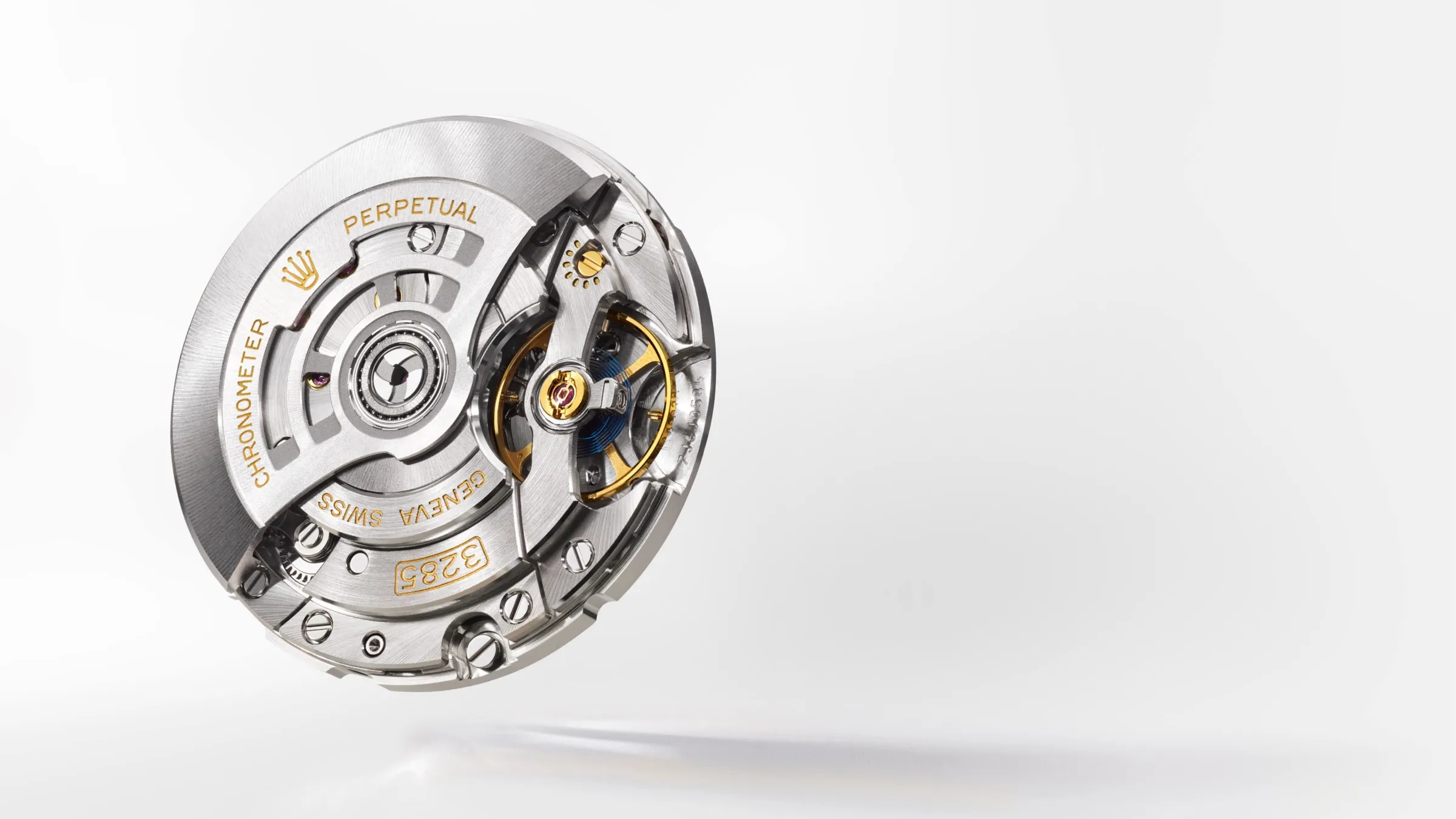
Calibre 3285, the movement inside every current GMT-Master II. Image: Rolex
Why the bezel is ceramic
The bezel is the part of the GMT-Master II people recognise first, and it’s also where Rolex has done its most visible engineering. In 2005 the GMT-Master II became the first Rolex with a Cerachrom bezel insert, made of ceramic rather than the aluminium used before. Rolex chose ceramic because it’s extremely hard and close to scratchproof, can’t corrode, and holds its colour under UV light. The 24-hour numerals and graduations are moulded into the ceramic and then coated in gold or platinum.
The first Cerachrom inserts were plain black, because putting two colours into one piece of ceramic took Rolex years of development and a patent. The blue-and-black arrived in 2013 and the red-and-blue in 2014. Brown-and-black, grey-and-black and green-and-black have followed.
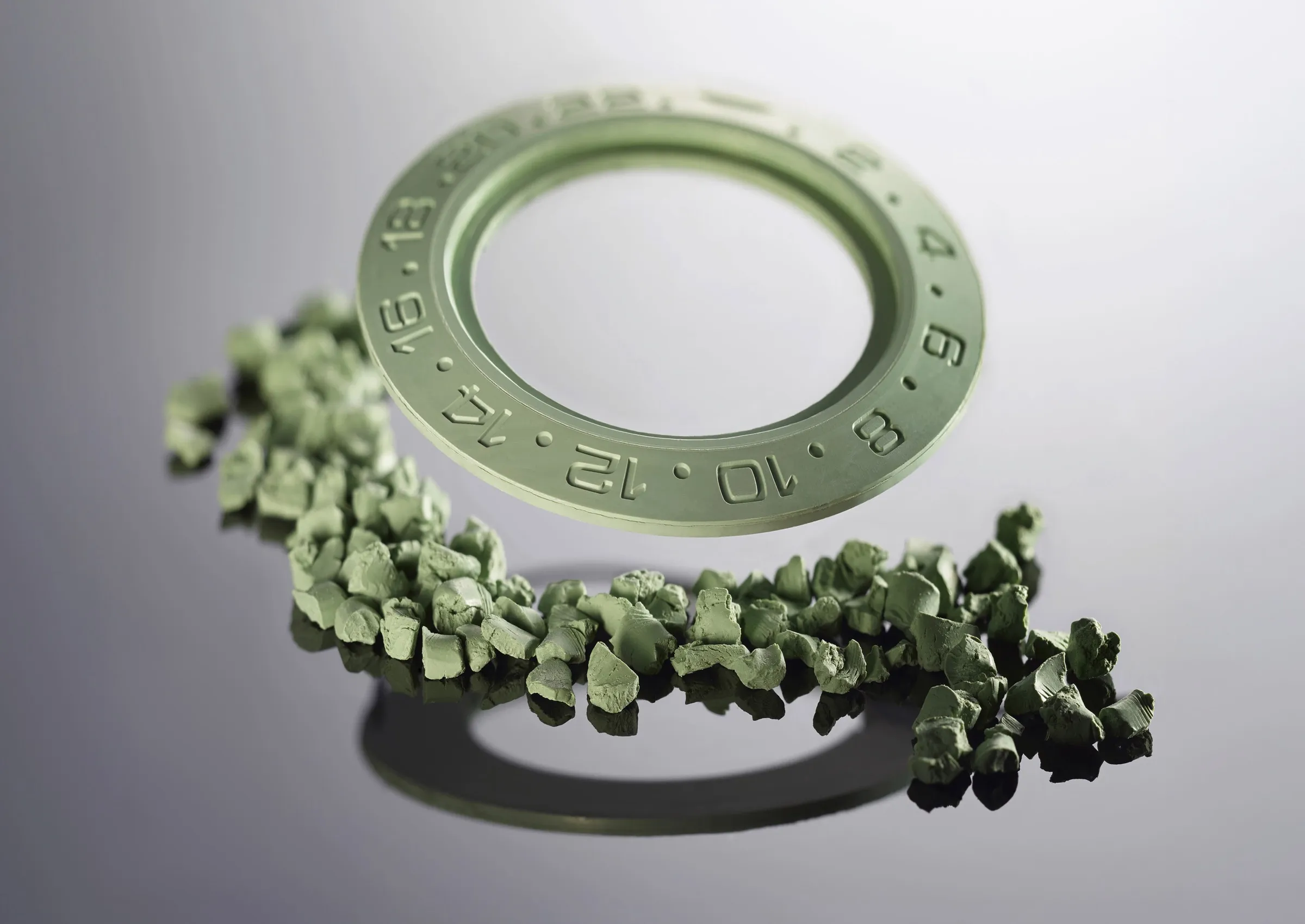
A ceramic bezel insert and the raw ceramic granules it is made from. Image: Rolex
Why there’s a Jubilee bracelet
Every steel GMT-Master II comes on a choice of two bracelets. The Oyster has three broad, flat links and looks like a tool watch. The Jubilee has five smaller links and was first made for the Datejust in 1945, which is why it reads as dressier. The GMT-Master II is the only watch in Rolex’s Professional range offered on a Jubilee, and it costs $400 more than the Oyster. The current blue-and-black, the 126710BLNR, launched on a Jubilee in 2019, replacing the 116710BLNR with the new calibre 3285 and reshaped end links that run into the case, as Hodinkee’s launch photos show.
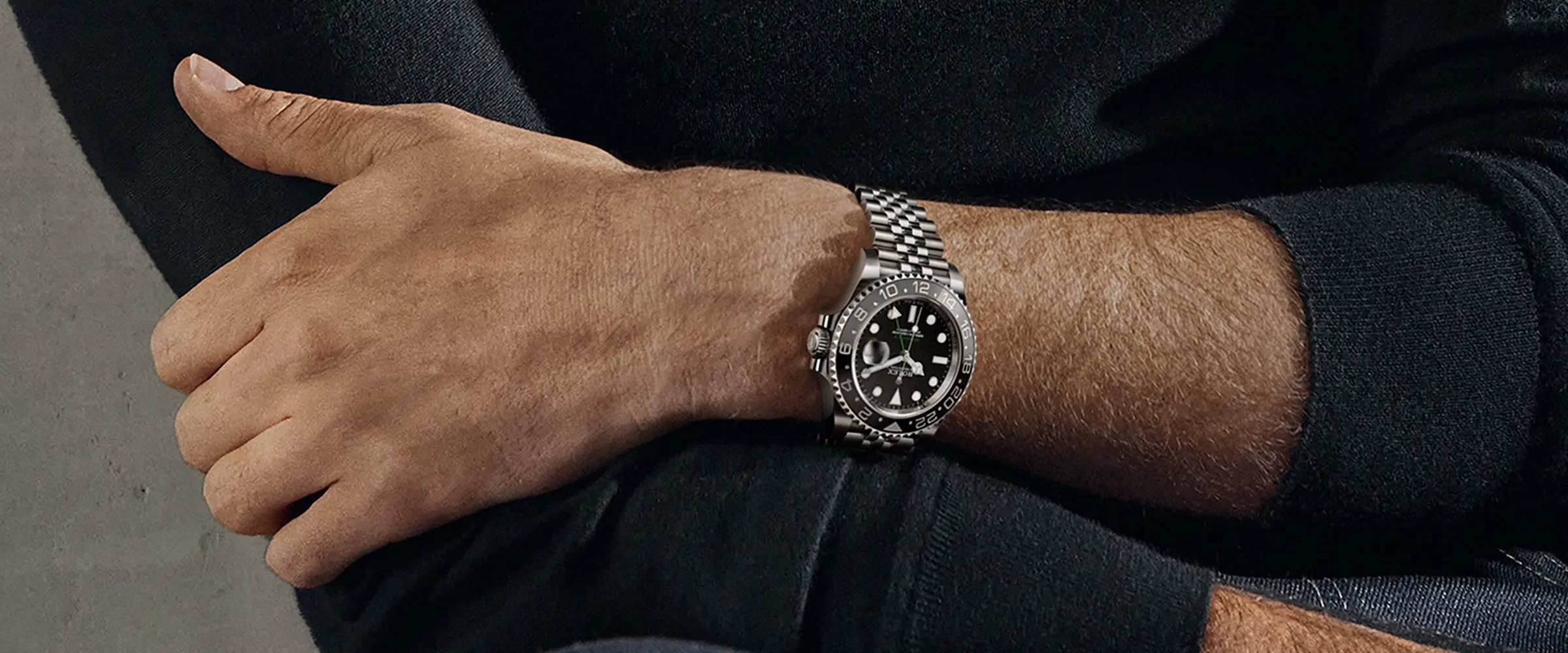
A GMT-Master II on the five-link Jubilee bracelet. Image: Rolex
Why one model has its crown on the left
The green-and-black 126720VTNR turns the case around. Rolex puts the crown and crown guard on the left side and the date at 9 o’clock, so it suits people who wear their watch on the right wrist. Rolex says it was the only Rolex with that layout when it was released.
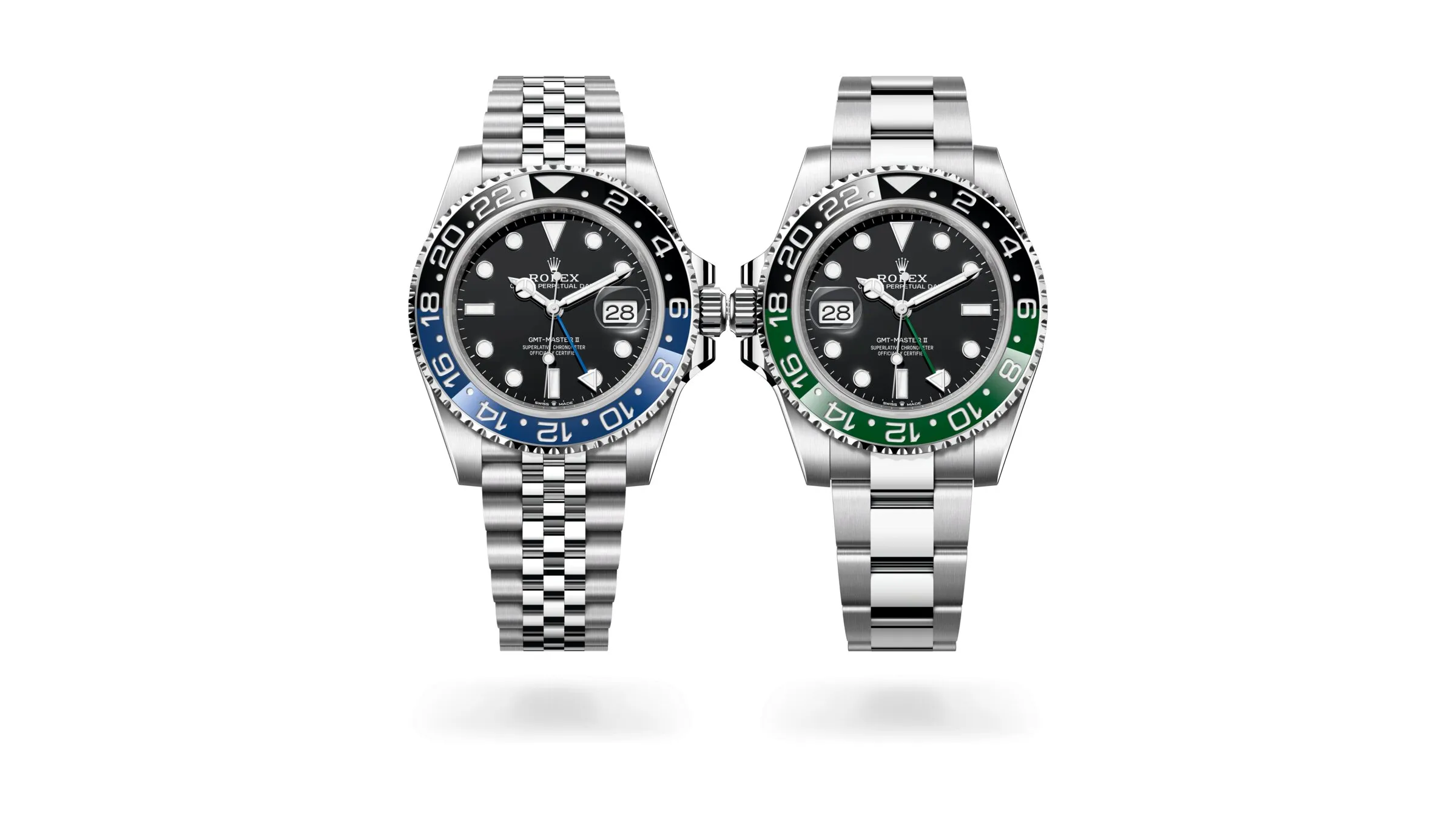
The blue-and-black bezel (left) beside the left-handed green-and-black GMT-Master II. Image: Rolex
If you wear your watch on the left and like the green bezel, the crown sits on the “wrong” side for you, and the $900 premium over the other steel models buys that layout rather than anything extra inside.
The current range and prices
Rolex sells three steel versions in Australia, each on either bracelet. Prices are the RRP on Rolex’s Australian site.
| Reference | Bezel | Oyster bracelet | Jubilee bracelet |
|---|---|---|---|
| 126710BLNR | Blue and black | $19,700 | $20,100 |
| 126710GRNR | Grey and black | $19,700 | $20,100 |
| 126720VTNR | Green and black, left-handed | $20,600 | $21,000 |
There’s no steel red-and-blue “Pepsi” in the current Australian range. Above steel, the two-tone models start at $33,600 for the 126711CHNR, in steel and Everose gold with a brown-and-black bezel, and $34,100 for the 126713GRNR in steel and yellow gold. Solid gold versions start at $85,100.
Which GMT-Master II to buy
The one to buy is the steel 126710BLNR with the blue-and-black bezel collectors call the “Batman”. It shares the lowest steel price, and with no steel red-and-blue on sale, it’s the closest thing to the classic two-colour look. Take the Jubilee if it’ll be worn with tailoring as much as on a plane, and the Oyster if it’s your everyday sports watch. The grey-and-black is the quieter choice for someone who wants the GMT function without the colour, at the same price. The green-and-black is for right-wrist wearers.
The Submariner is the watch most buyers weigh it against. The Submariner Date 126610LN costs $18,950, so the GMT-Master II is $750 more, and both have about 70 hours of power reserve and a ceramic bezel. The difference is what the bezel and case are for: the Submariner’s bezel times a dive and its case is waterproof to 300m, while the GMT-Master II’s tracks a second time zone and is rated to 100m, which is plenty for swimming. Choose the Submariner if you actually dive, and the GMT-Master II if you travel, call overseas or work across time zones.
If you want the red-and-blue bezel Rolex doesn’t currently offer in steel, the Tudor Black Bay GMT has it for $7,430 on a steel bracelet or $6,910 on a fabric strap. The Black Bay GMT has a 41mm steel case, a 200m water rating and Tudor’s own calibre MT5652 with about 70 hours of power reserve, and its hour hand jumps the same way. For less than half the price of a GMT-Master II, it’s the obvious choice if you want the look and the function and don’t need the crown on the dial.
Buying one in Australia
Only Official Rolex Retailers sell new Rolex watches and service them, and a new watch bought from one comes with Rolex’s five-year international guarantee. Rolex’s retailer locator lists them, with retailers in Sydney, Melbourne, Brisbane, Adelaide and Perth. Rolex doesn’t run an official waiting list: each retailer decides who gets a watch when one arrives, so talk to a retailer early and be clear about the reference and bracelet you want.
The other route is Rolex Certified Pre-Owned. These are second-hand watches at least two years old, sold only by official retailers that display the programme’s plaque, with a two-year international guarantee. The same locator can filter for the retailers that take part.