Omega Constellation: An Observatory Chronometer for Every Day
Where the eight stars, the pie-pan dial and the claws come from, what the movement adds, and how the 41mm and 39mm models compare with the Aqua Terra from $11,350.
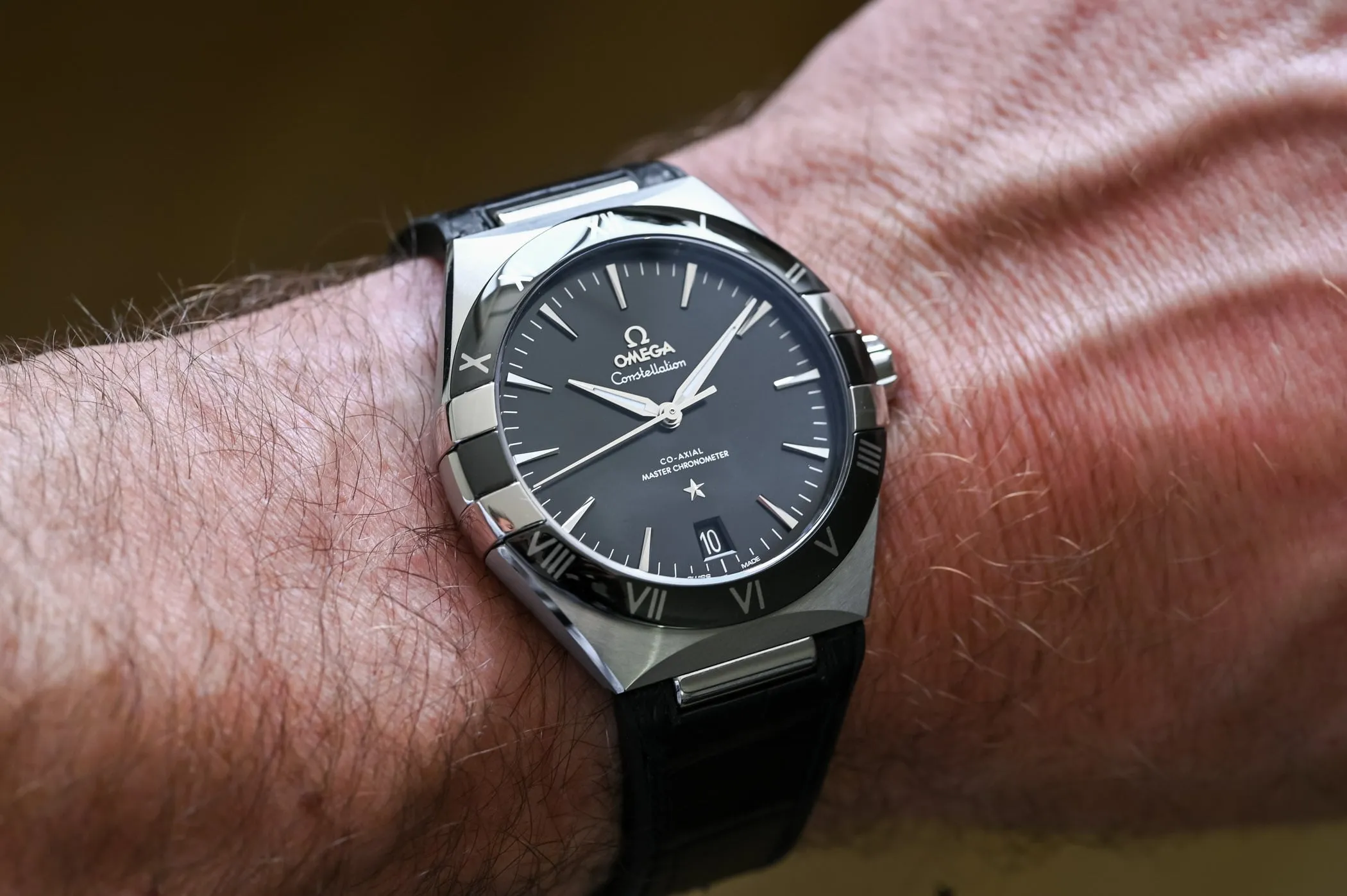
In 1952 Omega launched the Constellation as its chronometer line, an automatic watch certified for accuracy. Omega says it quickly became known as “the Swiss watch”. The eight stars on its crest stand for eight precision records Omega set at the Kew-Teddington and Geneva Observatory trials in the mid-20th century, and they’re still on the dial today.
The modern Constellation is a steel watch on a bracelet or strap, made to be worn every day, and it’s the most formal-looking watch in Omega’s main range. It suits someone who spends the week in collared shirts and wants an Omega that looks at home under a cuff. It’s one of the models in our guide to the best Omega watches.
Eight stars and a pie-pan dial
Observatory trials were where Swiss watchmakers competed to prove their movements, and Omega put its results there at the heart of the Constellation. The stars on the crest are a record of that, a reminder on every watch that the line began as a precision watch.
The first Constellations looked nothing like the current one. Omega’s own listing for a 1952 reference, the CK 2648, shows a “pie-pan” dial: the centre is raised and the edges slope away, like an upturned pie dish. Long, faceted dauphine hands sat over it, and inside was an automatic chronometer movement. It was a dress watch with a precision story, and the precision story is the part Omega has kept.
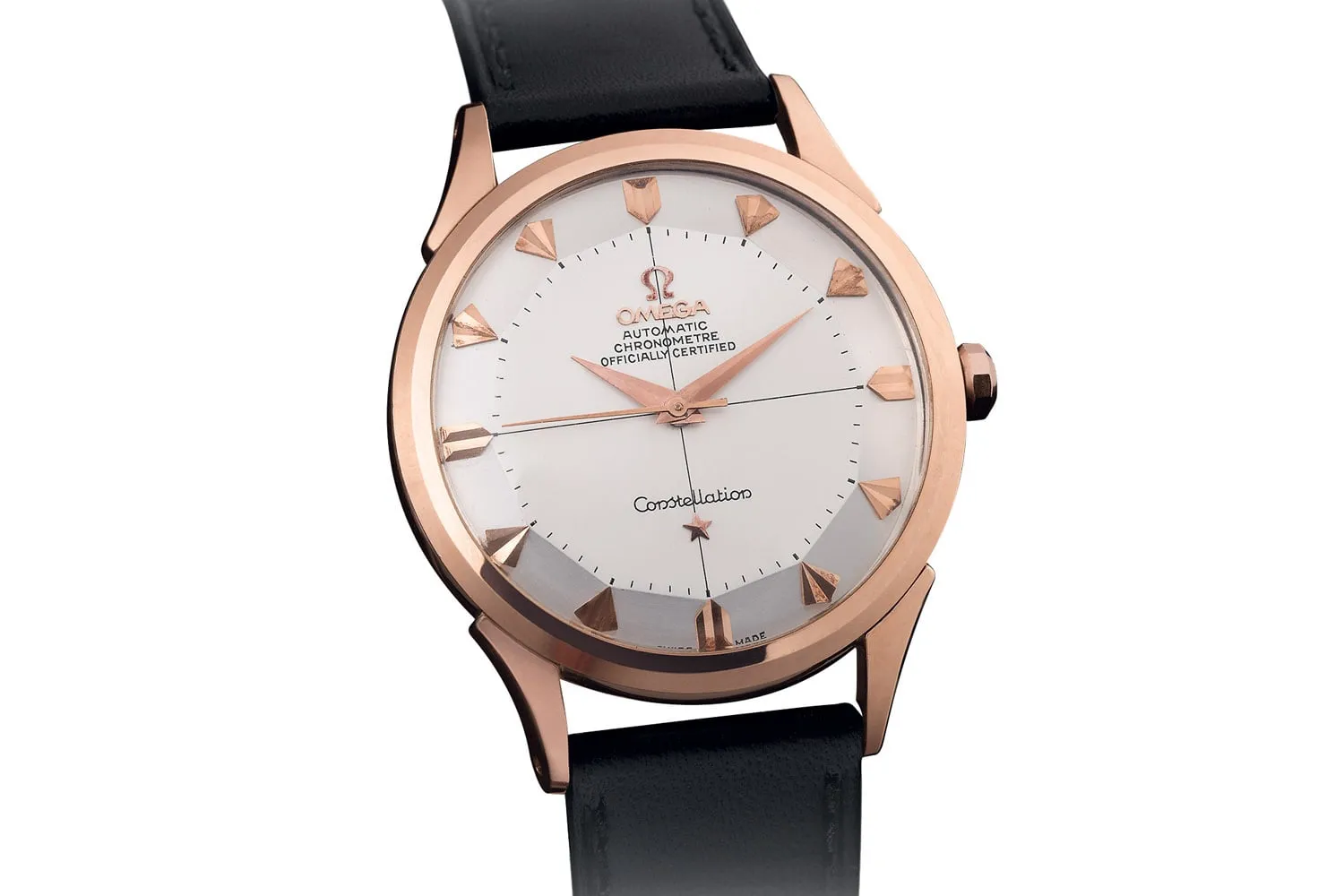
An early Constellation from 1952, with the sloped pie-pan dial and “Automatic Chronometre Officially Certified” on its face. Photo: Monochrome Watches
The claws arrived in 1982
The design most people picture is three decades younger. Omega says the claws were introduced in 1982, the year it first released the Constellation Manhattan, a quartz watch with a solid gold bezel. Omega describes the claws as conveying “both perfection and eternity”, and that’s as far as it goes: it doesn’t say they do anything. On the current watch they’re small grips on each side of the case, set beside a pair of half-moons.
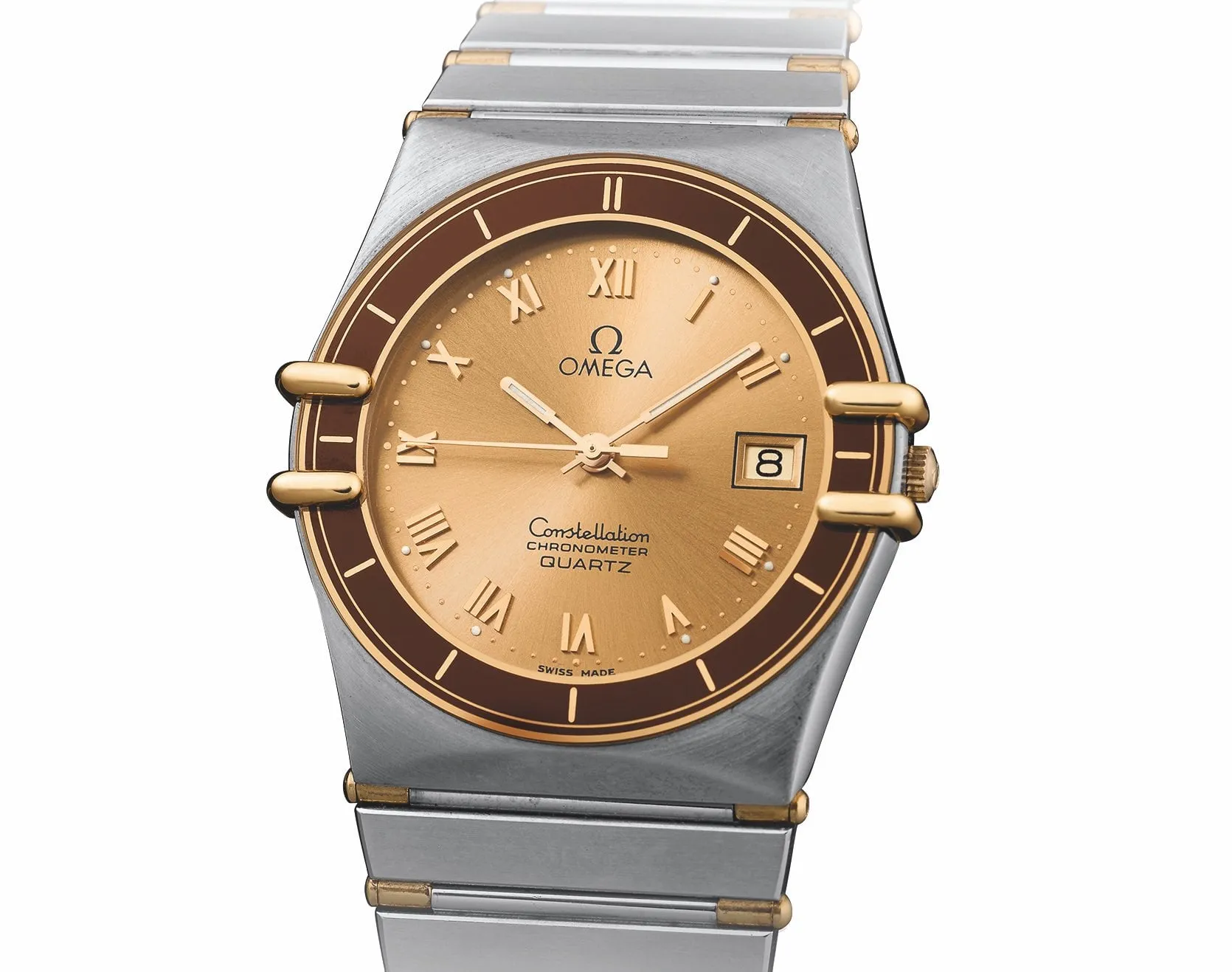
A Constellation Manhattan in steel and gold, a quartz chronometer with the claws at 3 and 9 o’clock. Photo: Monochrome Watches
The claws are the reason to buy a Constellation or to walk past one. With a suit they look deliberate and expensive in a way a dive watch never will. With shorts on a Saturday they can look as if you’ve come straight from the office.
Still a chronometer underneath
The 1952 promise of certified accuracy carries on in the current movement. Both men’s sizes use Omega’s self-winding Calibre 8900, a Co-Axial Master Chronometer tested by Omega and METAS, the Swiss federal metrology institute. Those tests include a 15,000 gauss magnetic field, so the magnets in a phone case, laptop or handbag clasp won’t throw its timekeeping off. The 60-hour power reserve means it can sit on the dresser over a weekend and still be running.
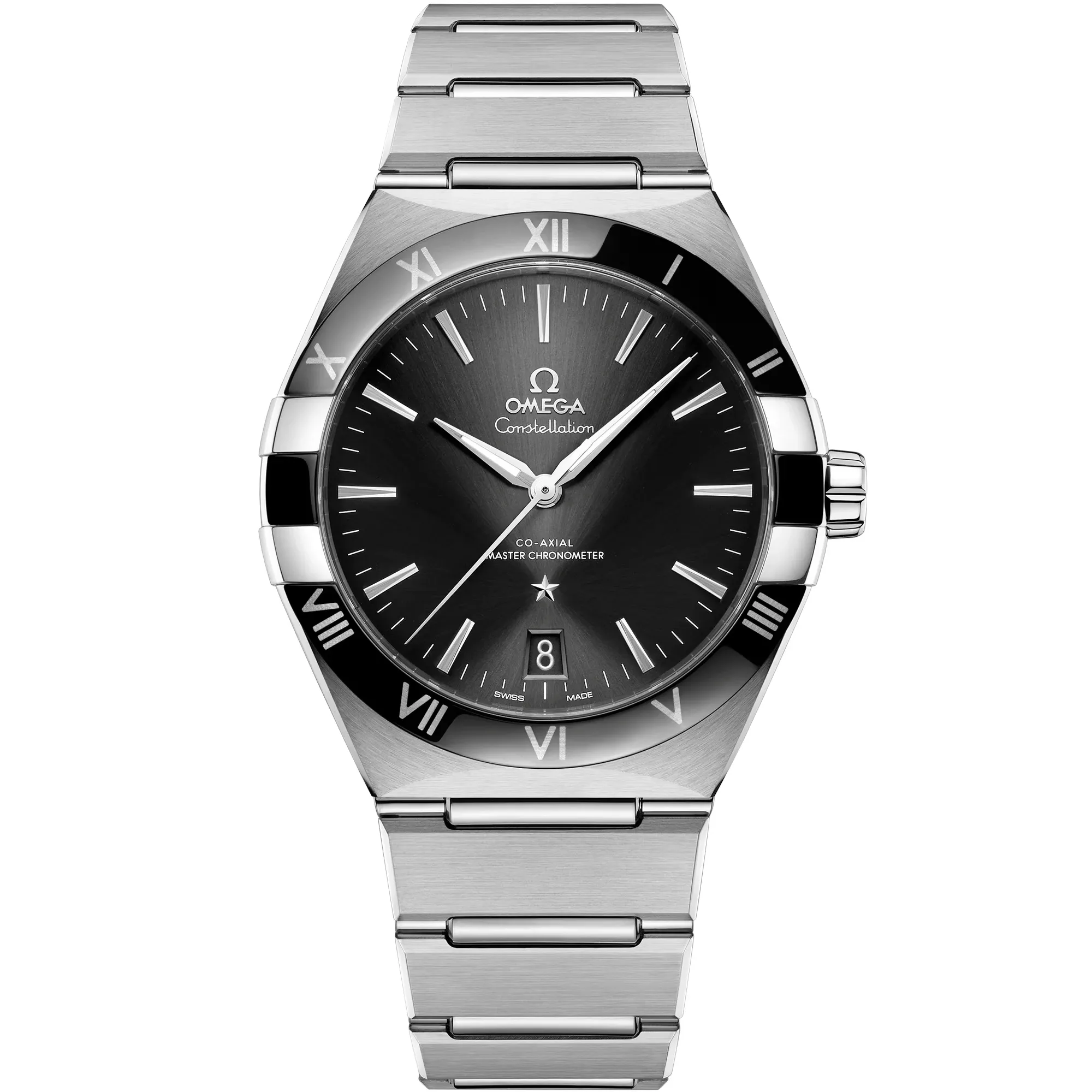
The black-dial 41mm on its steel bracelet, with the claws and half-moons at 3 and 9 o’clock. Image: Omega
The black-dial 41mm, 131.30.41.21.01.001, shows what the current range looks like:
| Spec | Constellation 41mm, 131.30.41.21.01.001 |
|---|---|
| Case | 41mm steel, 13.40mm thick |
| Movement | Calibre 8900, self-winding, Co-Axial Master Chronometer |
| Power reserve | 60 hours |
| Water resistance | 50m (5 bar) |
| Dial and bezel | Black sun-brushed dial, ceramic bezel with Liquidmetal Roman numerals |
| Bracelet | Steel, butterfly clasp with a comfort setting |
| Price | $12,975 |
The current generation arrived in 2020, the 39mm in January and the 41mm about six months later. Monochrome Watches’ review of the 41mm found it thicker than it would like for a dressy watch, though still comfortable. Water resistance is the other weak point. Fifty metres is fine for rain and washing up, but a watch that goes in the pool or the surf is better off with 150m.
The range: 41mm, 39mm and the Observatory
The 41mm is the main model. In steel it starts at $11,350 on a rubber strap, and the black-dial bracelet version above is $12,975. The 39mm uses the same movement and costs $11,750 in steel on a bracelet, the better pick for slimmer wrists or a closer fit under a shirt cuff.
Above both sits the Observatory, a 39.4mm sub-collection that shares its name with the trials behind the stars. It starts at $17,225 and climbs to $93,125 in gold, so it’s for buyers who already know they want a precious-metal Constellation.
Constellation, Aqua Terra or De Ville
The Aqua Terra is the Constellation’s closest sibling. The two cost about the same and share Calibre 8900, so the choice comes down to looks, water resistance and size.
| Constellation 41mm | Aqua Terra 150M 41mm | |
|---|---|---|
| Movement | Calibre 8900 | Calibre 8900 |
| Water resistance | 50m | 150m |
| Dial | Sun-brushed, Roman numeral bezel | Teak-pattern stripes |
| Steel on bracelet | $12,975 (black dial) | from $11,750 |
| Smaller sizes | 39mm | 34mm and 38mm (Shades) |
For most people who want one Omega for everything, the Aqua Terra is the better buy: it’s cheaper, it can swim, and its plainer face looks as right with a T-shirt as with a suit. The Constellation suits a second watch for suits and dinners, or a first watch for someone whose week is mostly collared shirts. For something dressier still, the De Ville Prestige is Omega’s classic dress watch, with a Co-Axial Master Chronometer movement from $8,100 at 40mm on leather.
Outside Omega, the obvious rival is the Rolex Datejust. The Datejust 41 in Oystersteel is $14,900 and the 36mm is $13,700, so the Constellation costs about $1,900 less at 41mm and $1,950 less at the smaller size.
Buying one in Australia
Buy from an Omega boutique or an authorised retailer, which Omega’s store locator lists, because its five-year warranty only applies with a certificate stamped by an authorised retailer.