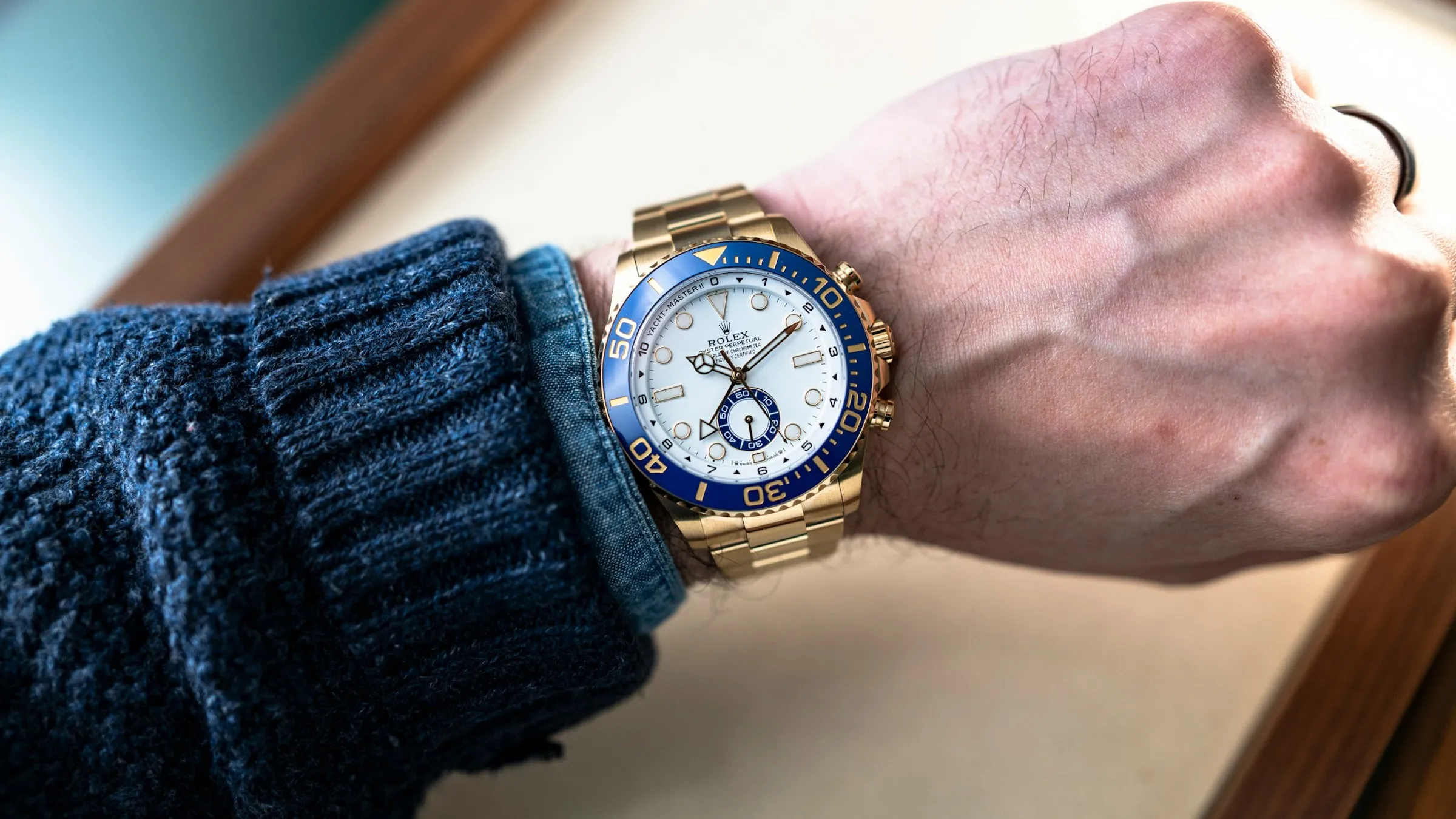
Omega Co-Axial: George Daniels's Escapement and the Master Chronometer
How an English watchmaker's escapement reached Omega in 1999, what it changes inside the watch, and what METAS actually tests before a watch can be called a Master Chronometer.
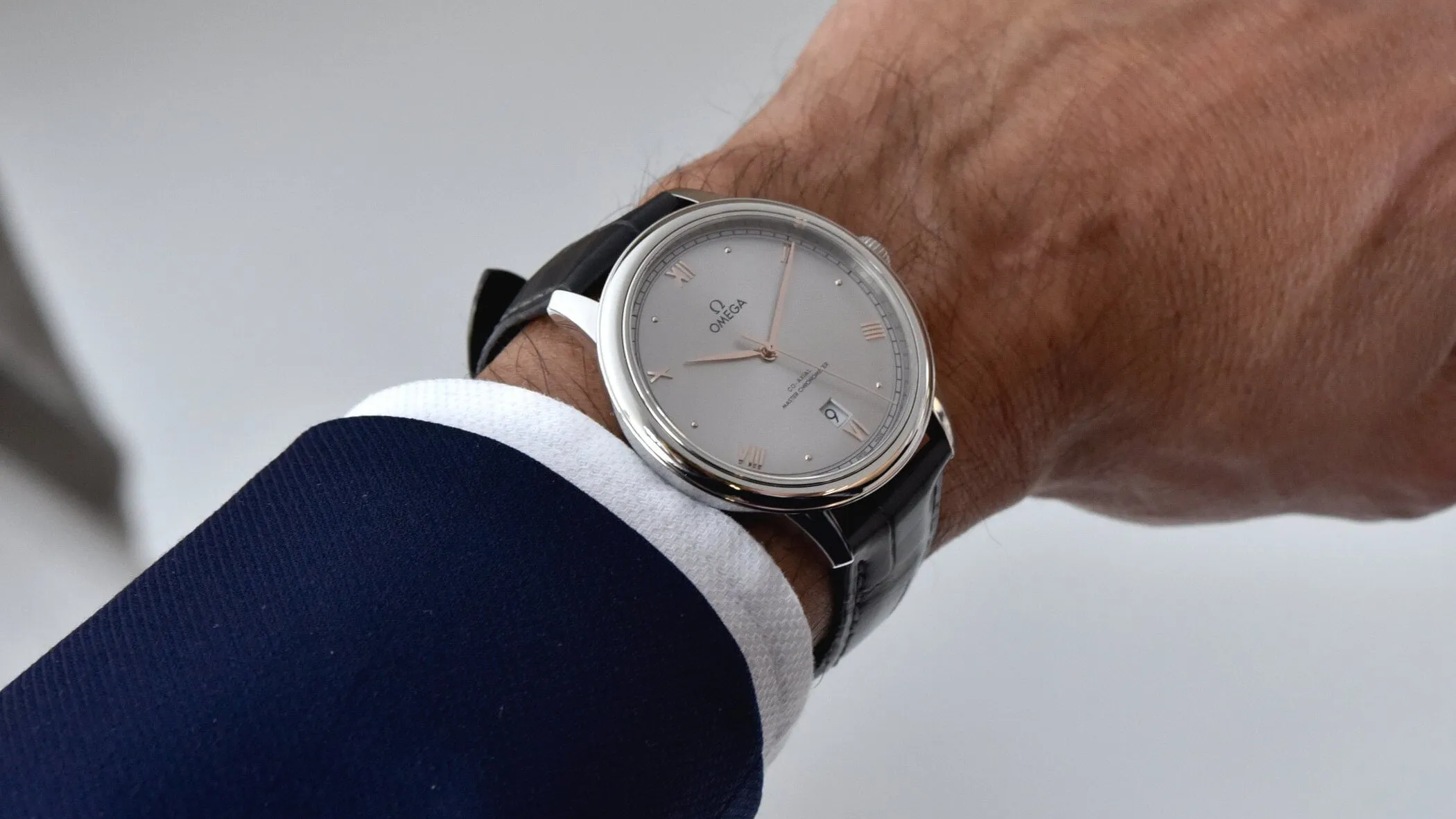
Every watch in our Omega guides, from the Moonwatch to the dressy De Ville, has the same two phrases in its full name: Co-Axial and Master Chronometer. The first is a part of the movement invented by George Daniels, an English watchmaker, and put into production by Omega in 1999. The second is a test the finished movement has to pass before it leaves the factory.
For the owner, the two add up to a watch that’s harder to knock off time. Omega says the Co-Axial escapement has smaller contact surfaces than the design most mechanical watches use, so it works with less friction and needs less lubrication, which makes it more reliable. Master Chronometer certification then holds the watch to between 0 and 5 seconds fast a day (up to 7 on some calibres), never slow, and proves it keeps time in a magnetic field of 15,000 gauss, so the magnets in a speaker or a bag’s magnetic latch won’t throw it off. It’s the reason the product pages in our Omega guide link here instead of repeating it.
What an escapement does
A mechanical watch runs on a spring. Wind it, and the mainspring stores energy that would unwind in seconds if nothing held it back. The escapement holds it back. It sits between the gears and the balance wheel, the small wheel you can see swinging back and forth through a display caseback, and it lets the gears turn one tooth at a time, once for each swing. Each time it lets a tooth go, it also gives the balance a small push to keep it swinging.
Since the 18th century almost every mechanical watch has done this with a lever escapement. The teeth of an escape wheel meet two jewelled pallet stones on a lever, and to give the balance its push, each tooth slides across the face of a stone. Sliding means friction, so those surfaces need oil, and oil thickens and wears as the years go by. That’s a large part of why a mechanical watch needs servicing at all.
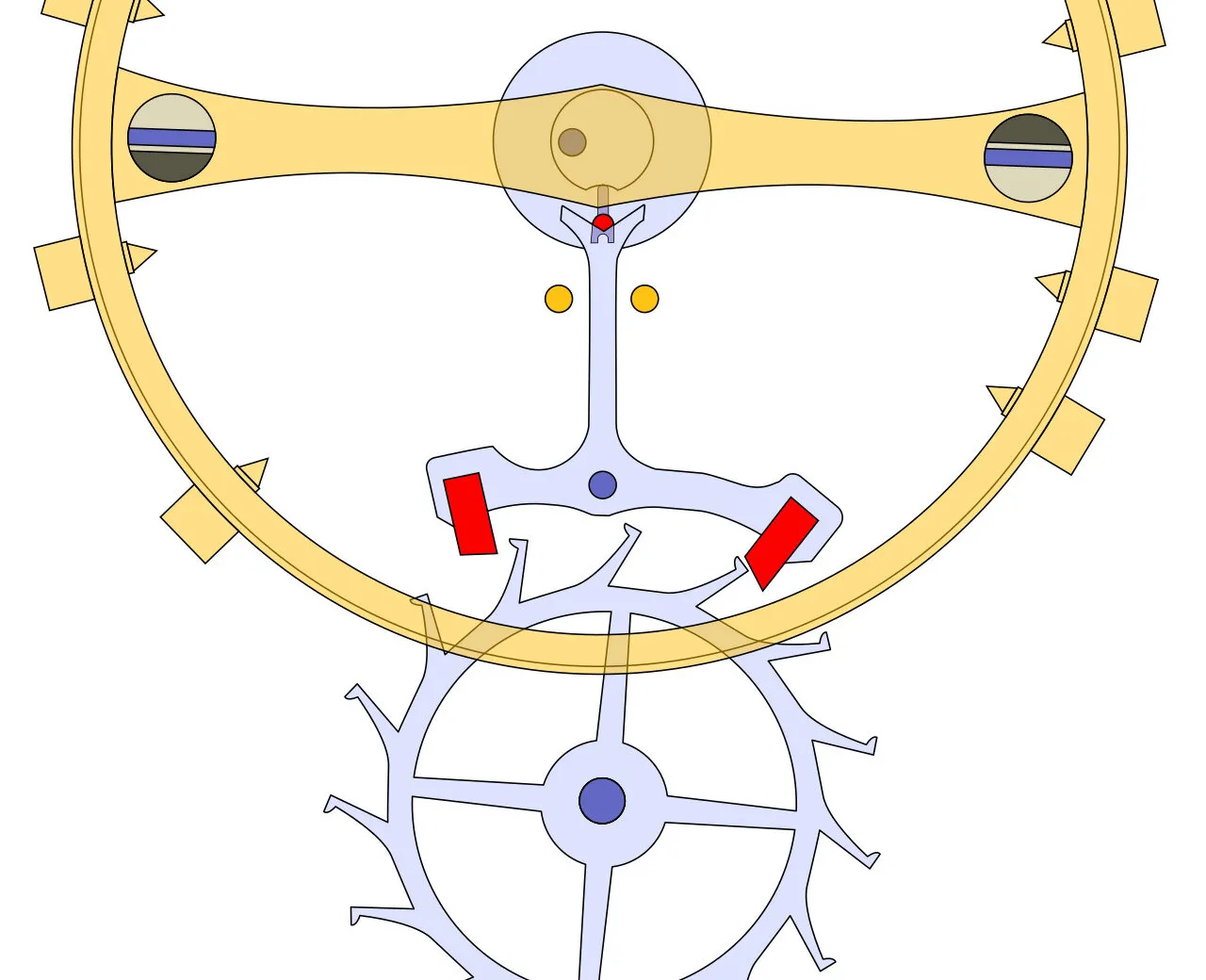
A lever escapement: the pallet fork locks and releases the escape wheel as the balance swings. Image: Fred the Oyster, CC BY-SA 4.0, via Wikimedia Commons
George Daniels’s answer
George Daniels (1926 to 2011) set out to cut that sliding. His Co-Axial escapement still has an escape wheel, pallets and a balance, but it reshapes how they meet. The name comes from a second, smaller escape wheel that shares an axis with the main one. Between them they push the balance more directly, so, as Worn & Wound explains, the parts press against each other rather than sliding across each other. Omega’s own explanation is shorter: the parts touch over smaller surfaces, so there’s less friction and less need for oil. Less, not none: a Co-Axial still takes a little oil.

George Daniels at his bench. Image: Omega
Omega released the escapement on 12 April 1999, and calls it the watch industry’s first practical new escapement in about 250 years.
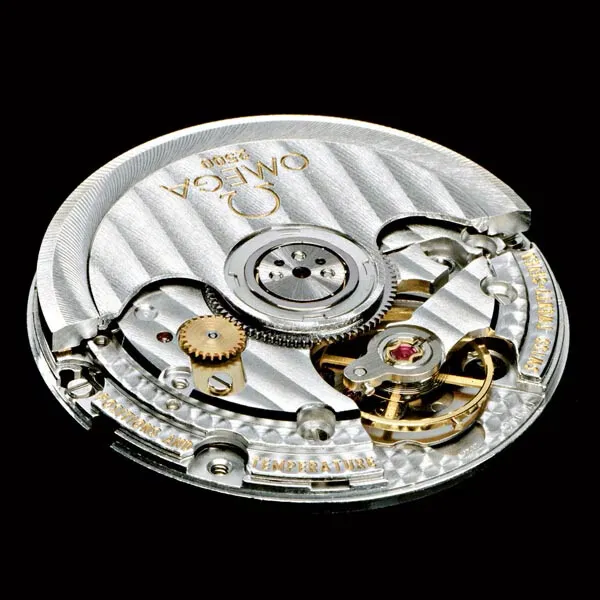
Calibre 2500, the movement Omega built the Co-Axial into in 1999. Image: Omega
From a 1999 De Ville to the whole range
The Co-Axial arrived in a 1999 De Ville limited series, reference 5931.81.23, built around Omega’s calibre 2500. Omega’s own pages disagree about which watch deserves to be called the first Co-Axial, so we’ll leave it at that.
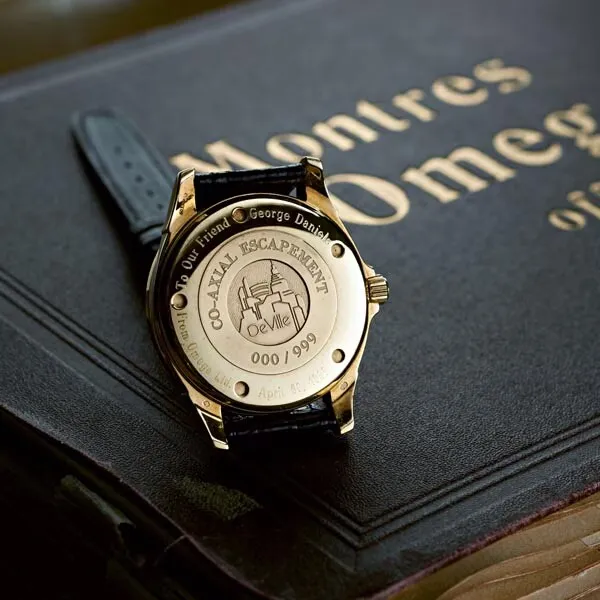
A gold 1999 De Ville Co-Axial, numbered 000/999 and engraved “To Our Friend George Daniels”. Image: Omega
The De Ville is still where Omega’s dress watches live, though it was one of the last lines to catch up: the Prestige moved to Omega’s current 8000-series calibres and became a Master Chronometer only in 2022.
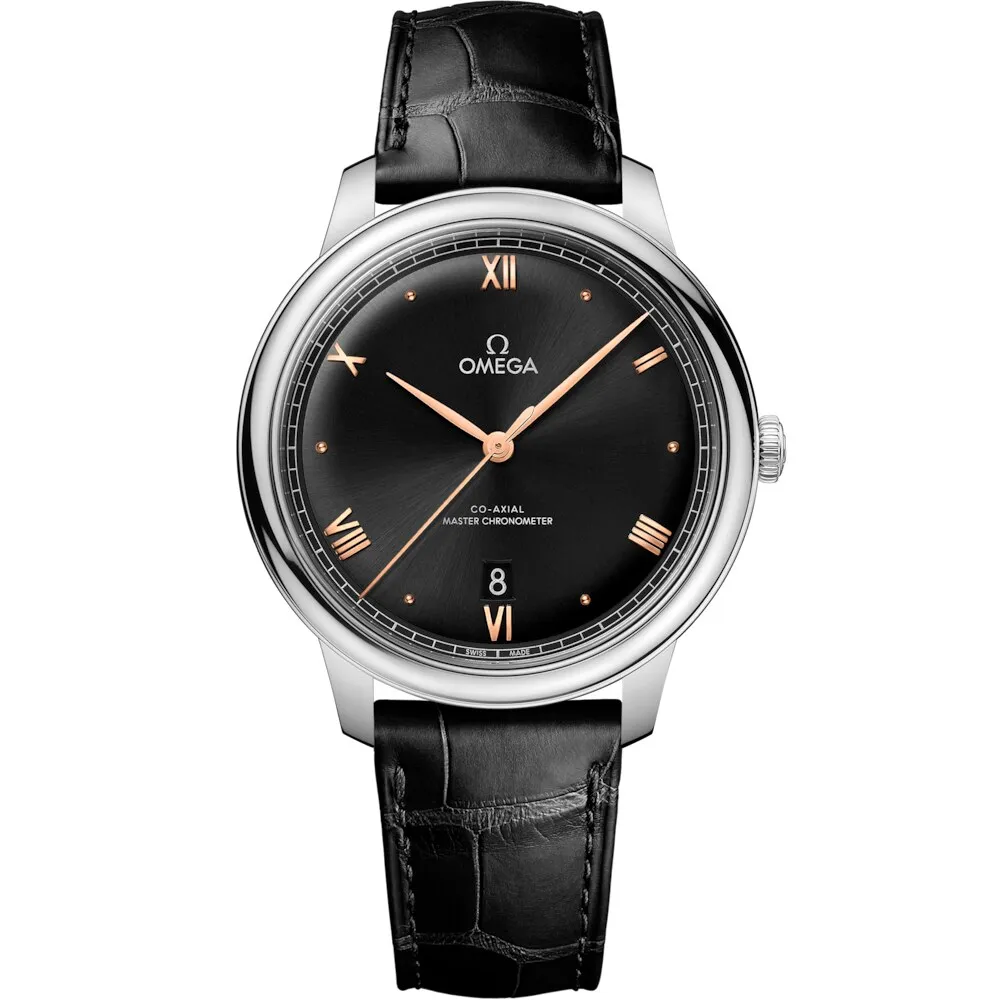
The De Ville Prestige 40mm, reference 434.13.40.20.01.001, with the calibre 8800. Image: Omega
In 2005 the escapement reached the Seamaster, when the first Planet Ocean launched with the same calibre 2500. In 2021 it reached the Speedmaster Moonwatch, swapping its calibre 1861 for the 3861. The new movement keeps the hand-wound chronograph and adds the Co-Axial escapement, a silicon balance spring and Master Chronometer certification.

The Moonwatch’s calibre 3861 through its sapphire caseback. Image: Omega
What Master Chronometer means
Swiss watchmakers have long sent movements to COSC, the official Swiss chronometer testing body, to earn the word “chronometer” on the dial. In 2015 Omega added a harder test on top, starting with the Globemaster, and called it Master Chronometer.
A Master Chronometer movement first has to be certified as a chronometer. Then it goes through eight tests over ten days set by METAS, the Swiss Federal Institute of Metrology, first as a bare movement and then cased as the finished watch. Two results matter most to whoever ends up wearing it:
- Accuracy: between 0 and 5 seconds fast a day, or up to 7 depending on the size of the calibre, and never slow.
- Magnetism: the watch has to keep running accurately in a magnetic field of 15,000 gauss. Omega calls magnetism arguably the biggest problem in watchmaking: speakers, magnetic latches and even fridge magnets can make a mechanical watch run fast, and its service centres say fixing magnetised watches is one of their largest workloads. A Master Chronometer carries on keeping time beside them.
Having METAS involved matters because it’s a government body, not Omega. The watch isn’t only meeting Omega’s own standard.
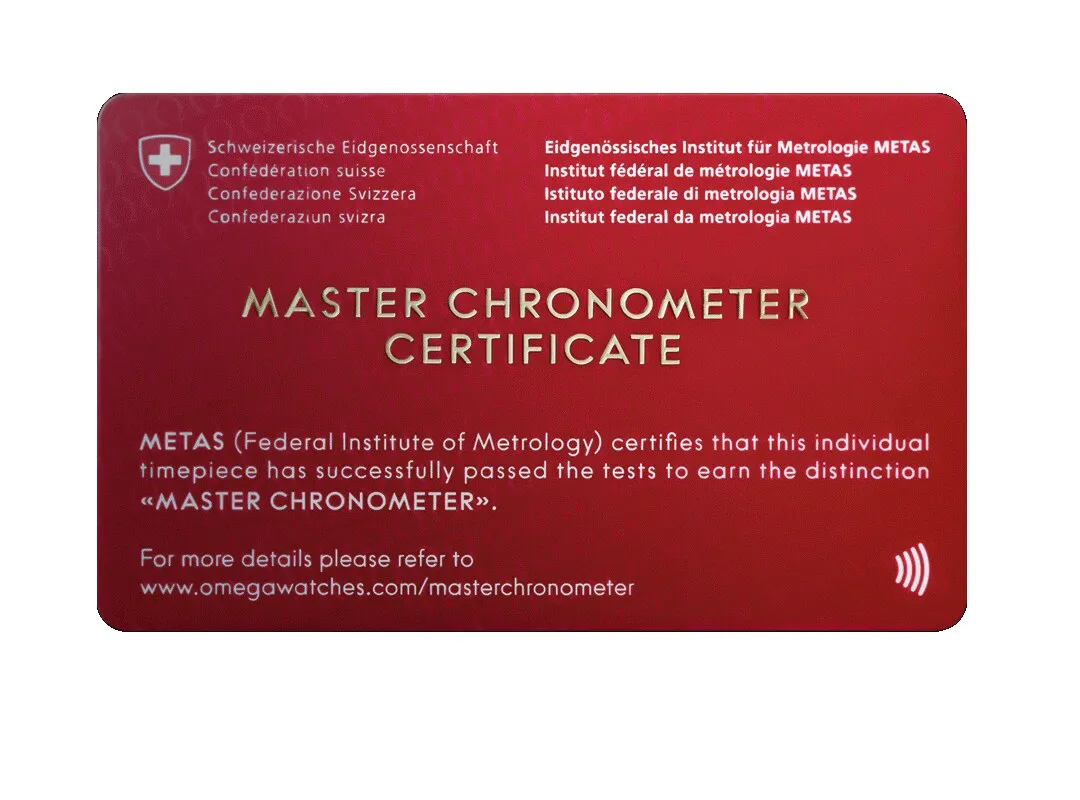
The METAS Master Chronometer certificate card. Image: Omega
What it changes for the owner
The Co-Axial doesn’t change how often an Omega needs looking after. Omega’s advice is the same for every watch it sells: a water-resistance check each year and a full service every five to eight years, depending on how it’s worn. You’ll see longer intervals claimed for the Co-Axial online, but Omega doesn’t make that claim, so we don’t either. What the escapement gives you, by Omega’s account, is a movement with less friction and less dependence on oil between those services. Every new Omega also carries a five-year warranty, as long as the certificate is dated and stamped by an authorised retailer.
Every mechanical Omega in our guides uses a Co-Axial Master Chronometer movement:
- Speedmaster Moonwatch: calibre 3861, hand-wound chronograph.
- Seamaster 300: calibre 8912.
- Seamaster Diver 300M: calibre 8800.
- Seamaster Planet Ocean: calibre 8912.
- Seamaster Aqua Terra: calibre 8900.
- Constellation: calibre 8900.
- De Ville Prestige: calibre 8800 in the 40mm, and 8810 with a power reserve indicator in the 41mm.
For which of them suits you, start with the Omega guide.