Omega Seamaster Planet Ocean: From the Seamaster 300 to the Deepest Dive
How a 1957 dive watch shaped the 2005 Planet Ocean, how an Ultra Deep reached the bottom of the Mariana Trench, and how the 42mm Planet Ocean 600M compares with the Diver 300M from $13,575.
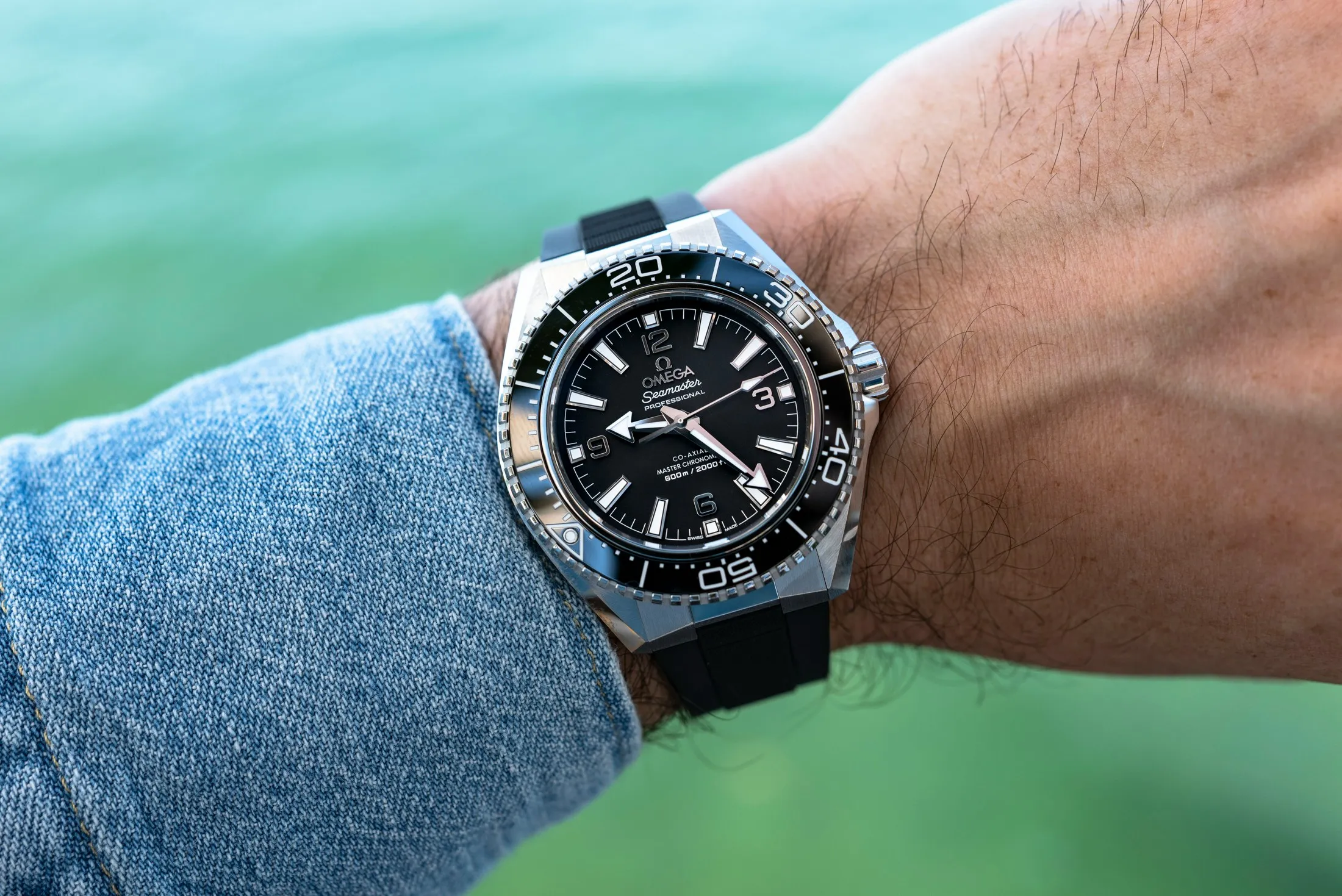
In 2005 Omega released a new dive watch, the Seamaster Planet Ocean. Omega says it took its design from the Seamaster 300 of 1957, the company’s first professional divers’ watch. It also brought the Co-Axial escapement into the Seamaster line, six years after Omega first put it into production.
The Planet Ocean 600M is still 42mm, the same size as the 2005 original, and is now in its fourth generation. It’s water resistant to 600m and costs from $13,575 in Australia. It suits someone who wants a serious, deep-rated diver in a size that still wears like an everyday watch. It sits in our guide to the best Omega watches.
A Seamaster 300 for a new century
The Seamaster 300 arrived in 1957, the same year as the Speedmaster and the Railmaster, as Omega’s first watch for professional divers. It had a jet-black dial with broad arrow hands and sharp-tipped hour markers. Nearly 50 years later, Omega went back to it as the starting point for the Planet Ocean.
The new watch carried the movement story forward too. The Co-Axial escapement, developed by the English watchmaker George Daniels, went into production in 1999. In 2005 it reached the Seamaster in the Planet Ocean’s calibre 2500.
Orange has been part of the Planet Ocean from the start. Omega calls it a signature colour of the collection since 2005, and when the fourth generation arrived in 2025, twenty years on, it came with an orange ceramic bezel.
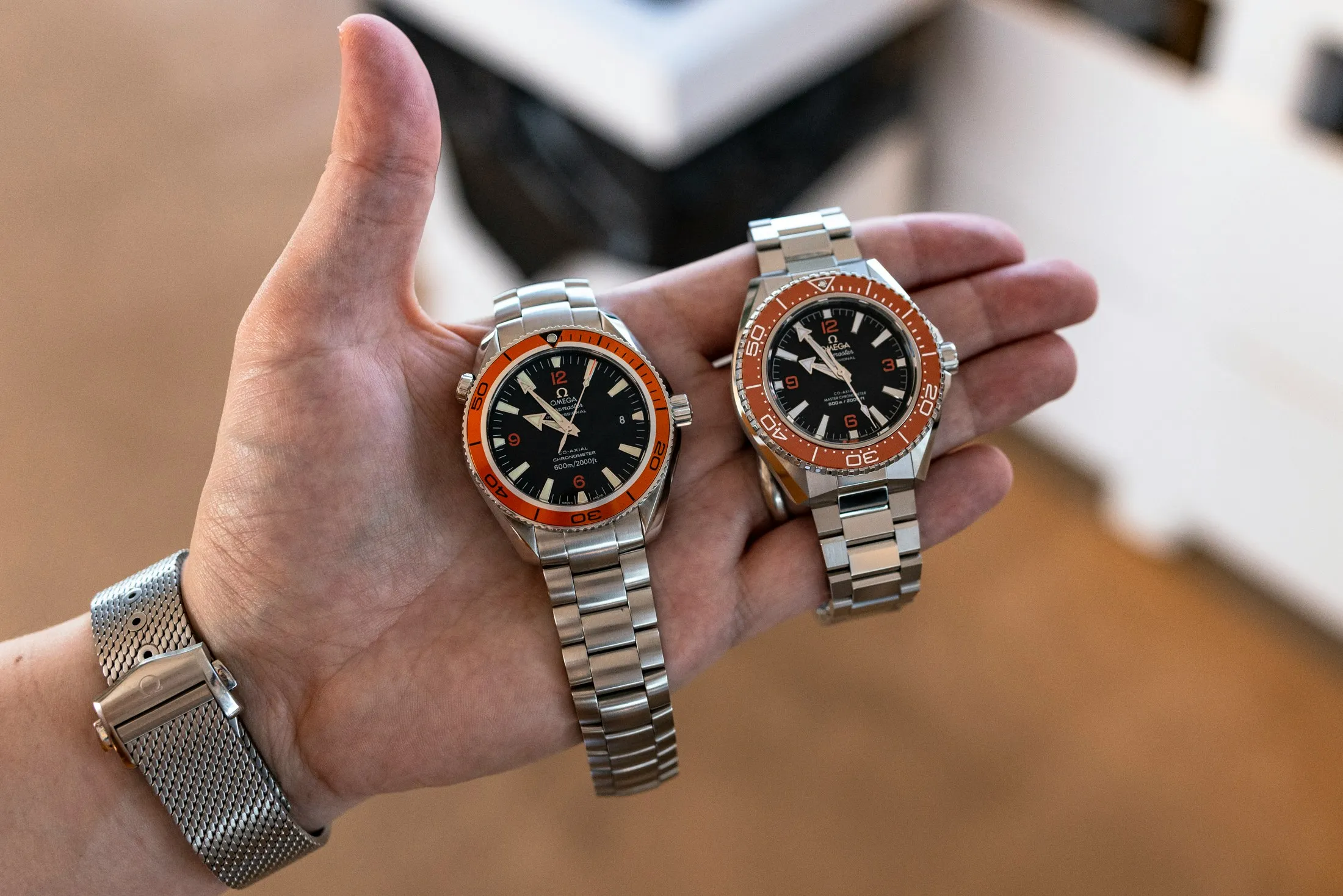
A first-generation Planet Ocean (left) beside the 2025 model. Photo: Hodinkee
What each part of the 600M is for
The 600m rating is the headline, and it’s about margin rather than a depth you’ll reach. Recreational divers stay inside 40m, so on any dive you’ll do, the Planet Ocean is working far from its limit.
The bezel is ceramic, which keeps its colour in sun and salt water and resists the scratches that wear an aluminium bezel down. Like any diving bezel, it turns one way only, so a knock can only make a dive look longer, never shorter.
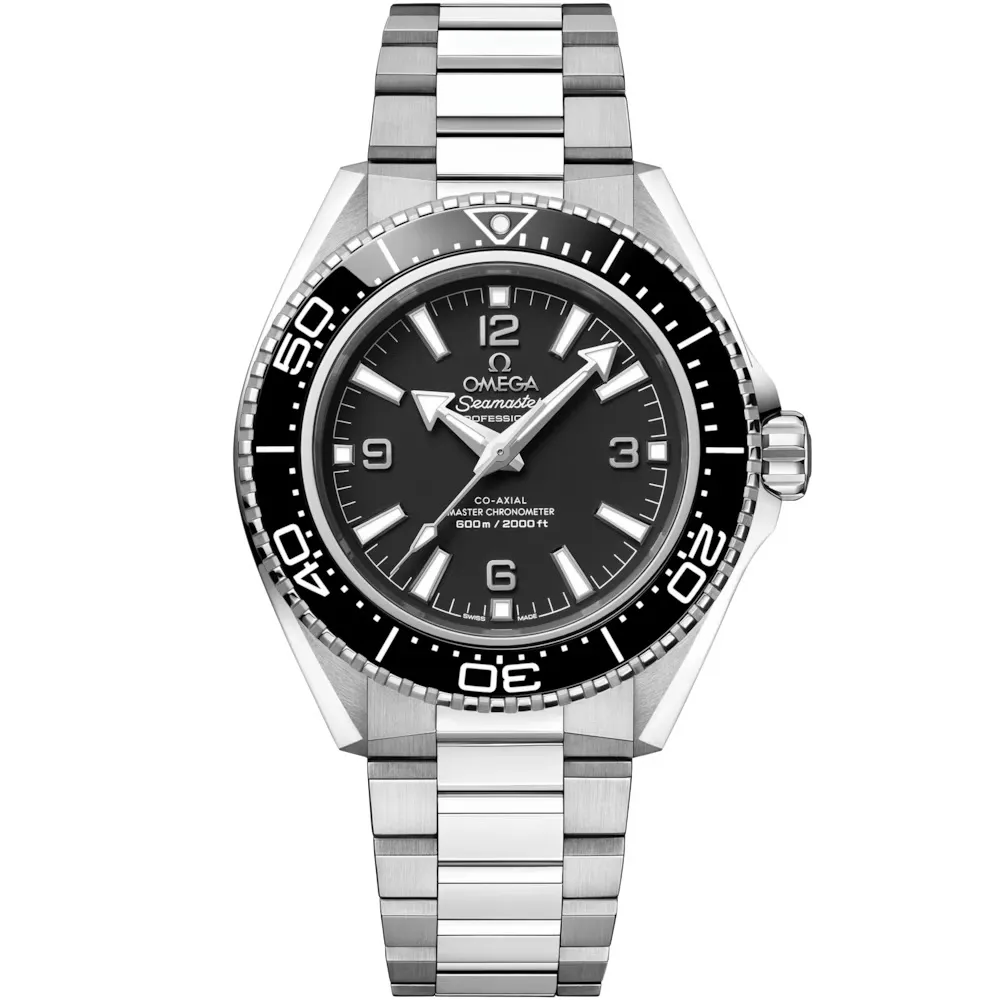
The Planet Ocean 600M in black on its steel bracelet. Image: Omega
Inside is calibre 8912, a Co-Axial Master Chronometer tested with METAS, the Swiss federal metrology institute, and resistant to magnetic fields of 15,000 gauss. Its 60-hour power reserve means the watch can sit in a drawer from Friday evening to Monday morning and still be running when you pick it up. The caseback is grade 5 titanium and the crystal is flat sapphire.
The 2025 redesign also took two things away. As Hodinkee’s hands-on points out, the new Planet Ocean has no date and no helium escape valve, a part that only matters to saturation divers decompressing after days in a pressurised chamber. It comes on a rubber strap or a steel bracelet, with orange or blue accents.
The Ultra Deep and the bottom of the ocean
In 2019 the explorer Victor Vescovo took his submersible to the bottom of the Challenger Deep in the Mariana Trench, the deepest known point in the ocean, as part of the Five Deeps Expedition. Two Planet Ocean Ultra Deep watches went down with the submersible, spent the 12-hour mission at about 10,930m and survived. Omega first gave the depth as 10,925m and revised it to 10,935m in 2020, and it calls the dive a world record.
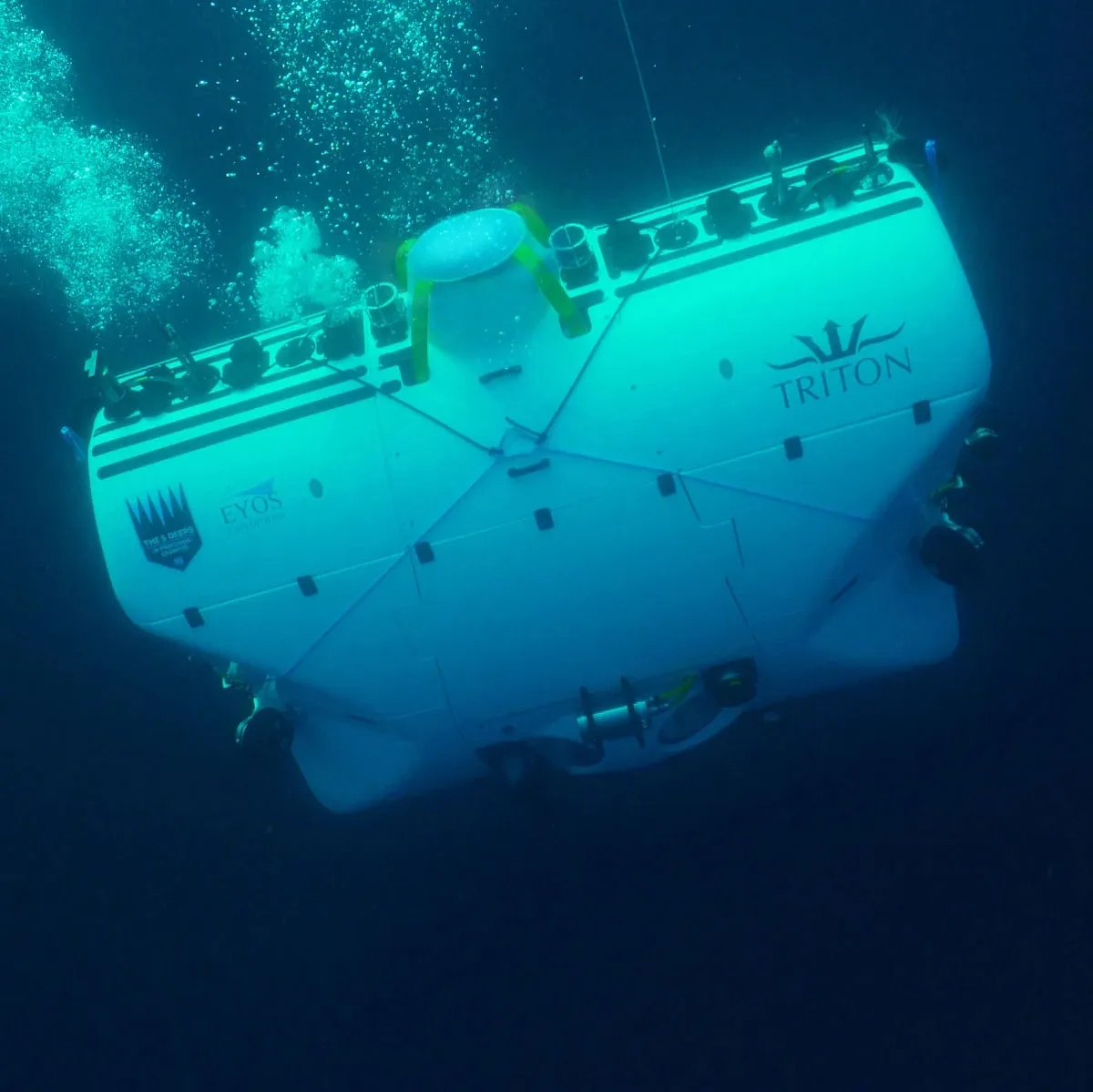
The Five Deeps Expedition submersible on its way down. Image: Omega
The production Planet Ocean 6000M Ultra Deep followed: 45.5mm, rated to 6,000m and METAS-certified, in Omega’s O-MEGASTEEL or titanium. It’s for people who want the extreme version, and it’s too big and too dear to be the everyday pick.
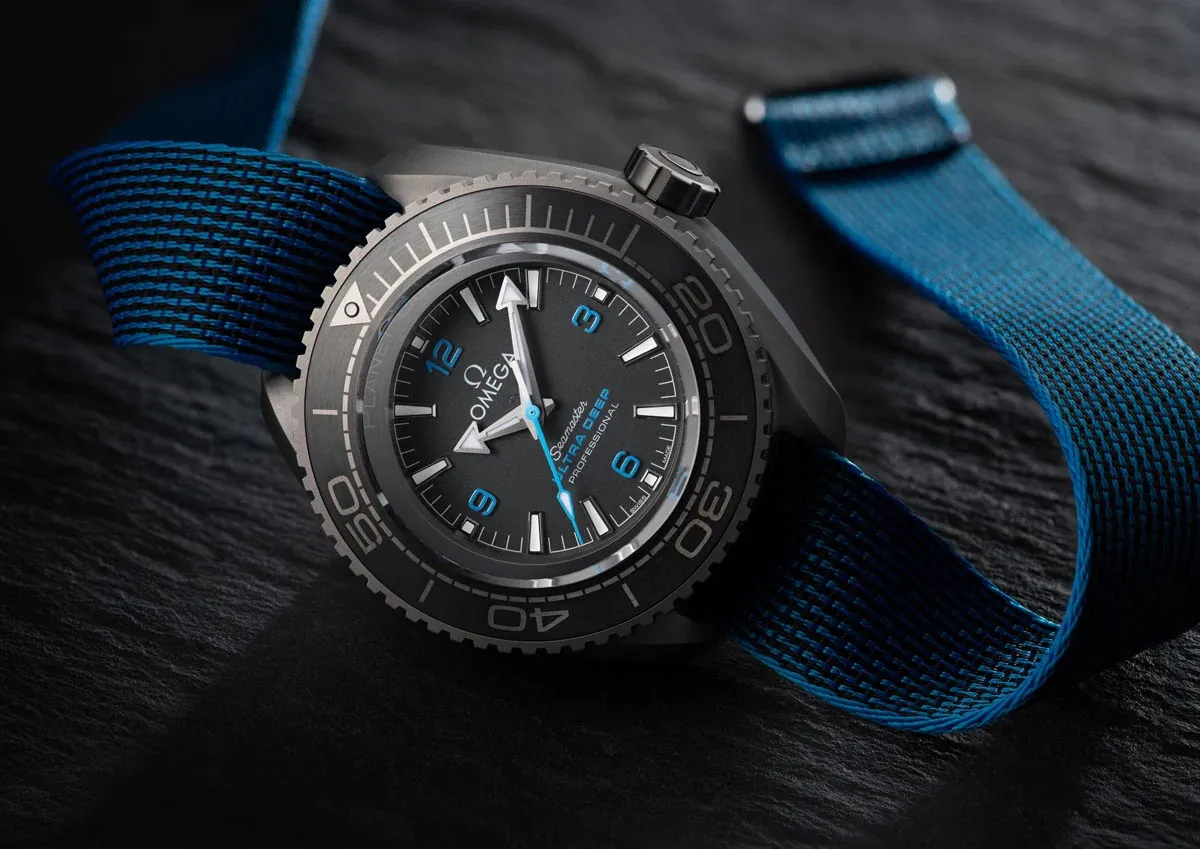
The Planet Ocean 6000M Ultra Deep in titanium. Image: Omega
Planet Ocean prices in Australia
Omega’s Australian catalogue lists seven steel 42mm Planet Ocean 600M references, from $13,575 on rubber to $15,000 on the steel bracelet. The reference 217.30.42.21.01.001 is $14,575. The larger models cost considerably more.
| Model | Case | Price |
|---|---|---|
| Planet Ocean 600M, steel | 42mm | $13,575 to $15,000 |
| Planet Ocean 600M GMT, black ceramic, rubber | 45.5mm | $26,325 |
| Planet Ocean 6000M Ultra Deep, O-MEGASTEEL | 45.5mm | $21,875 to $23,075 |
| Planet Ocean 6000M Ultra Deep, titanium, NATO strap | 45.5mm | $24,100 |
Prices are Omega’s Australian RRPs, checked in November 2026; the Planet Ocean catalogue has every reference.
Omega’s five-year warranty applies only with a card stamped by an authorised retailer, which is the real cost of a grey-market discount.
Planet Ocean, Diver 300M or Seamaster 300
The Planet Ocean’s reputation as the big Seamaster doesn’t hold at 42mm. It wears almost exactly like the Seamaster Diver 300M: a quarter of a millimetre thicker, but more than two millimetres shorter from lug to lug, which matters more on a smaller wrist.
| Planet Ocean 600M | Diver 300M | |
|---|---|---|
| Case | 42mm steel | 42mm steel |
| Thickness | 13.79mm | 13.56mm |
| Lug to lug | 47.5mm | 49.9mm |
| Lug width | 21mm | 20mm |
| Water resistance | 600m | 300m |
| Movement | Calibre 8912 | Calibre 8800 |
| Power reserve | 60 hours | 55 hours |
| Price | $13,575 to $15,000 | $9,925 to $10,525 |
The Diver 300M is the better buy for most people. It costs $3,650 less on rubber and $4,475 less on the bracelet, and its wave dial and helium escape valve, which the Planet Ocean no longer has, give it more character. Choose the Planet Ocean if you want the deeper rating, the longer power reserve and the plainer, orange-accented look.
The 41mm Seamaster 300 is the other sibling. It runs the same calibre 8912 and costs $12,550 on a steel bracelet, $2,450 less than a steel Planet Ocean on its bracelet, with a vintage look and a 300m rating.
Among the rivals, the Rolex Submariner costs from $16,850, or $18,950 with a date, for a 300m rating and the name everyone recognises. The titanium Tudor Pelagos is rated to 500m and costs $8,470, a lighter and cheaper route to a serious diver.
The Planet Ocean also has a screen history. Daniel Craig wears one in Casino Royale before switching to a Seamaster 300M, a story told in our guide to James Bond’s watches.