Omega Seamaster 300: Omega's First Professional Dive Watch
Why it has broad arrow hands and a star on the crown, where Cousteau's divers come in, and what the 41mm steel model with Calibre 8912 costs in Australia.
In 1957 Omega launched three professional watches at once: the Speedmaster, with a tachymeter bezel Omega says was meant for racing drivers, the Railmaster, and the Seamaster 300 for divers. Omega calls the Seamaster 300 its first professional divers’ watch, and within a few years, Omega says, Jacques Cousteau’s divers were wearing it on the floor of the Red Sea.
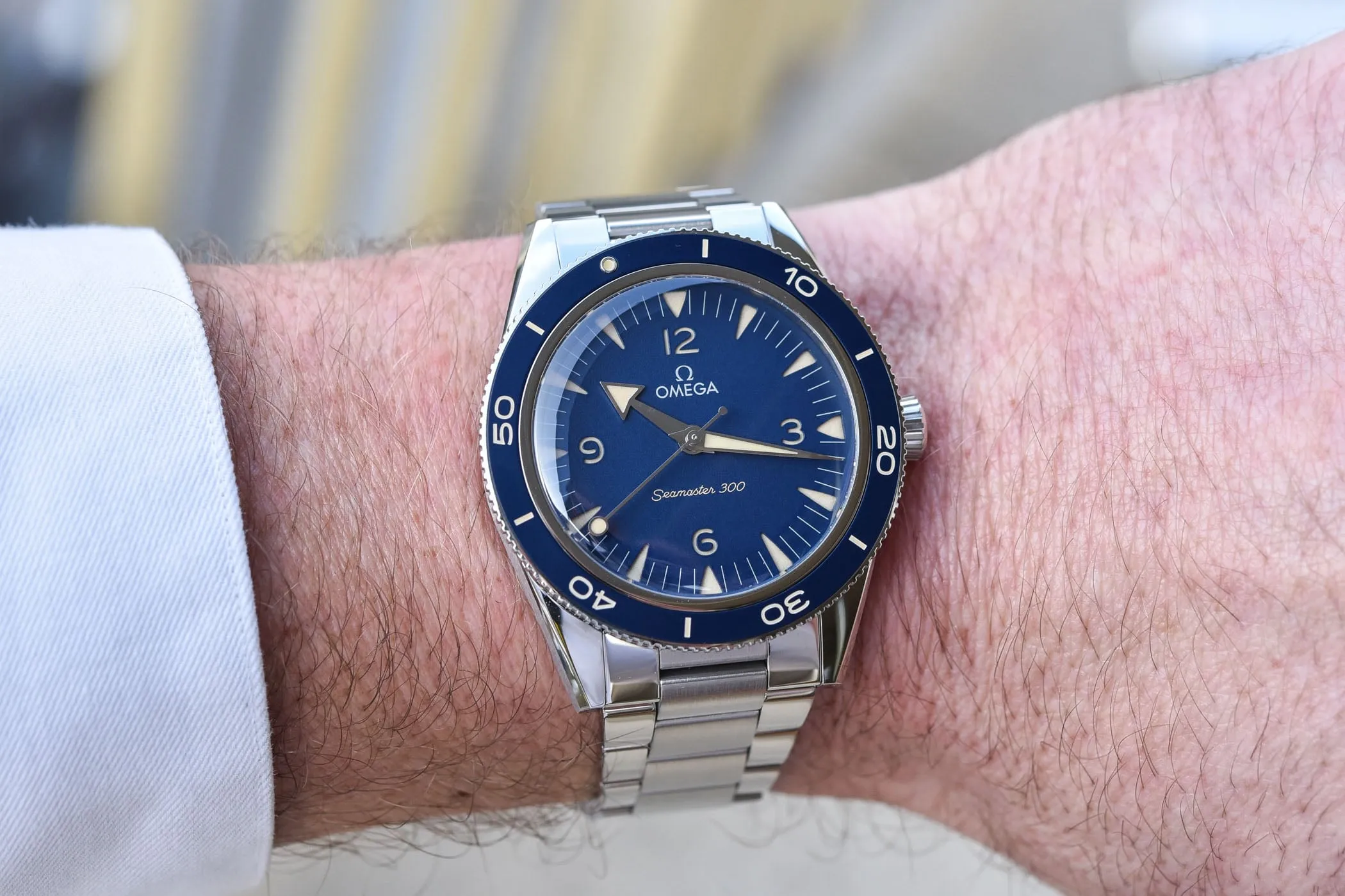
The Seamaster 300 Omega sells today is a 41mm steel watch that keeps the black dial and broad arrow hands of the original but runs on a modern Master Chronometer movement. At $12,550 on a bracelet, it suits someone who wants a 1950s diver’s looks without an old watch’s fragility. It sits in our guide to the best Omega watches.
From a watch for town and country to a diver’s tool
The Seamaster name is older than the dive watch. Omega launched the first Seamaster in 1948, the year the company turned 100, and drew on its wartime work, when it supplied most of the water-resistant watches worn by RAF pilots and navigators. Omega pitched the result as a watch for “town, sea and country”: something you could swim in, but mostly an everyday watch.
The Seamaster 300 was different: a watch for people who worked underwater. After it, the Seamaster name came to mean dive watches above all, from the Seamaster Diver 300M of 1993 to the Planet Ocean of 2005.
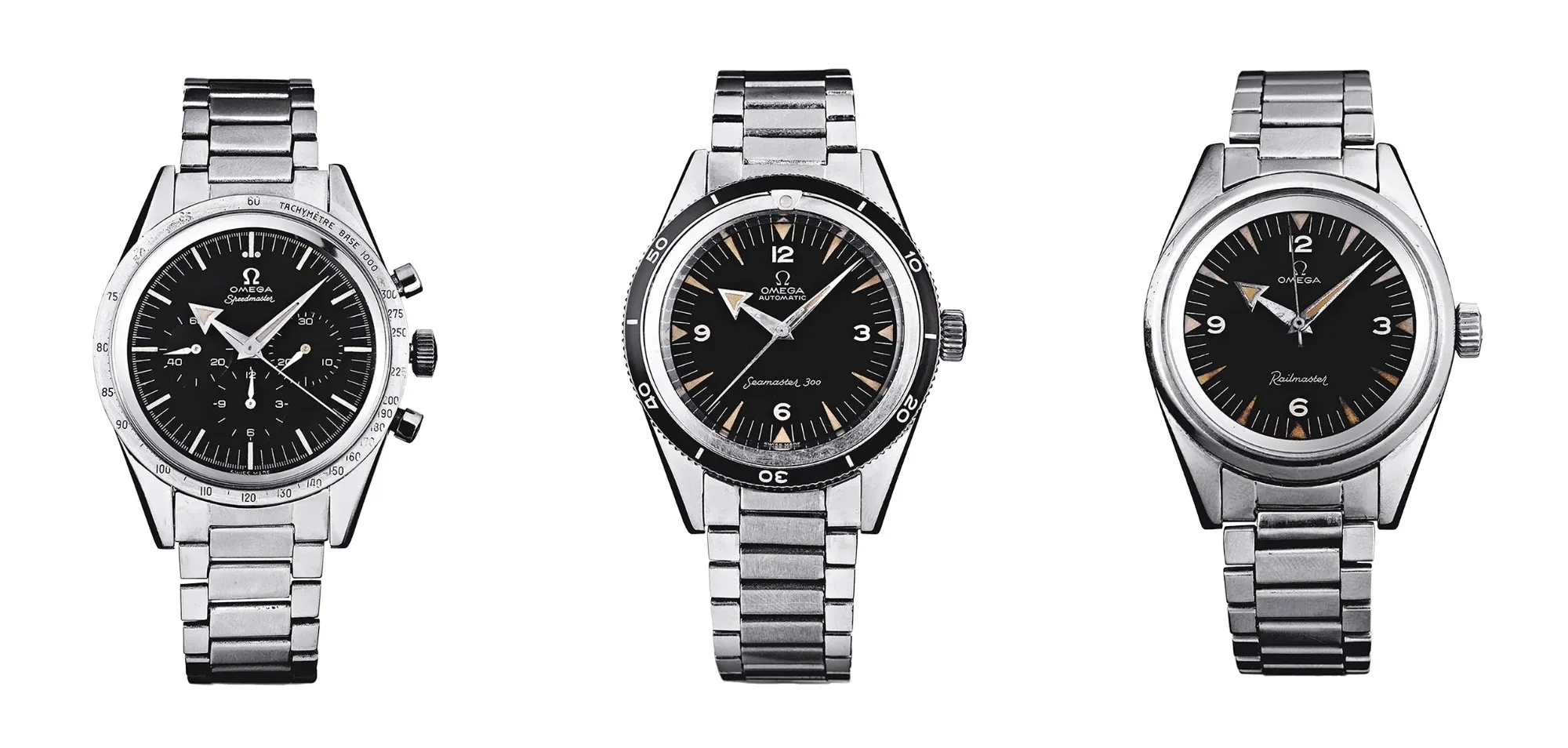
The 1957 Professional line: Speedmaster, Seamaster 300 and Railmaster. Image: Omega
Cousteau’s divers in the Red Sea
In the summer of 1963, Jacques-Yves Cousteau ran Precontinent II, an experiment in living on the seabed, with his divers working from a station built underwater in the Red Sea. According to Omega’s history of the Seamaster, Cousteau’s team relied on the Seamaster 300 throughout.
Omega also says the watch became a choice of military divers, including Britain’s Special Boat Service. Both are Omega’s own accounts, but they explain why the Seamaster 300 is remembered as a working tool rather than a beach watch.
Why the dial is black, with broad arrow hands
Omega describes the original as having a jet-black dial, broad arrow hands and sharp-tipped hour markers. The current watch keeps all three.
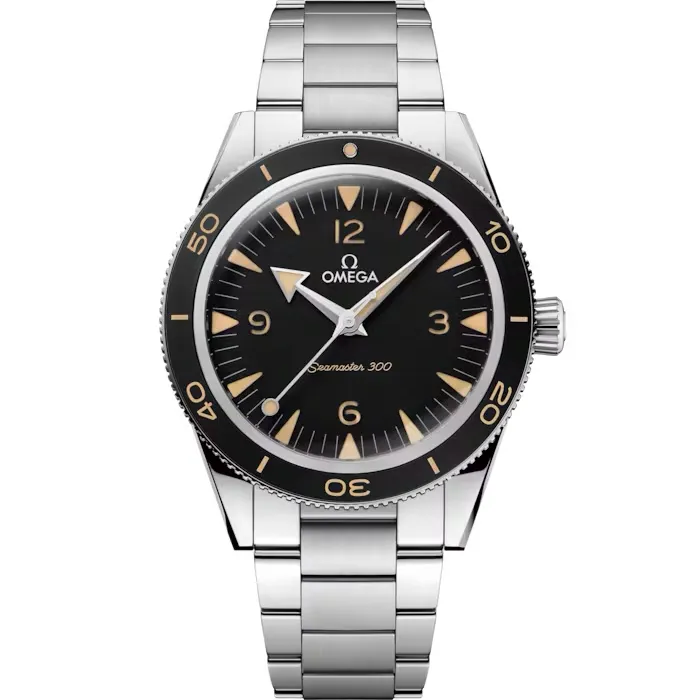
The black-dial Seamaster 300 keeps the original’s broad arrow hour hand. Image: Omega
Light hands and markers on a black dial give the most contrast in dim water, and the broad arrow makes the hour hand impossible to mistake for the slim minute hand, even at a glance through a mask.
The first Speedmaster, the CK 2915 of the same year, is known as the “Broad Arrow” for the same style of hands, one of the clearest links between the two watches.
Why there’s a star on the crown
Look closely at the crown of a vintage Seamaster 300 and you’ll see a small star beside the Omega logo. Omega calls it the “Naiad” star, and says it showed the watch was water resistant. That was worth marking on the crown, because the crown is where the stem passes through the case, and it’s the easiest place for water to get in.
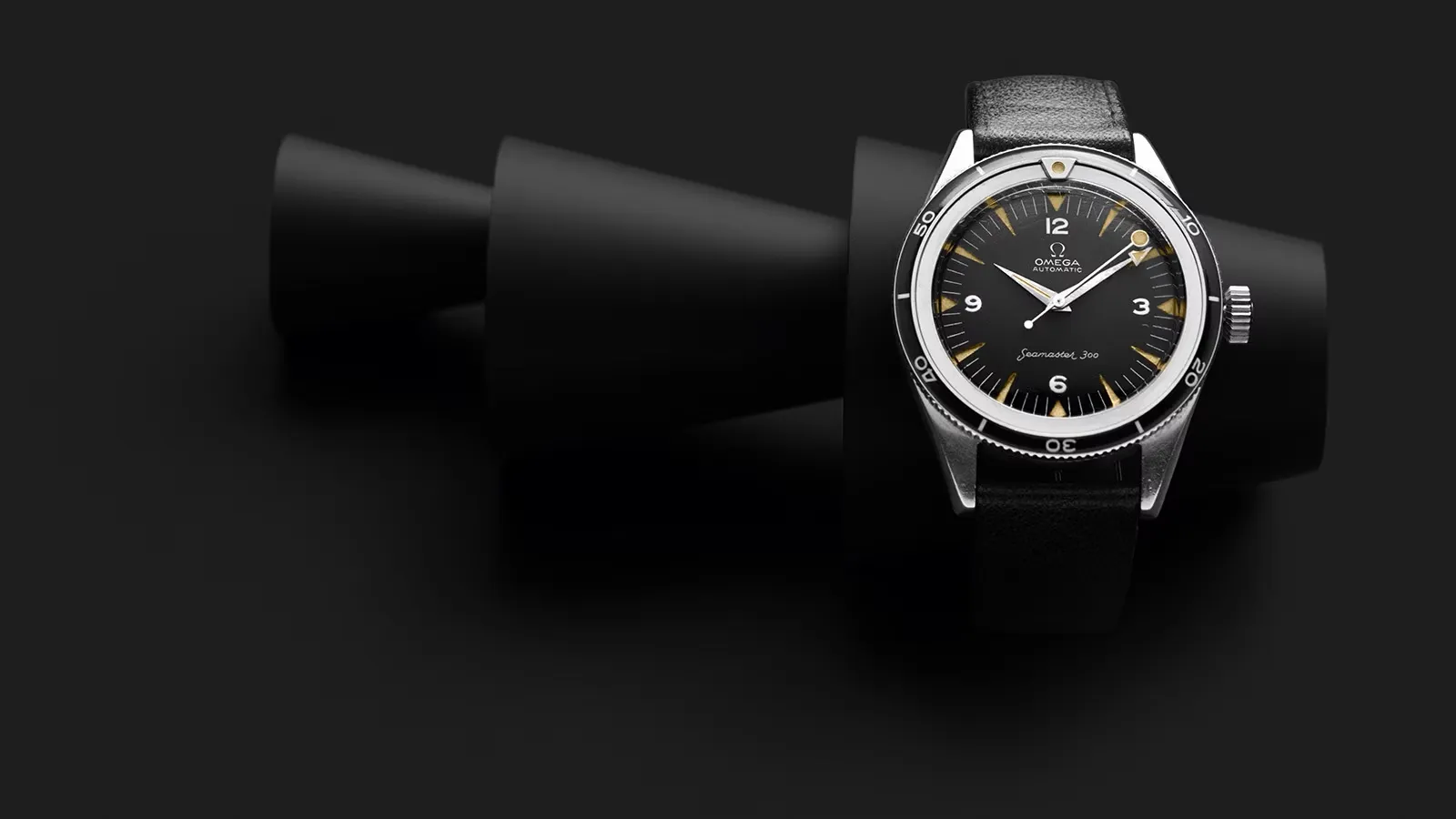
A Seamaster 300 from 1958. Image: Omega
Why it has a turning bezel
The bezel is the diver’s timer. Before going under, a diver turns it so the zero marker lines up with the minute hand, then reads elapsed time straight off the bezel without doing sums. On a dive that matters, because air and decompression limits are measured in minutes. The current Seamaster 300 is water resistant to 300m, the figure in its name.
A 1950s look with a modern movement
Inside, today’s Seamaster 300 has nothing in common with the 1957 watch. Omega gave it its current form in 2021, and Monochrome Watches’ hands-on measured the new 41mm case at 13.85mm thick, down from just under 15mm. It runs Omega’s Calibre 8912, the same automatic movement as the Planet Ocean, with Omega’s Co-Axial escapement and Master Chronometer certification. The certification includes a test against magnetic fields of 15,000 gauss, so the fridge door, a laptop’s speakers or the magnetic clasp on a handbag won’t knock it off time. The power reserve is 60 hours, so a watch taken off on Friday evening is still running on Monday morning.
The crystal is domed sapphire, which gives the curved profile of a 1950s watch with sapphire’s resistance to scratches, and it’s treated with an anti-reflective coating on the inside. Omega files the watch under its Heritage Models rather than with the modern divers, which is a fair description of what it is.
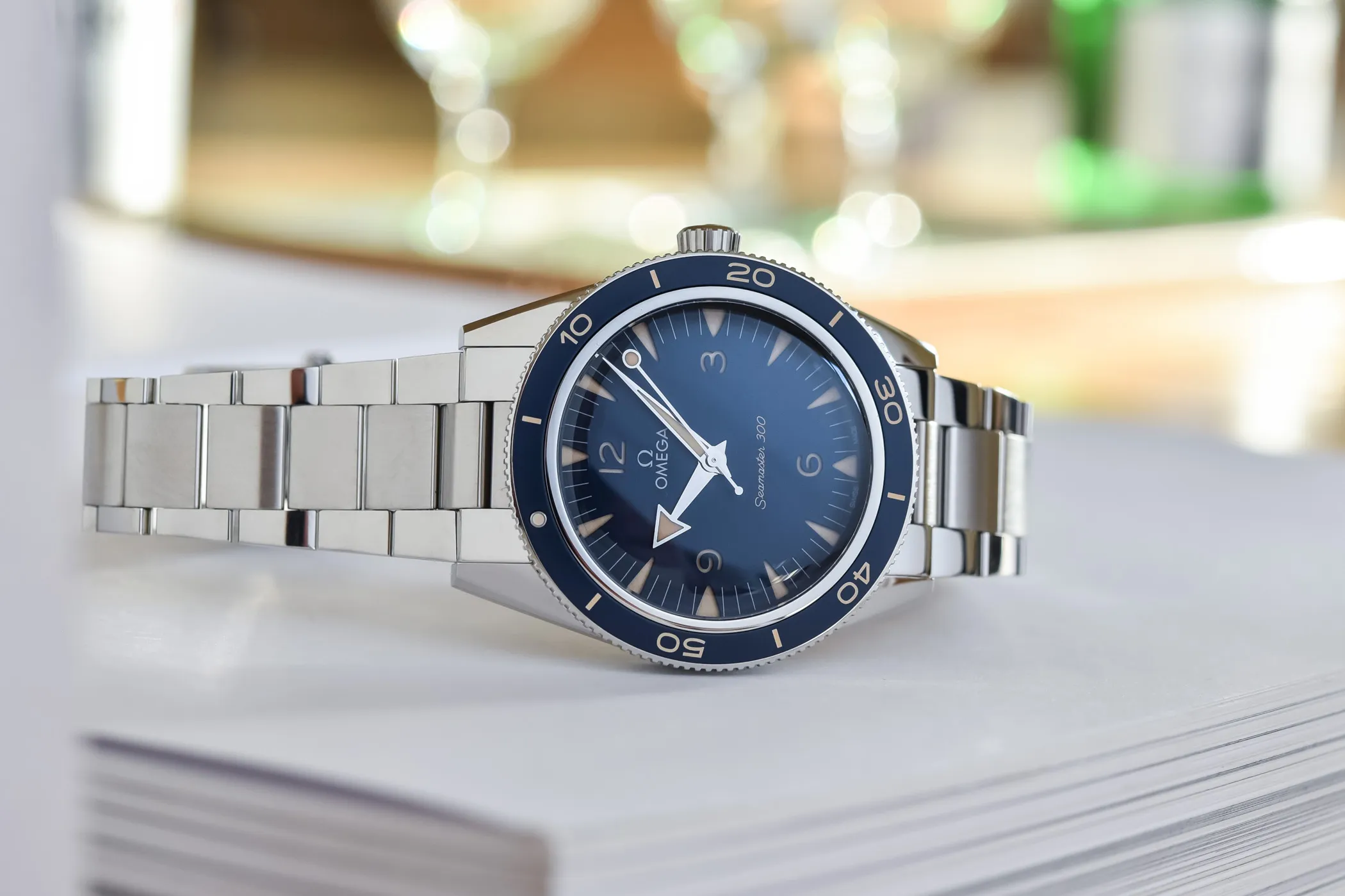
The blue-dial Seamaster 300 from the 2021 update. Photo: Monochrome Watches
The range and Australian prices
All eight Seamaster 300 references in Omega’s Australian catalogue are 41mm. Steel is where most buyers will start.
| Version | Price |
|---|---|
| Steel on a steel bracelet | $12,550 |
| Summer Blue, steel | $13,175 |
| Bronze Gold on a leather strap | $24,800 |
| Yellow gold | $63,975 to $76,825 |
| Platinum | $91,400 to $103,025 |
Buy from an Omega boutique or an authorised retailer. Omega’s five-year warranty is only valid with a dated warranty card stamped by an authorised seller, and Omega warns that watches from other sources may not be covered.
Which Seamaster to buy, and the alternatives
The steel Seamaster 300 on its bracelet is the one to buy. It’s the closest thing to the 1957 watch in Omega’s range, and the movement and certification are the same as on Omega’s more expensive divers. The gold and platinum versions are a lot of money for the same watch in a dressier metal.
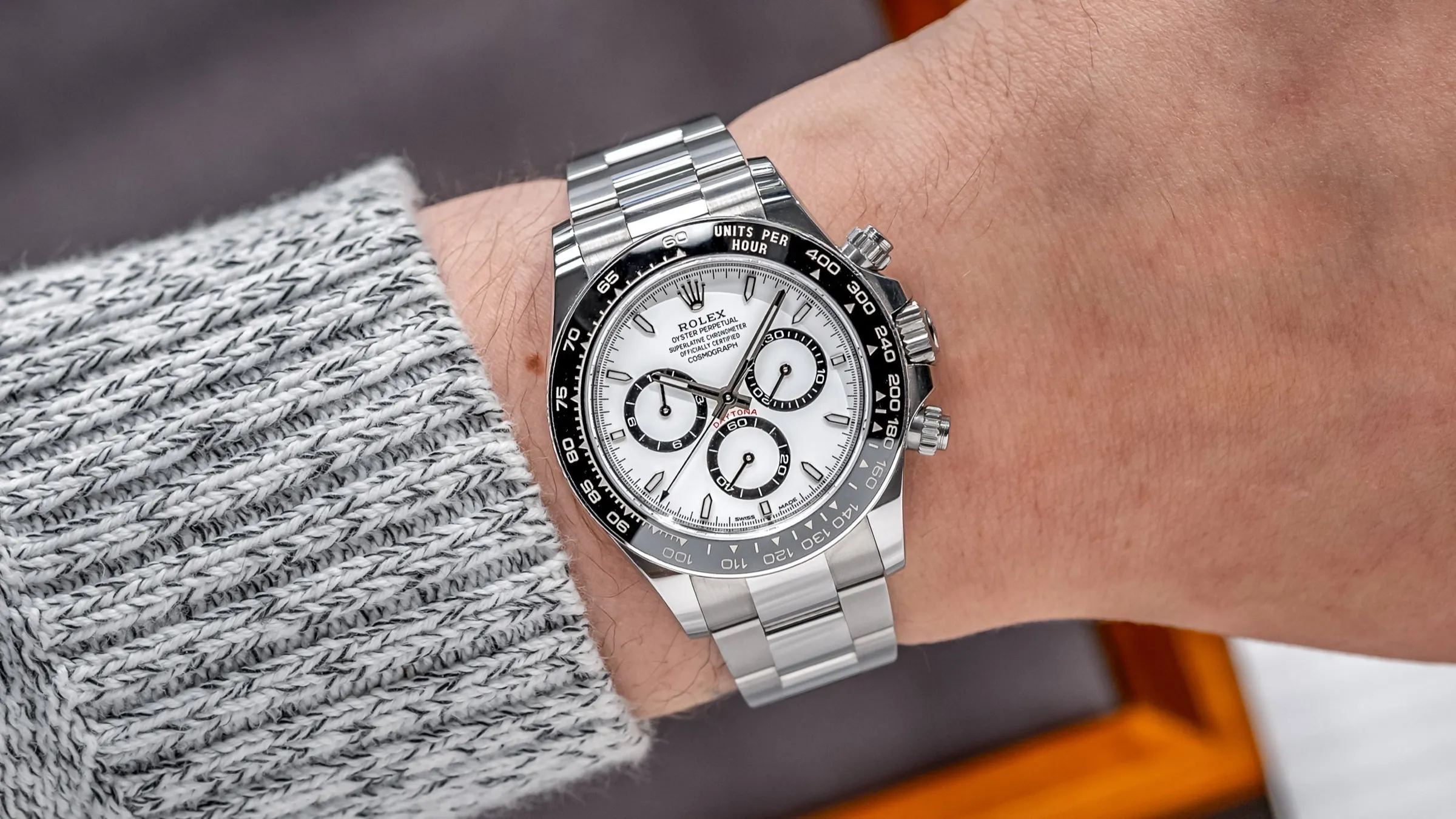
Its two Seamaster siblings suit different buyers. The Diver 300M costs $10,525 on a bracelet, about $2,000 less, and has the wave dial and helium valve of the 1990s rather than the 1950s look. The Planet Ocean took its design from the Seamaster 300, Omega says, and runs the same Calibre 8912, but at 42mm and 600m it’s the bigger, more modern diver, at $15,000 on a bracelet. If what draws you to the Seamaster 300 is 1957 itself, its sibling from that year, the Speedmaster Moonwatch, costs $12,350 on a bracelet and is a chronograph rather than a diver.
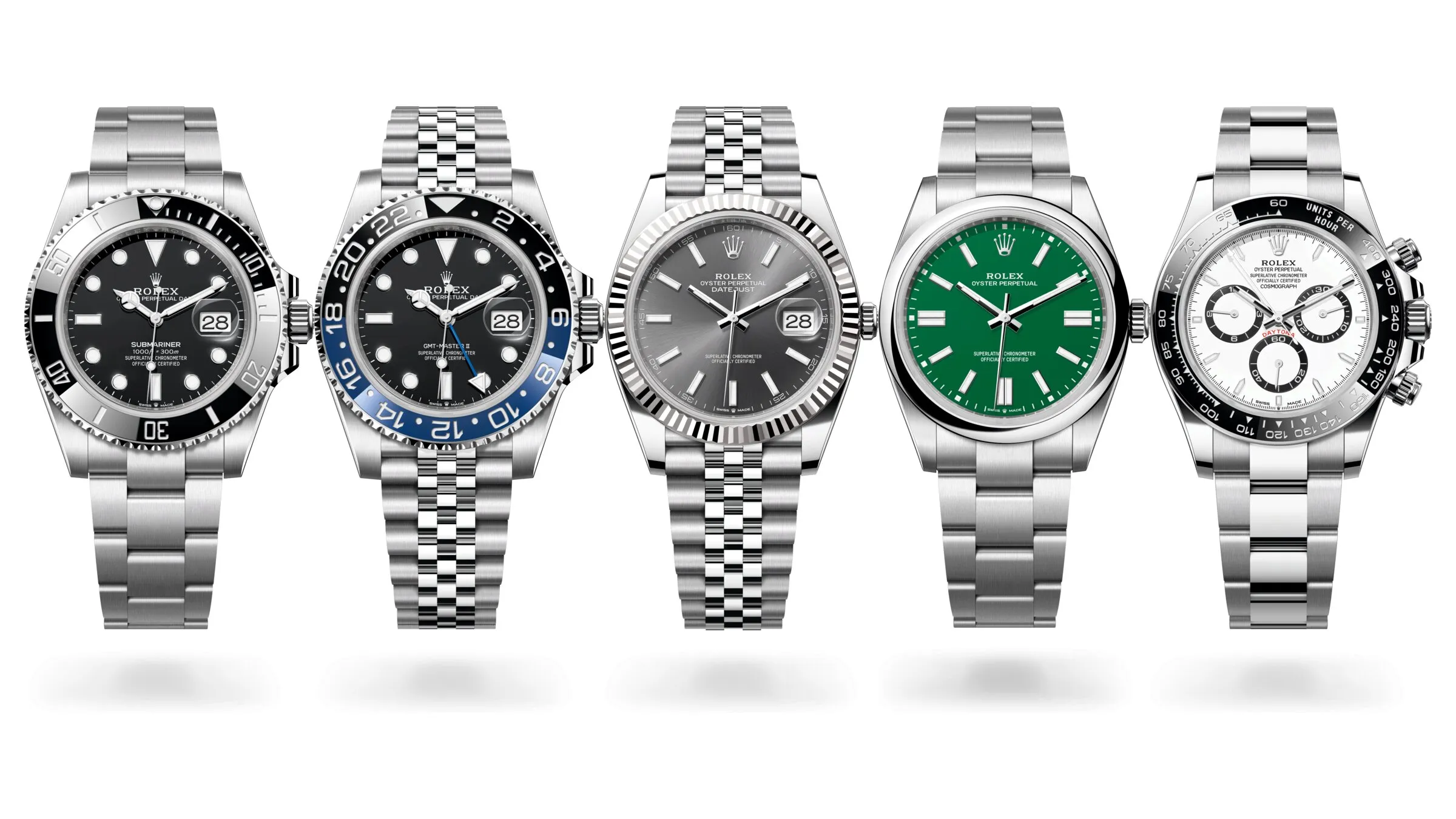
Outside Omega, the obvious rival is the Rolex Submariner, the dive watch Rolex launched in the 1950s. It’s also 41mm and rated to 300m, and starts at $16,850 without a date, so the Omega is about $4,300 cheaper. The Tudor Black Bay 58 is the other way to get a 1950s-style diver, at 39mm and from $6,990, a little over half the price.