Best Omega Watches: The Story Behind Each Model
Every current Omega family, from the $8,100 De Ville Prestige to the Planet Ocean: where each one comes from, who it suits, what it costs in Australia and the Rolex it competes with.
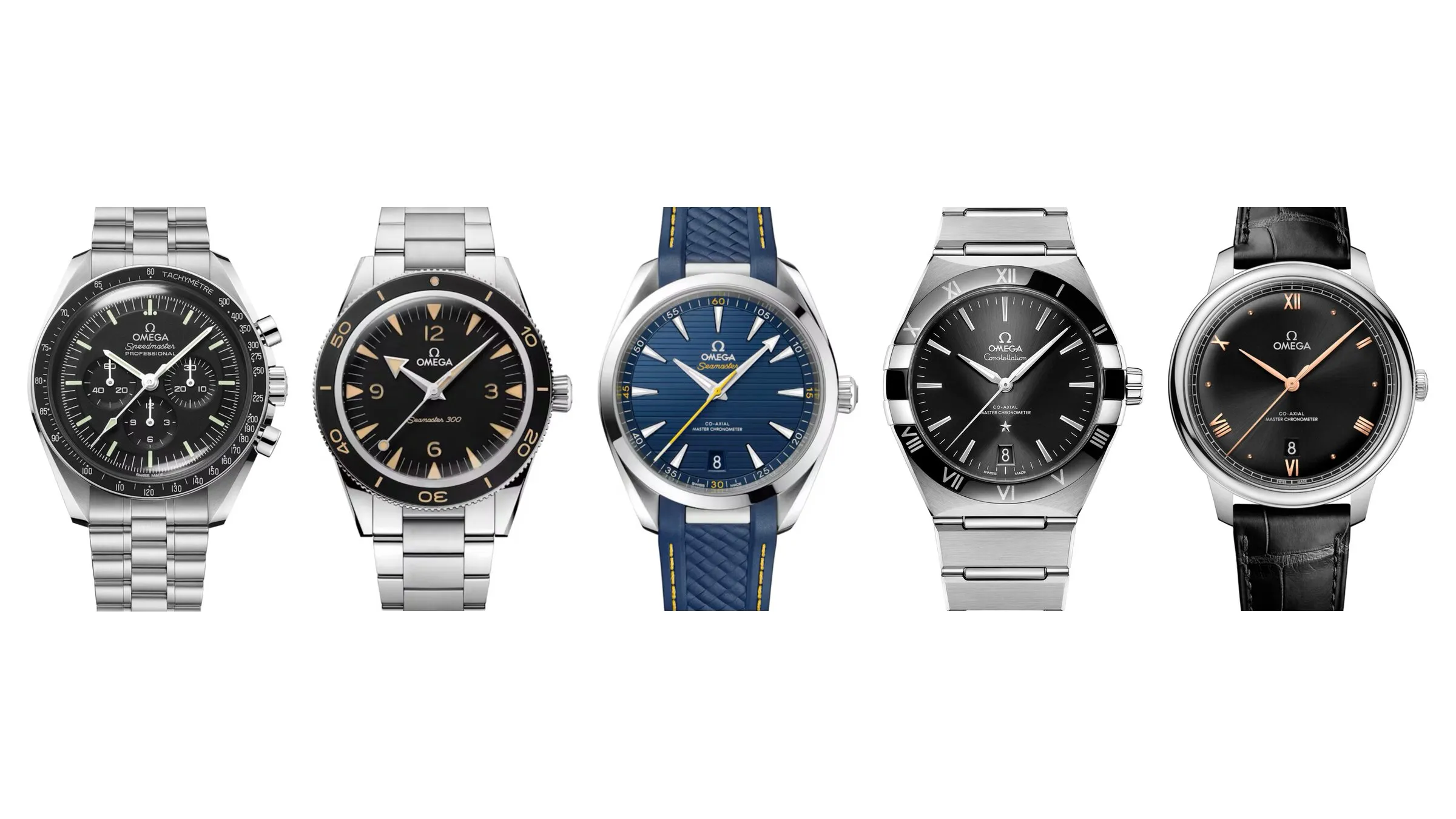
Nearly every Omega you can buy today goes back to a handful of dates. The Seamaster began as a centenary watch in 1948, the Constellation as a chronometer in 1952, the Speedmaster as a racing chronograph in 1957 and the De Ville as the dress watch that left the Seamaster in 1967. Each still carries the details of the job it started with, and that’s the clearest way to work out which one suits you.
That matters, because from the outside the range is hard to read. Most of the watches are round, steel and around 41mm, four in this guide are called Seamaster, and prices run from $8,100 to more than $20,000 before you reach gold. Below, each family gets its story and who it suits. At the end, you’ll find a table matching each one to a buyer, current Australian prices and how Omega compares with Rolex.
The Omega calibre: where every Omega starts
Louis Brandt set up a watchmaking workshop in La Chaux-de-Fonds, in the Swiss Jura, in 1848, and the business moved to Biel in 1880. In 1894, the Brandt brothers released a 19-ligne movement they called “Omega”. Omega says it was built so any watchmaker could replace its parts without modifying them, and that it wound and set through the crown.
The calibre did so well that the company renamed itself after it, and Omega says that by 1903 it was the largest maker of finished watches in Switzerland. Today Omega is part of the Swatch Group.
Co-Axial: the escapement inside every model

George Daniels at his bench. Image: Omega
The escapement is the part of a mechanical watch that releases the mainspring’s energy in even steps. On 12 April 1999 Omega released the Co-Axial, designed by the English watchmaker George Daniels, and called it the first practical new escapement in about 250 years. Omega says its smaller contact surfaces mean less friction and need less lubrication. It arrived in a limited De Ville series that year, reached the Seamaster in 2005 and the Moonwatch in 2021, and each of those families has its story below.
Since 2015, Omega has gone further with its Master Chronometer certification. The tests are set by the Swiss metrology institute, METAS, and include resistance to magnetic fields of 15,000 gauss. Every watch in this guide now runs a Co-Axial Master Chronometer movement, and our Co-Axial guide explains the escapement and what the certificate means. What changes from one family to the next is the case, the dial and the job.
Seamaster: a watch for town, sea and country
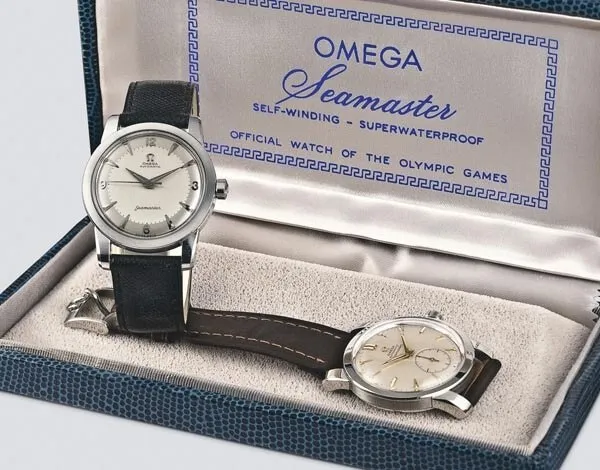
An early Seamaster in its box, sold as “self-winding” and “superwaterproof”. Image: Omega
Omega turned 100 in 1948 and marked it with a new watch. During the Second World War, Omega says, it had supplied most of the water-resistant watches worn by RAF pilots and navigators, and the Seamaster brought that know-how to everyday wear. Omega pitched it for “town, sea and country”.
That broad idea is why the Seamaster name covers so much today. Over the following decades it came to mean dive watches above all, but the everyday watch never went away. Four of the watches in this guide are Seamasters: the 1950s-style Seamaster 300, the Diver 300M, the Aqua Terra and the Planet Ocean.
Constellation: the chronometer with eight stars
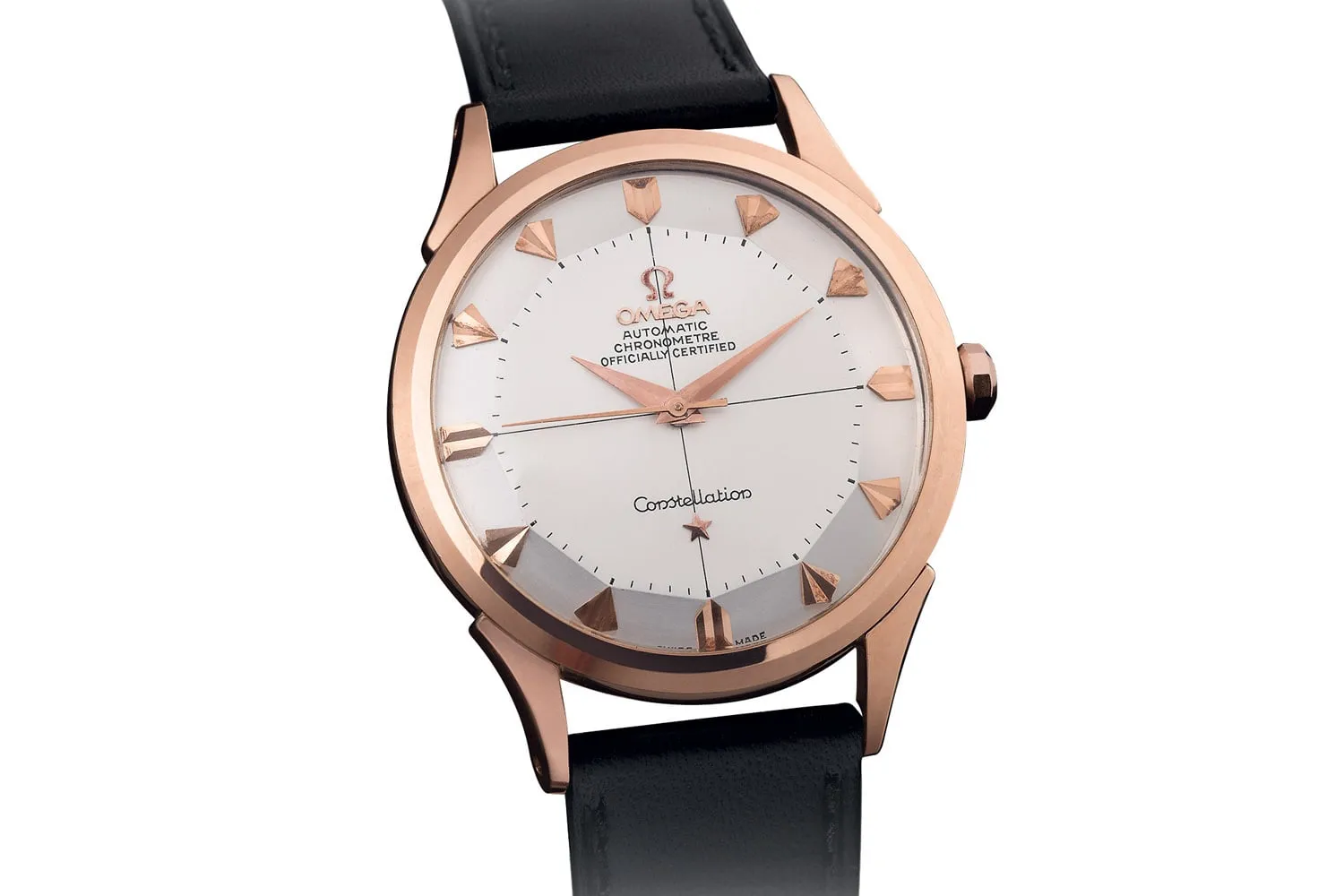
An early Constellation from 1952, with the sloped pie-pan dial and “Automatic Chronometre Officially Certified” on its face. Photo: Monochrome Watches
The Constellation was Omega’s chronometer line from the start. The eight stars on its crest stand for eight precision records Omega set at the observatory trials at Kew-Teddington and Geneva in the mid-20th century, and Omega says it soon became known as “the Swiss watch”. Early models had the “pie-pan” dial, its centre raised and its edge sloping away like an upturned pie dish.
The look most people picture now is three decades younger. The claws on either side of the case arrived in 1982, on the quartz Constellation Manhattan, and Omega says only that they “convey both perfection and eternity”. Today’s Constellation comes in 41mm and 39mm with Roman numerals on the bezel. It’s rated to 50 metres, and it suits anyone whose week is mostly collared shirts.
Speedmaster Moonwatch: from the racetrack to the Moon
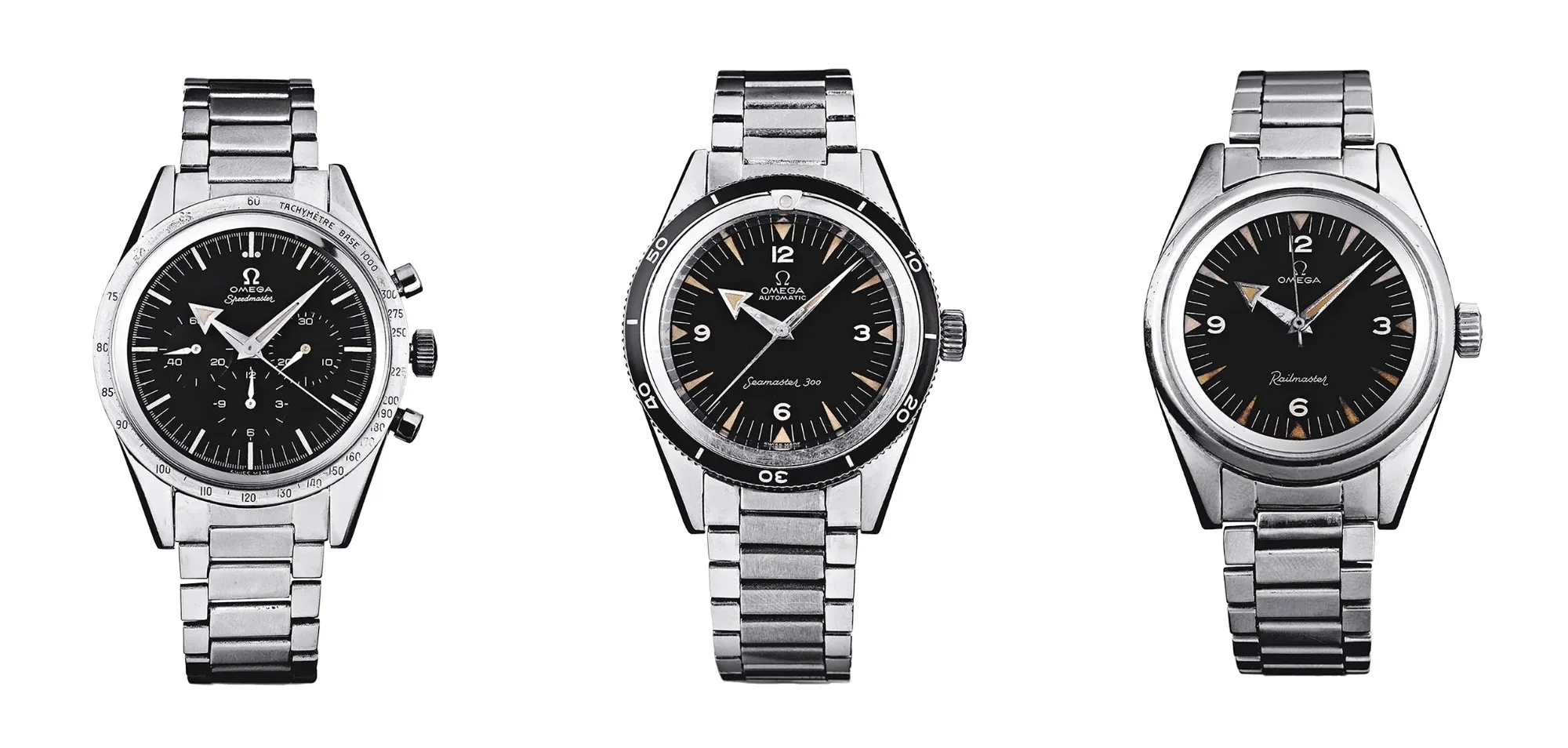
The 1957 Professional line: Speedmaster, Seamaster 300 and Railmaster. Image: Omega
In 1957 Omega launched three professional watches at once: the Speedmaster, the Seamaster 300 and the Railmaster. The first Speedmaster, the CK 2915, put its tachymeter scale on the bezel rather than the dial, which Omega says made it the first chronograph to do so, a feature “designed for the benefit of racing car drivers”.
It got to space sooner than anyone planned. Wally Schirra wore his own Speedmaster on Mercury’s Sigma 7 flight in 1962, and Omega says NASA qualified it for every crewed mission in 1965. When Apollo 11 landed on the Moon in July 1969, it was in each astronaut’s kit, which is where the Moonwatch name comes from. Omega also says the crew of Apollo 13 used their Speedmasters to time a 14-second engine burn on the way home.
The Speedmaster Moonwatch is still a hand-wound 42mm chronograph with a Hesalite crystal, like the original, now with the calibre 3861 inside. When I wore one every day, it went from desk to dinner and slipped under a shirt cuff. At 50 metres it’s not a watch to swim in, but it suits anyone who wants the story on their wrist.
Seamaster 300: Omega’s first professional dive watch
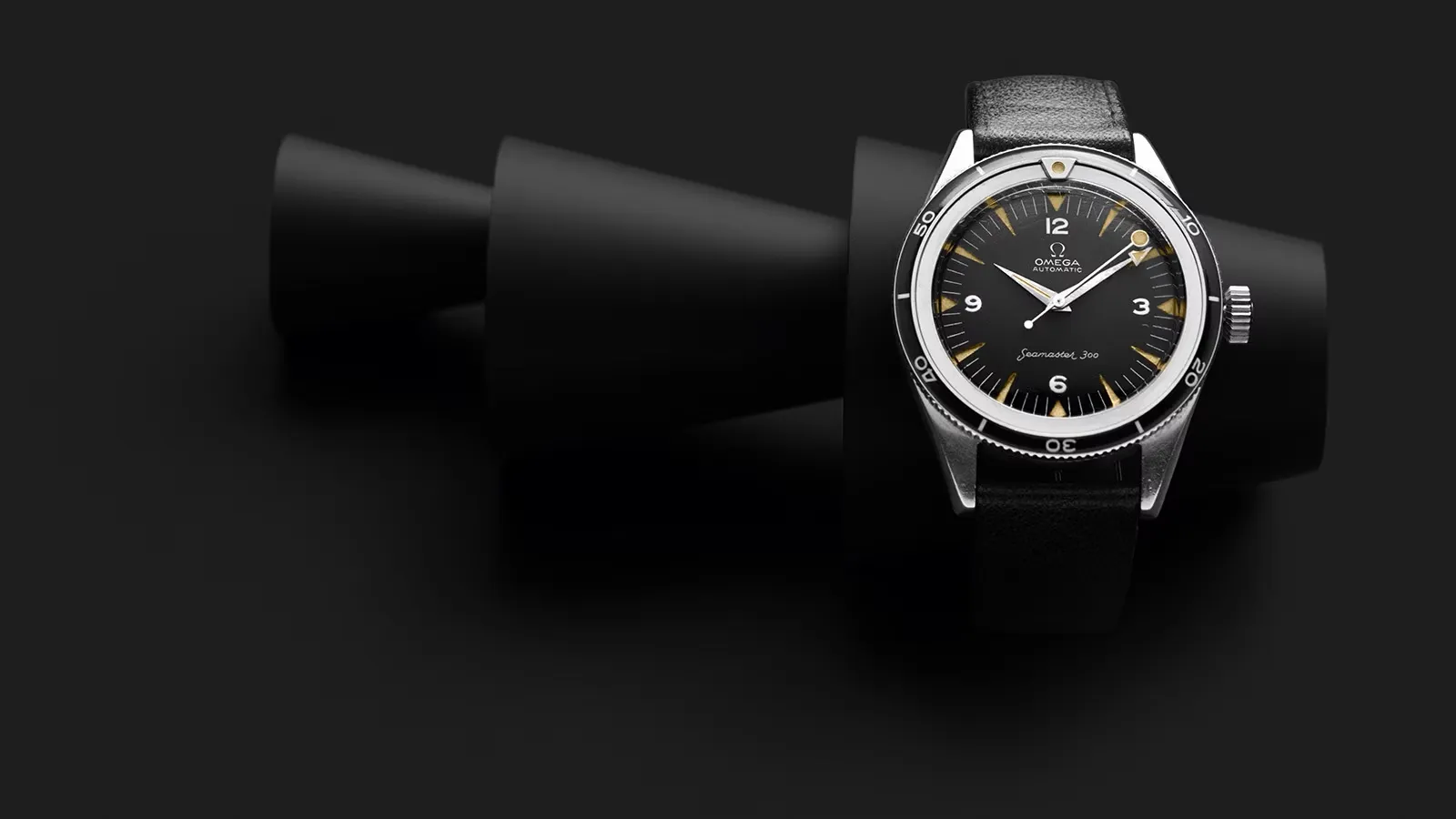
A Seamaster 300 from 1958. Image: Omega
The Seamaster 300 was the diver of the 1957 trio and Omega’s first professional dive watch, with a jet-black dial and broad arrow hands. Omega says Jacques-Yves Cousteau’s team relied on it during the Precontinent II experiments in the Red Sea in 1963.
Today’s version keeps the black dial and broad arrow hands in a 41mm case rated to 300 metres, with a modern Master Chronometer movement inside. It suits anyone who wants a 1950s diver’s looks without an old watch’s fragility.
De Ville: the dress watch that left the Seamaster
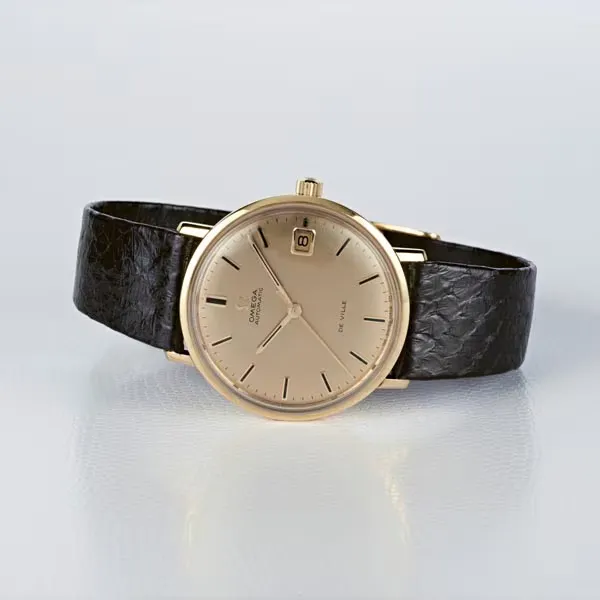
An Omega De Ville Automatic from Omega’s 1967 archive. Image: Omega
For its first two decades the Seamaster name covered Omega’s dressier watches too. In 1967 the De Ville dropped “Seamaster” from its name and became its own line: slimmer, simpler and more varied, with proven movements and careful finishing.
The De Ville Prestige is that idea today: a thin, plain steel watch with Roman numerals, in 40mm, or 41mm with a power-reserve display. It’s the least expensive watch in this guide, and it suits anyone buying a first good dress watch, or a second watch to sit beside a diver. The De Ville Trésor looks the part too, but its men’s model is quartz.
Seamaster Diver 300M: the 1993 diver and Bond’s watch
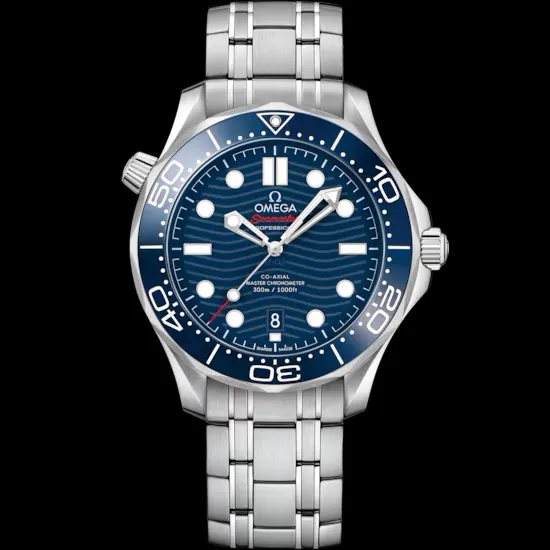
The Diver 300M with a blue dial, on the steel bracelet. Image: Omega
Omega launched the Seamaster Diver 300M in 1993 and calls it its return to dive watches. It introduced the wave-pattern dial it still wears, plus a helium escape valve: the second crown on the side of the case, which releases gas that works its way in during long stays in a saturation chamber.
Two years later it found its most famous wearer. Omega says costume designer Lindy Hemming chose a Seamaster for Pierce Brosnan in GoldenEye because it suited a naval commander, and the watch on screen was the blue quartz Diver 300M. Bond has worn a Seamaster in every film since, and our guide to James Bond’s watches runs through them all.
Today’s Diver 300M is 42mm with a ceramic dial and bezel. It’s the Omega most people should start with: rated to 300 metres, at home in the office, and the least expensive of the Seamasters.
Aqua Terra: the everyday Seamaster
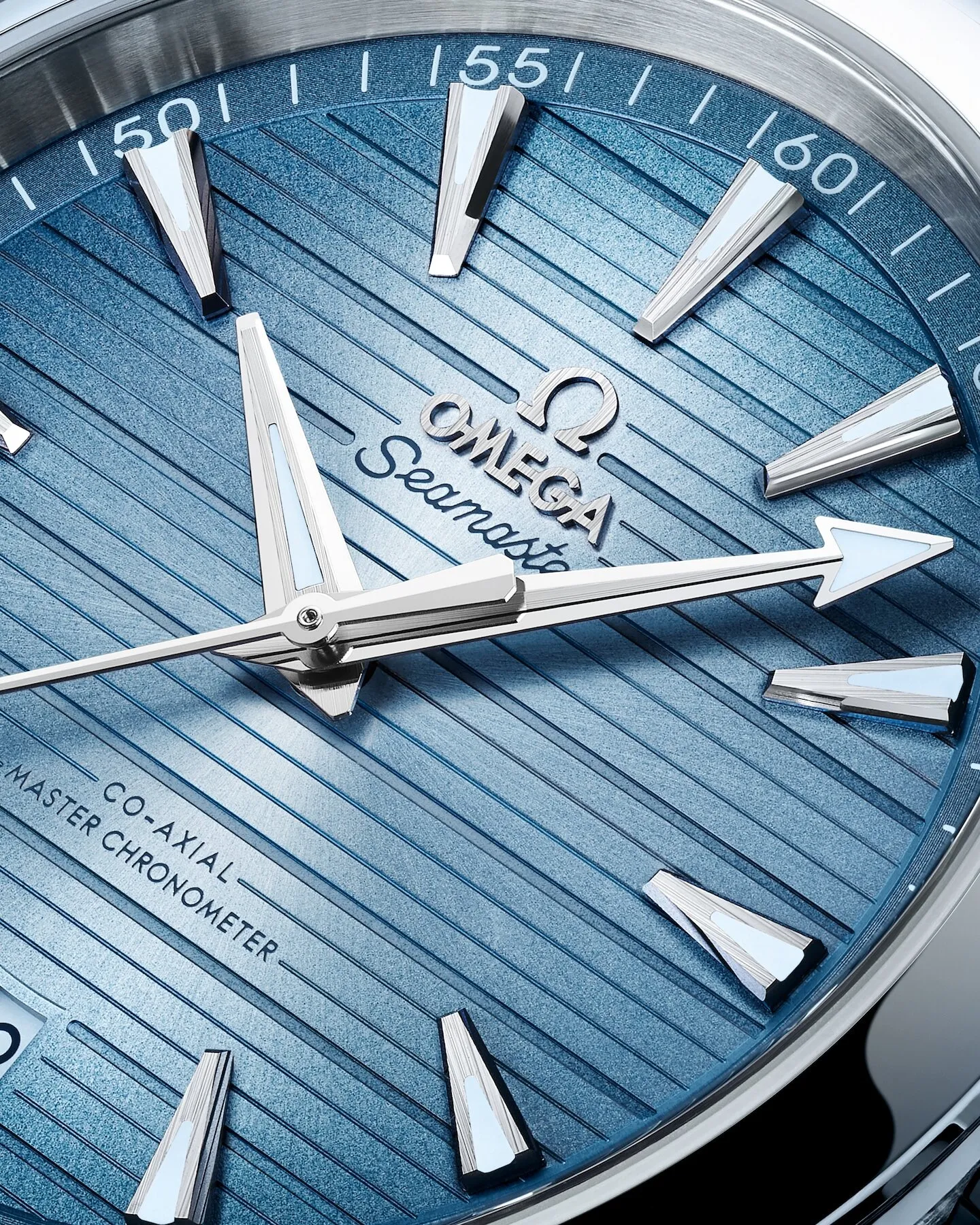
The teak pattern up close, on the Summer Blue dial. Image: Omega
The Aqua Terra, launched in 2002, brings back the 1948 idea of a Seamaster for every day, with a later face. Omega says its clean look recalled the original Seamaster 300 of 1957, but it leaves off the dive bezel and keeps the case slim. Its dial has horizontal stripes that Omega says are inspired by the teak decks of sailboats.
At 41mm and rated to 150 metres, it passes for a dress watch under a shirt cuff and can still go in the sea. It suits anyone who wants one good watch rather than several.
Planet Ocean: the deeper diver
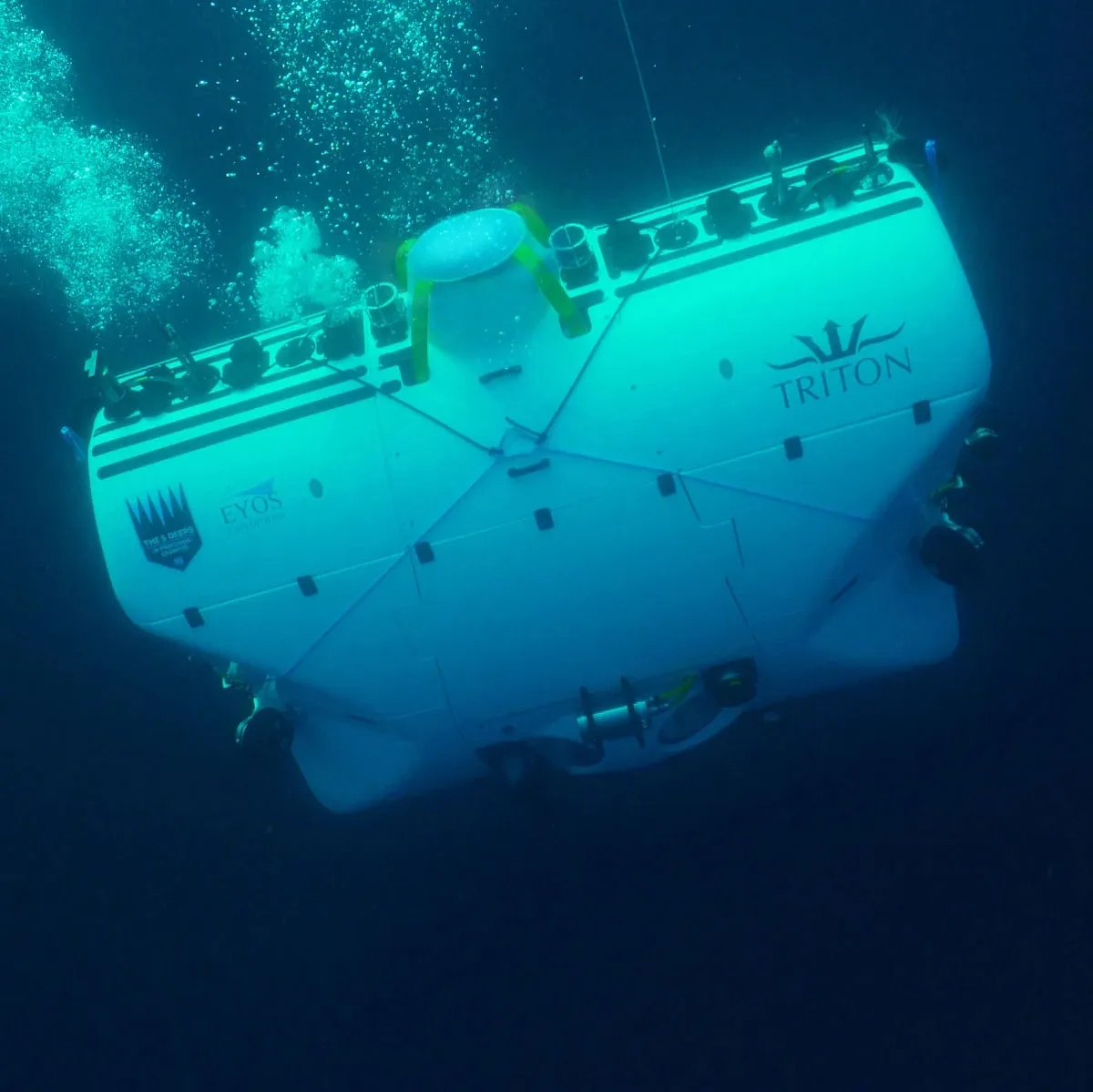
The Five Deeps Expedition submersible on its way down. Image: Omega
The Planet Ocean arrived in 2005 as Omega’s deeper diver. Omega says its design draws on the Seamaster 300, and it added orange accents and a Co-Axial movement. It’s now in its fourth generation, still 42mm and rated to 600 metres. In 2019 an Ultra Deep version rode on the submersible that took Victor Vescovo nearly 11,000 metres down to the Challenger Deep, and a 45.5mm production model followed.
It wears much like the Diver 300M, and suits anyone who wants the deeper rating, a 60-hour power reserve against the Diver 300M’s 55, and a plainer, more modern look.
Which Omega suits you
Start with what you’ll wear it for.
| If you want | Buy | Size |
|---|---|---|
| One Omega for everything | Seamaster Diver 300M, steel bracelet | 42mm |
| The Moon landing story | Speedmaster Moonwatch, Hesalite, bracelet | 42mm |
| One watch that passes as a dress watch | Aqua Terra, steel bracelet | 41mm |
| A watch for suits and dinners | Constellation | 39, 41mm |
| A true dress watch | De Ville Prestige, leather | 40mm |
| A 1950s-style diver | Seamaster 300, steel | 41mm |
| A deeper-rated diver | Planet Ocean 600M | 42mm |
| A Bond watch | Diver 300M 007 Edition, titanium | 42mm |
Omega also makes other families, such as the Railmaster, the Ploprof and other Speedmasters, which aren’t covered here.
Omega prices in Australia
Recommended retail prices for the models in this guide, in steel unless noted. Prices updated 27 November 2026.
| Model | Version | Price |
|---|---|---|
| De Ville Prestige | 40mm | $8,100–$8,725 |
| Diver 300M | Steel | $9,925–$10,525 |
| De Ville Prestige | 41mm, power reserve | $10,125–$10,750 |
| Aqua Terra | 41mm | $10,525–$11,750 |
| Constellation | 41mm | From $11,350 |
| Constellation | 39mm, bracelet | $11,750 |
| Speedmaster Moonwatch | Hesalite, nylon | $11,750 |
| Speedmaster Moonwatch | Hesalite, bracelet | $12,350 |
| Seamaster 300 | Bracelet | $12,550 |
| Planet Ocean 600M | 42mm | $13,575–$15,000 |
| Speedmaster Moonwatch | Sapphire, bracelet | $14,175 |
| Diver 300M 007 Edition | Titanium | $15,800–$17,825 |
| Planet Ocean Ultra Deep | 45.5mm | From $21,875 |
Rolex: the dearer alternative
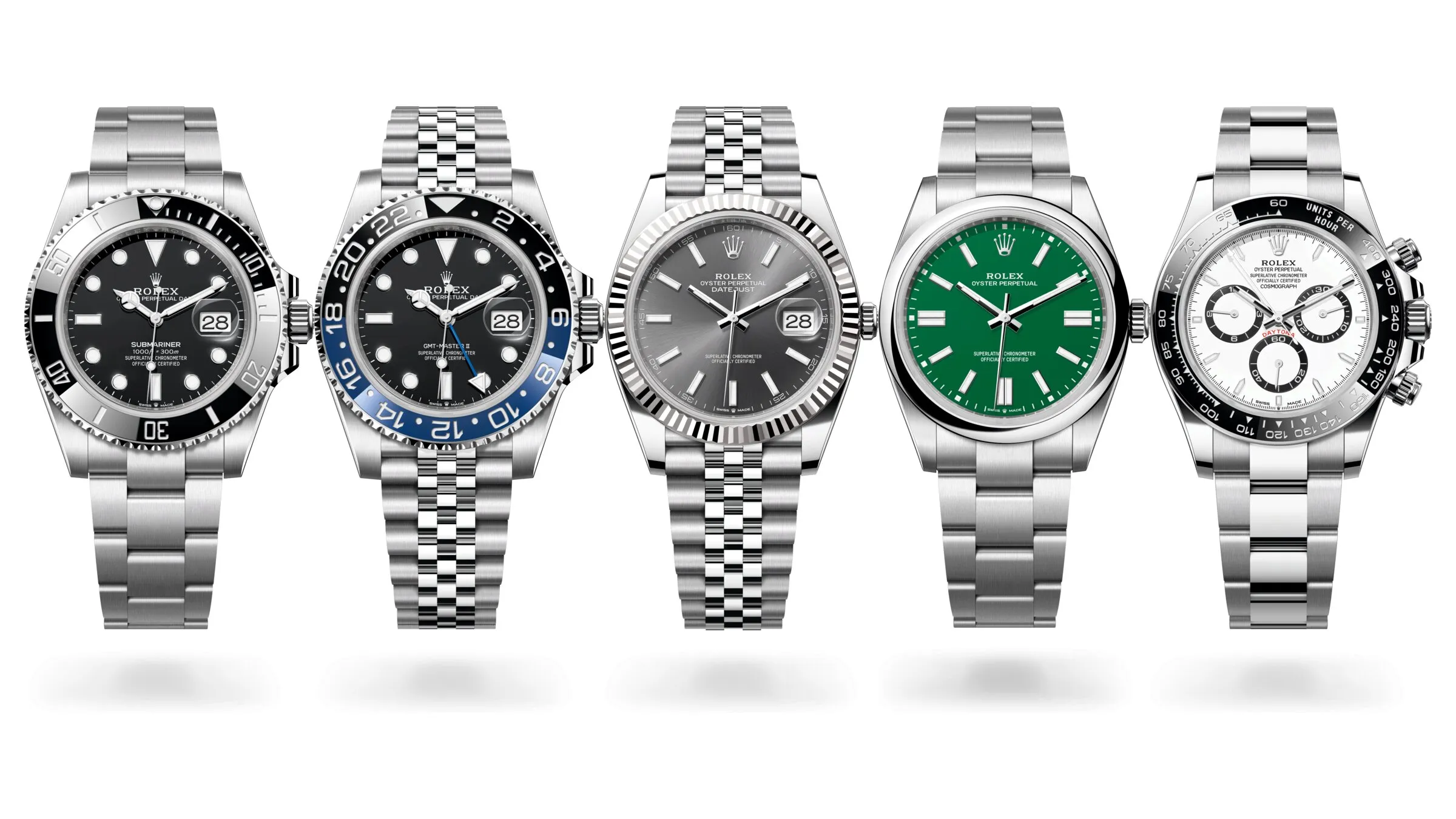
A current Rolex line-up: Submariner, GMT-Master II, Datejust, Oyster Perpetual and Cosmograph Daytona. Image: Rolex
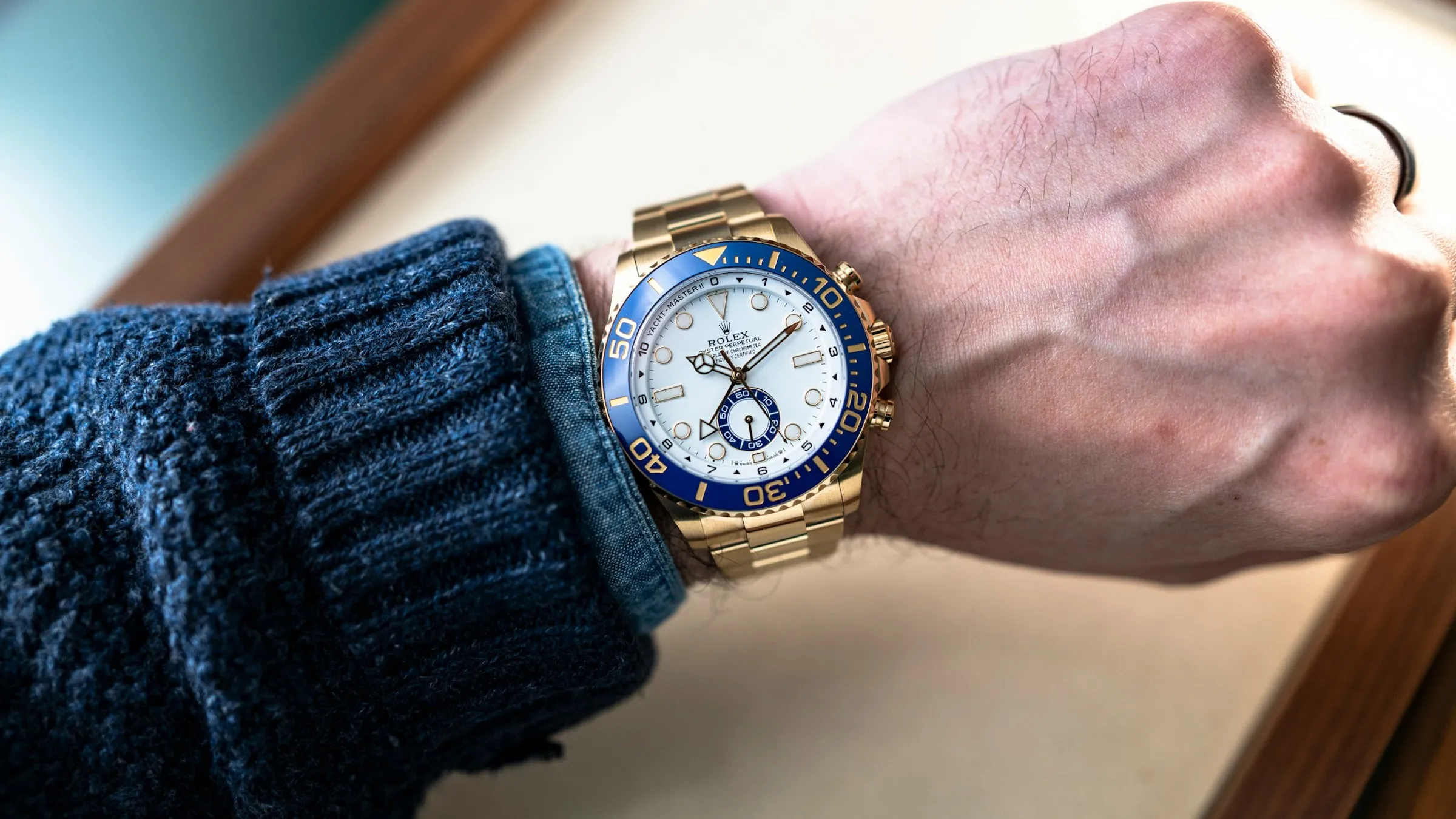
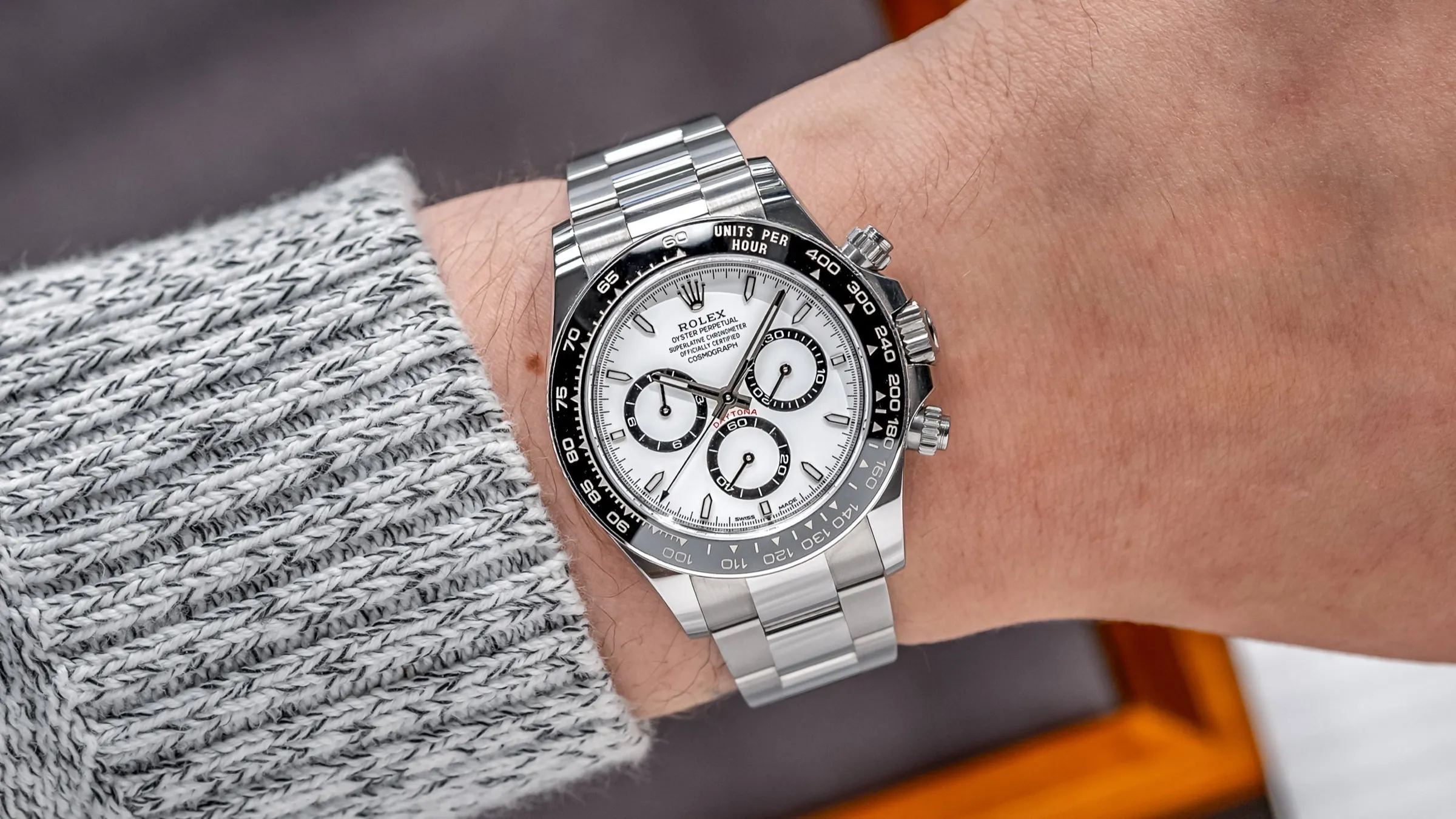
Many buyers weigh an Omega against a Rolex. For every job below, the Omega costs less.
| Instead of | Omega | You save |
|---|---|---|
| Submariner, $16,850 | Diver 300M, bracelet, $10,525, or Seamaster 300, $12,550 | $4,300–$6,325 |
| Datejust 41, $14,900 | Constellation 41, black dial, bracelet, $12,975 | $1,925 |
| Explorer 36, $13,250 | Aqua Terra 41, bracelet, $11,750 | $1,500 |
| Datejust 36, $13,700 | De Ville Prestige 40, bracelet, $8,725 | $4,975 |
| Daytona, $28,200 | Speedmaster Moonwatch, Hesalite, bracelet, $12,350 | $15,850 |
Prices updated 27 November 2026.
Buying an Omega in Australia
Omega has boutiques in Sydney, Melbourne, Brisbane and Perth, and its store locator lists authorised retailers elsewhere. Buy from one of them: Omega’s five-year warranty only applies with a certificate stamped by an authorised retailer, so a grey-market discount can cost you the cover.