Omega De Ville Prestige: The Dress Watch That Left the Seamaster
Why the De Ville split from the Seamaster in 1967, how the Co-Axial escapement reached it in 1999, and how the 40mm and 41mm Prestige compare from $8,100.
In 1967 Omega took the dress watches out of the Seamaster family and gave them a name of their own. The De Ville, Omega says, “dropped ‘Seamaster’ from its name and became a line in its own right”, pairing movements Omega had already proven with more careful finishing in a case that was slimmer and simpler.
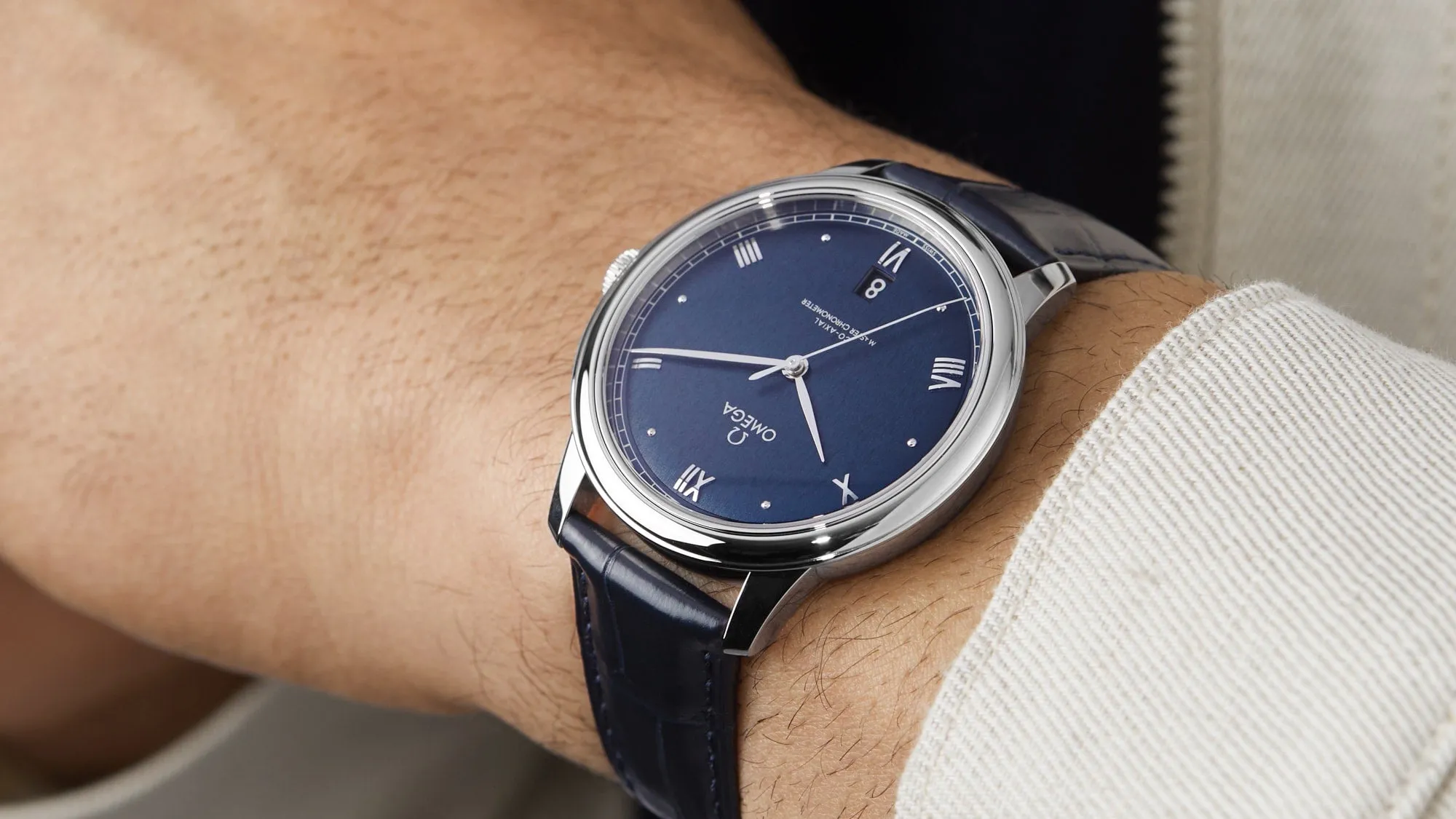
The De Ville Prestige is that idea today: a thin, plain steel watch with Roman numerals, made for shirts with cuffs. At $8,100 it’s also the most affordable of the Omegas in our guide. It suits someone buying their first good dress watch, or a second watch to sit beside a diver. It’s one of the models in our guide to the best Omega watches.
A Seamaster that dressed for town
The Seamaster began in 1948, and Omega pitched it for “town, sea and country”. For nearly two decades the name covered Omega’s dress models as well as its water-resistant watches, so a buyer looking for a diver and a buyer looking for something to wear to a wedding were shopping under the same name.
Splitting off the De Ville let each line get on with its job. The Seamaster went on to the professional dive watches and, much later, the Aqua Terra. The De Ville kept the town part of the brief, and Omega describes the result as simpler, slimmer and more varied than what came before. Omega still calls the collection its dress watches, and the slim case is the thread that runs from 1967 to the current Prestige.
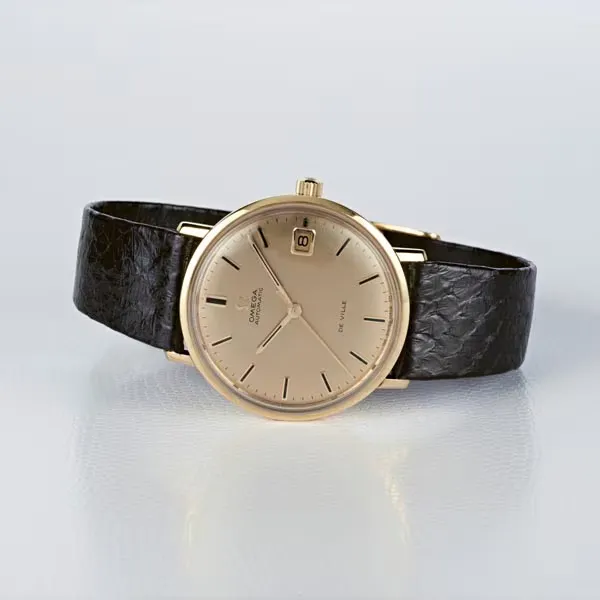
An Omega De Ville Automatic from Omega’s 1967 archive. Image: Omega
The Co-Axial arrived in a De Ville
The most important thing to happen to the De Ville came in 1999. On 12 April that year Omega released the Co-Axial escapement, developed by the English watchmaker George Daniels. The escapement is the part of a mechanical watch that releases the mainspring’s energy in small, even steps, and in a conventional design its parts slide against each other. Omega says Daniels’s layout cuts that friction, so the movement needs less lubrication and runs more reliably over time.
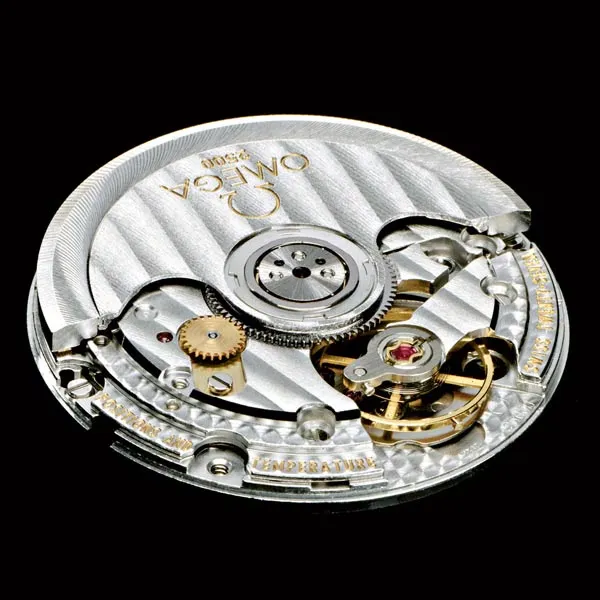
Calibre 2500, the movement Omega’s archive lists in the 1999 De Ville. Image: Omega
Omega’s archive lists a De Ville Co-Axial limited series from 1999, so the dress line carried the new escapement in its first year. The Seamaster followed with the Planet Ocean in 2005, and every current Omega in our guide uses it. Our Co-Axial guide explains how it works and what Omega’s Master Chronometer testing adds.
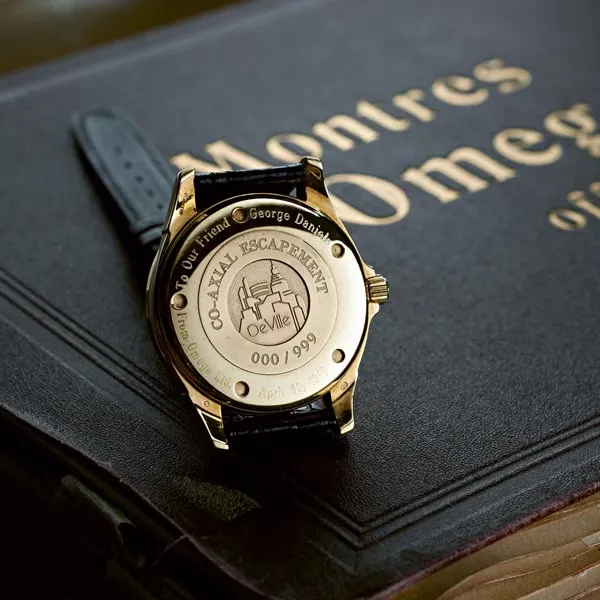
The caseback of a 1999 De Ville Co-Axial, engraved with a dedication to George Daniels. Image: Omega
Inside the Prestige today
Omega says the Prestige has been a collection since 1994 and is now in its third generation. The current watches keep the 1967 recipe, a slim case and a quiet dial, and put a modern sports-watch movement inside.
The 40mm uses Calibre 8800, the same self-winding movement as the Seamaster Diver 300M. It’s a Co-Axial Master Chronometer, tested by Omega and METAS, the Swiss federal metrology institute, against magnetic fields of 15,000 gauss, so the magnets in a laptop or phone case won’t throw it off. The 55-hour power reserve means it will still be running on Monday morning if you take it off on Friday night.
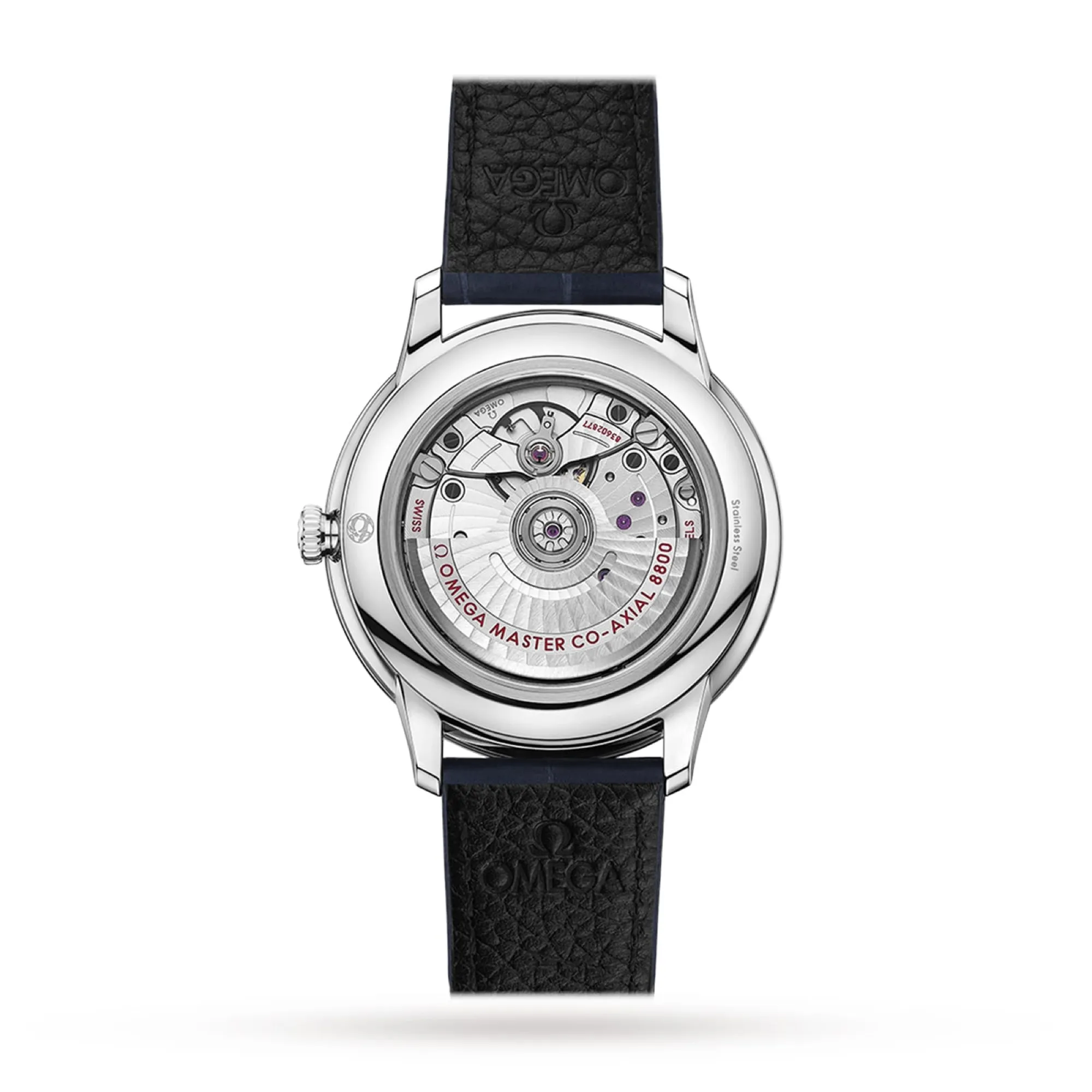
Calibre 8800 through the sapphire caseback of the 40mm. Image: Omega
The case is the reason to buy it. At 9.93mm thick it’s more than 3.5mm slimmer than the 13.56mm Diver 300M, which is the difference between a watch that slides under a shirt cuff and one that catches on it. The domed sapphire crystal softens the profile further, and the caseback is sapphire too, so you can see the movement.
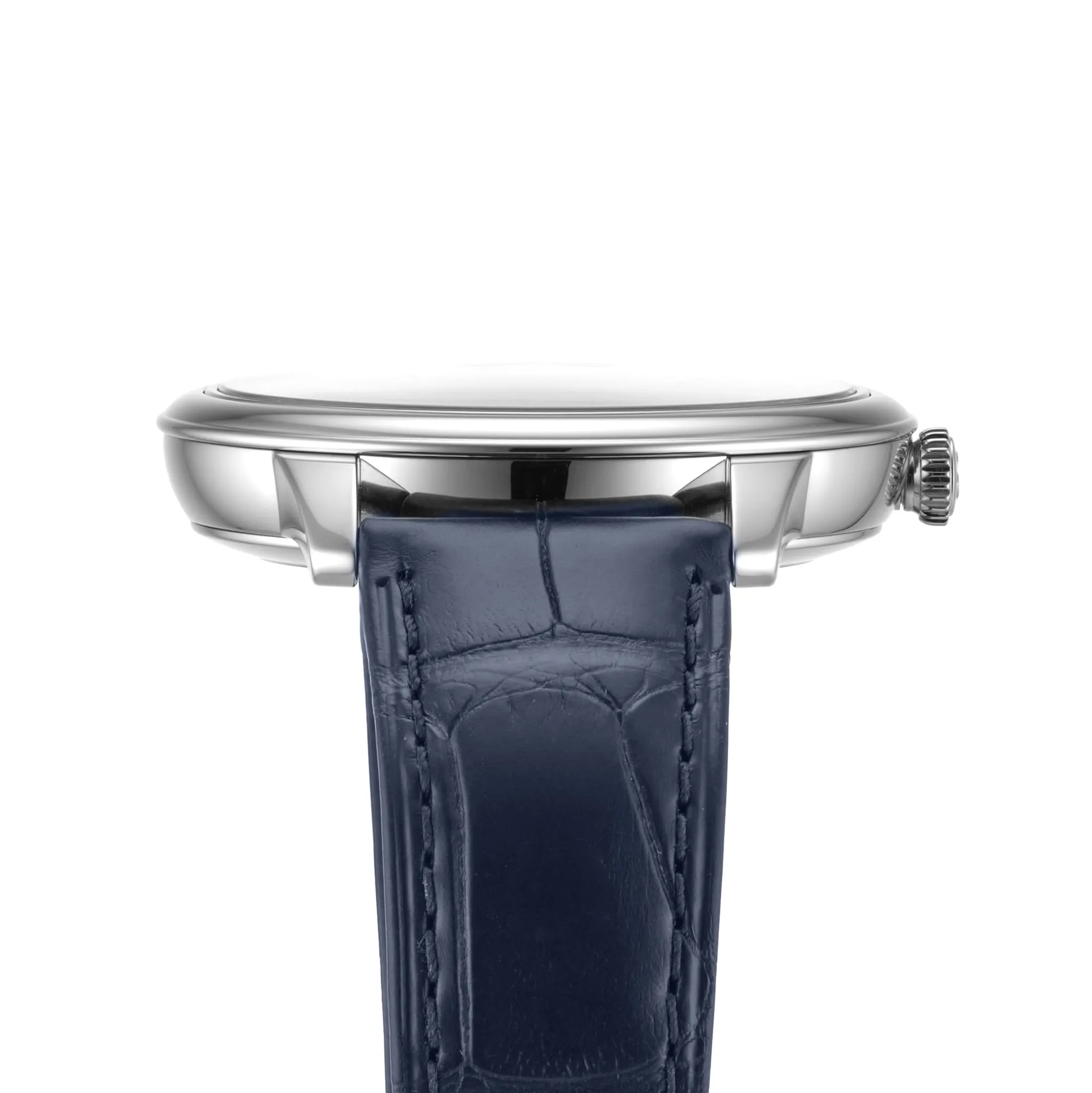
The 40mm case is 9.93mm thick. Image: Omega
The dial follows dress-watch convention. Roman numerals alternate with small rounded cabochon markers, a railway track runs around the edge for reading the minutes, and the date sits at 6 o’clock, where it leaves the numerals undisturbed. The blue dial on leather has a fine stamped vertical pattern under a sun-brushed finish, and the green dial on the bracelet is plain sun-brushed.
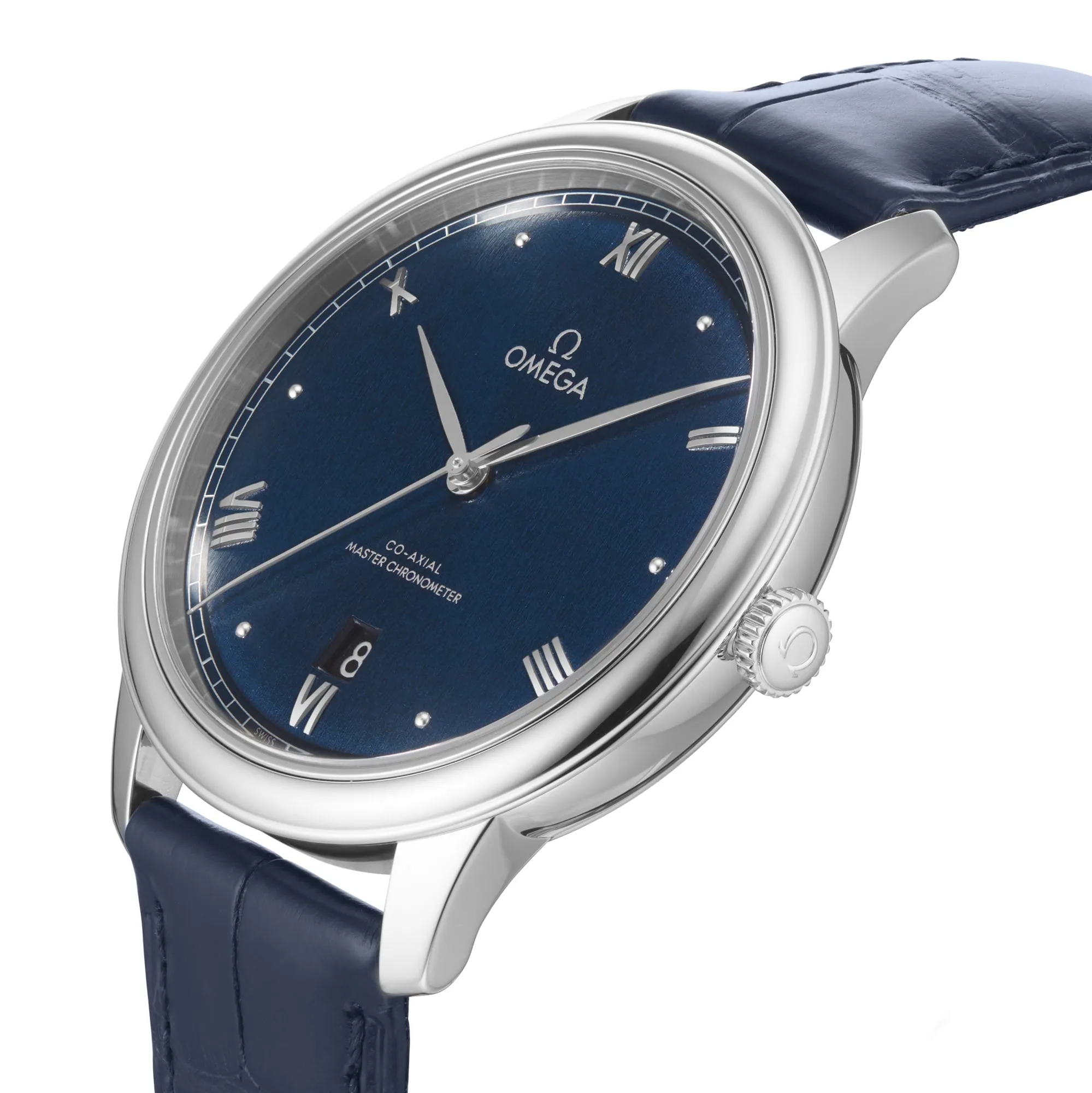
The blue dial’s stamped vertical pattern, with the date at 6. Image: Omega
The 41mm adds Calibre 8810 and a power reserve indicator. It’s a 270-degree scale at 6 o’clock, sharing that spot with the date, while a small seconds dial sits at 9. Because a self-winding watch keeps itself wound only while it’s worn, the indicator tells you whether a watch that’s been in a drawer for a day or two needs a few turns of the crown before you put it on. The extra complication costs only 0.84mm: the 41mm is 10.77mm thick.
| Spec | Prestige 40mm | Prestige 41mm power reserve |
|---|---|---|
| Movement | Calibre 8800, Co-Axial | Calibre 8810, Co-Axial |
| Case | Steel, 9.93mm thick | Steel, 10.77mm thick |
| Power reserve | 55 hours | 55 hours, with indicator at 6 |
| Dial layout | Date at 6 | Date and power reserve at 6, small seconds at 9 |
| Water resistance | 30m | 30m |
| On leather | $8,100 (blue dial) | $10,125 (grey dial) |
| On steel | $8,725 (green dial) | $10,750 (grey dial) |
Thirty metres of water resistance is the trade for the slim case. It’s fine for rain and washing your hands, but the Prestige shouldn’t go swimming.
The range and prices
In steel, the 40mm is $8,100 on a blue alligator strap with a pin buckle and $8,725 on a steel bracelet with a butterfly clasp. The 41mm power reserve is $10,125 on a grey alligator strap and $10,750 on the bracelet. There’s also a two-tone 41mm in steel and yellow gold, at $15,900 on leather and $19,250 on the bracelet, and the Prestige range runs on into yellow and red gold, and women’s models.
The De Ville also includes the Trésor, but the current Trésor is quartz. The 36mm in steel on alligator is $9,925, more than a mechanical 40mm Prestige, so it’s for someone who wants its particular look rather than the movement.
Which Prestige to buy, and the alternatives
For most people the 40mm on leather is the one to buy. It’s the slimmest watch in the range, a dress watch belongs on a strap, and at $8,100 it costs $1,825 less than a Diver 300M on rubber. Take the bracelet if you’ll wear it every day in summer, when leather suffers. Pay the $2,025 extra for the 41mm only if you like the power reserve display and the small seconds; it doesn’t run any longer.
Within Omega, the Prestige sits at the formal end of three everyday-to-dress watches. The Constellation, from $11,350 at 41mm, has more presence on a bracelet, with its Roman numeral bezel and claws on the case, and 50m of water resistance. The Aqua Terra, from $10,525, is the better single watch for someone who wears one Omega everywhere, because it’s rated to 150m and looks right with a T-shirt as well as a suit. The Prestige is for someone who wants a watch that looks unmistakably dressy, and who has something else for the beach.
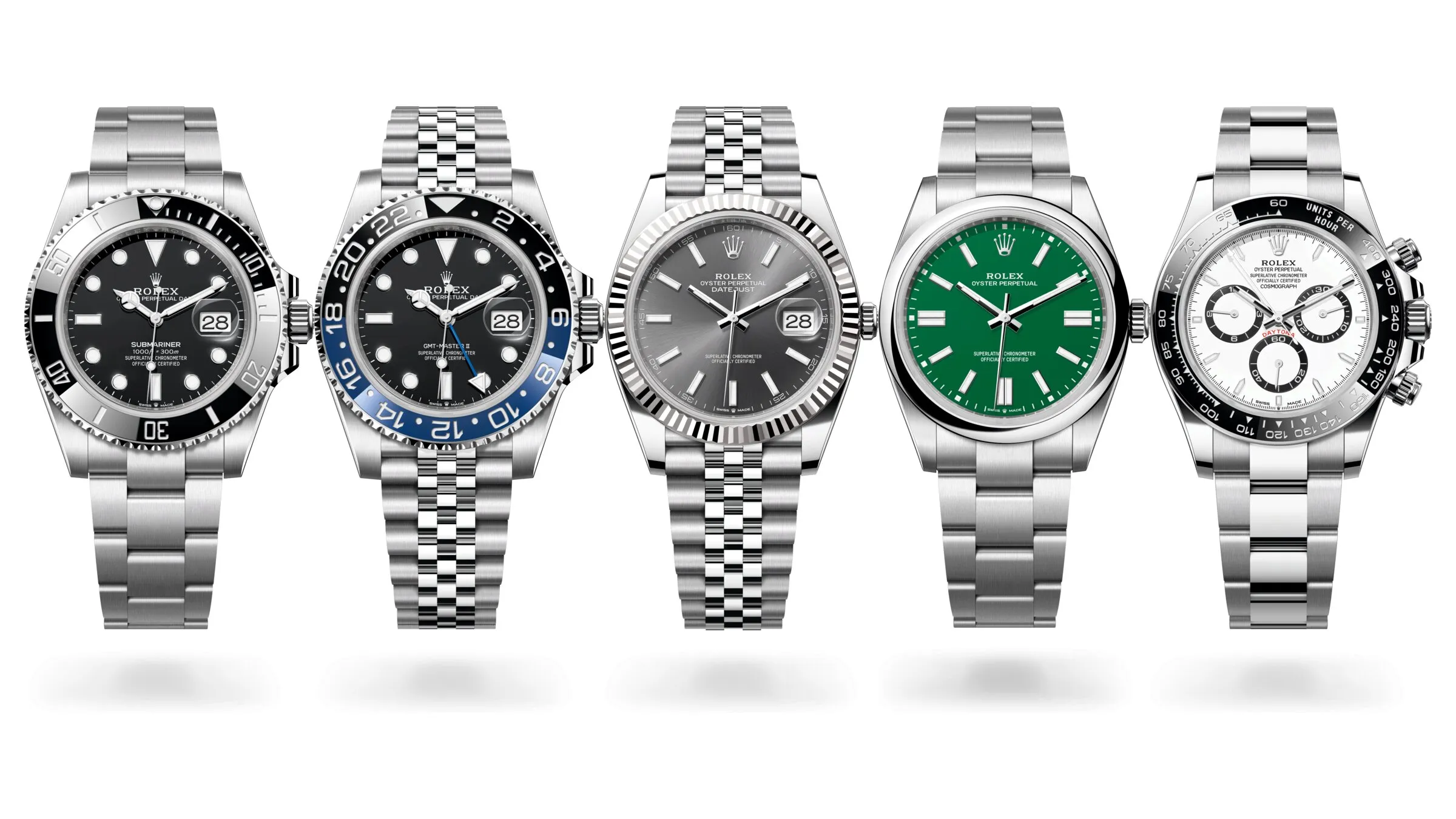
Outside Omega, buyers looking at a steel watch for the office often look at the Rolex Datejust. The Datejust 36 in Oystersteel is $13,700, so the 40mm Prestige on a bracelet is $4,975 less, though the Datejust is the more versatile everyday watch rather than a dress watch.
Buy from an Omega boutique or an authorised retailer, because Omega’s five-year warranty only applies with a certificate stamped by one of them.