Omega Aqua Terra: The Everyday Seamaster, Omega's Way
How the 1948 Seamaster led to Omega's everyday watch, why the dial has a teak pattern and no dive bezel, and which size and strap to buy in Australia.
Omega turned 100 in 1948 and marked it with a new watch. During the Second World War it had supplied most of the water-resistant watches worn by RAF pilots and navigators, and the Seamaster took that know-how out of uniform. Omega pitched it for “town, sea and country”: a watch that could go on a boat or to the office without a second thought.
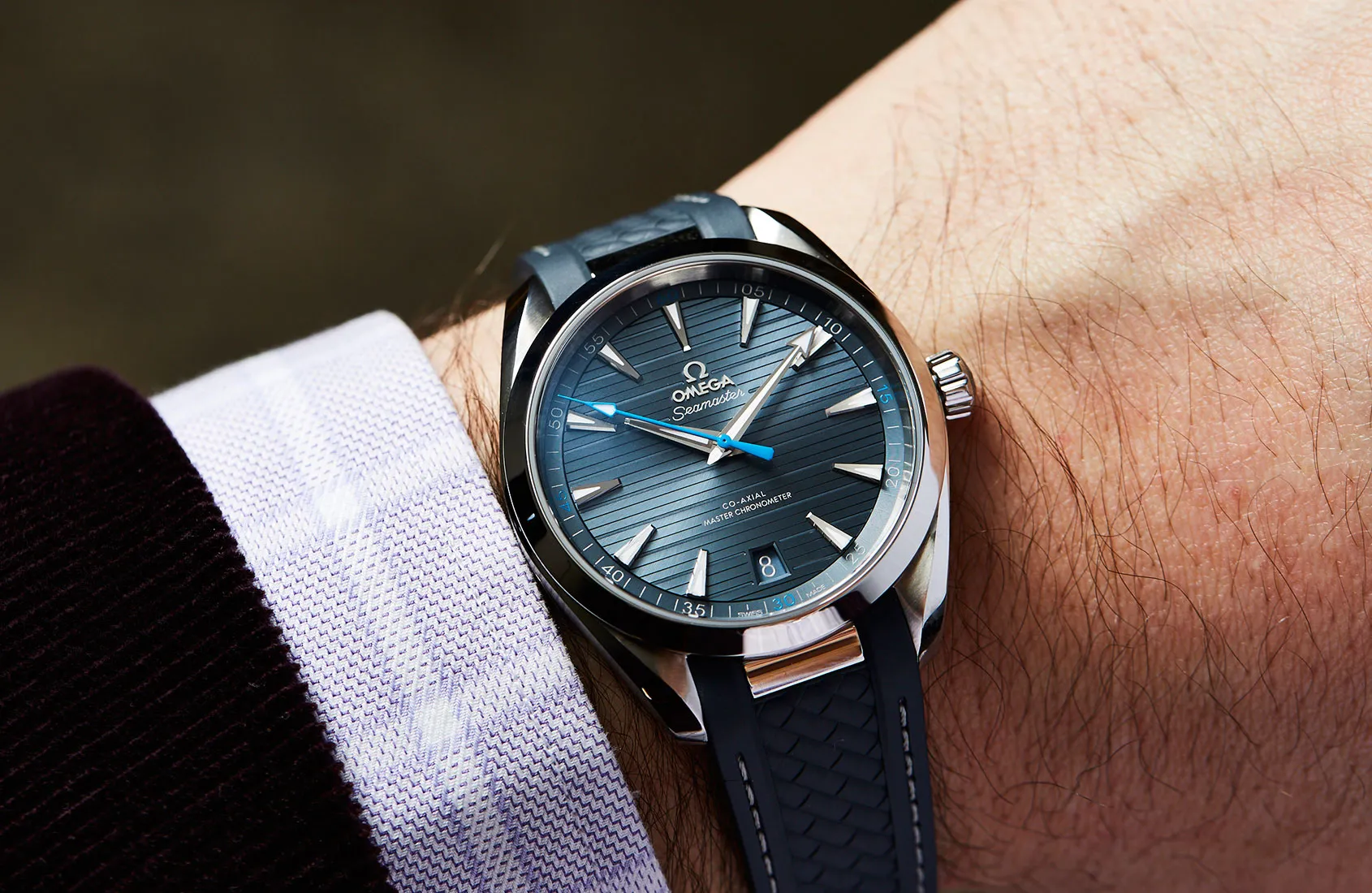
The Aqua Terra, launched in 2002, is the modern version of that idea. Omega says its clean look recalled the original Seamaster 300, the 1957 dive watch, but it leaves off the dive bezel and keeps the case slim. Today it’s a 41mm steel watch, water resistant to 150m, that passes for a dress watch under a shirt cuff. It suits anyone who wants one good watch rather than several, and it’s one of the models in our guide to the best Omega watches.
A Seamaster for town as well as sea
The Seamaster name started out broad. The 1948 watch was meant for everyday wear, on land as much as at sea. Then in 1957 Omega launched the Seamaster 300, its first professional divers’ watch, and over the following decades the name came to mean dive watches above all, from the Diver 300M in 1993 to the Planet Ocean in 2005.
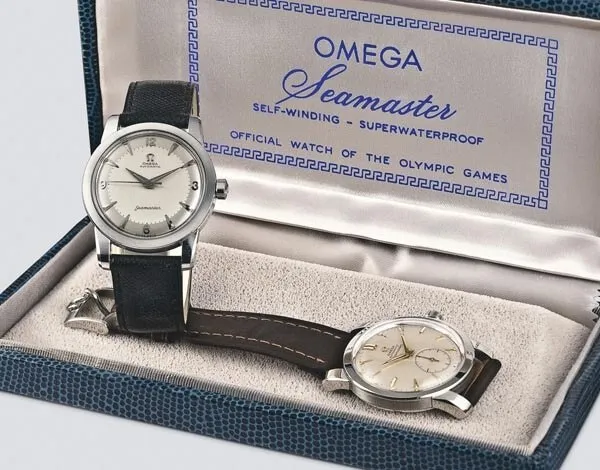
An early Seamaster in its box, sold as “self-winding” and “superwaterproof”. Image: Omega
The Aqua Terra brought the Seamaster back to where it began. It sits in the same family as Omega’s divers and shares their taste for water, but it suits the life most owners actually lead: a desk on weekdays, a pool or a boat on the weekend.
Why the dial has a teak pattern
The detail people notice first is the dial. It’s cut with fine horizontal grooves that Omega calls a “teak” pattern, inspired by the wooden decks of luxury sailboats. It ties a dressy watch back to the sea, and it gives a plain dial some texture, so the light moves across it as you turn your wrist. Earlier Aqua Terras ran the lines vertically, and turning them horizontal was one of the changes Time+Tide picked out in the Master Chronometer generation.
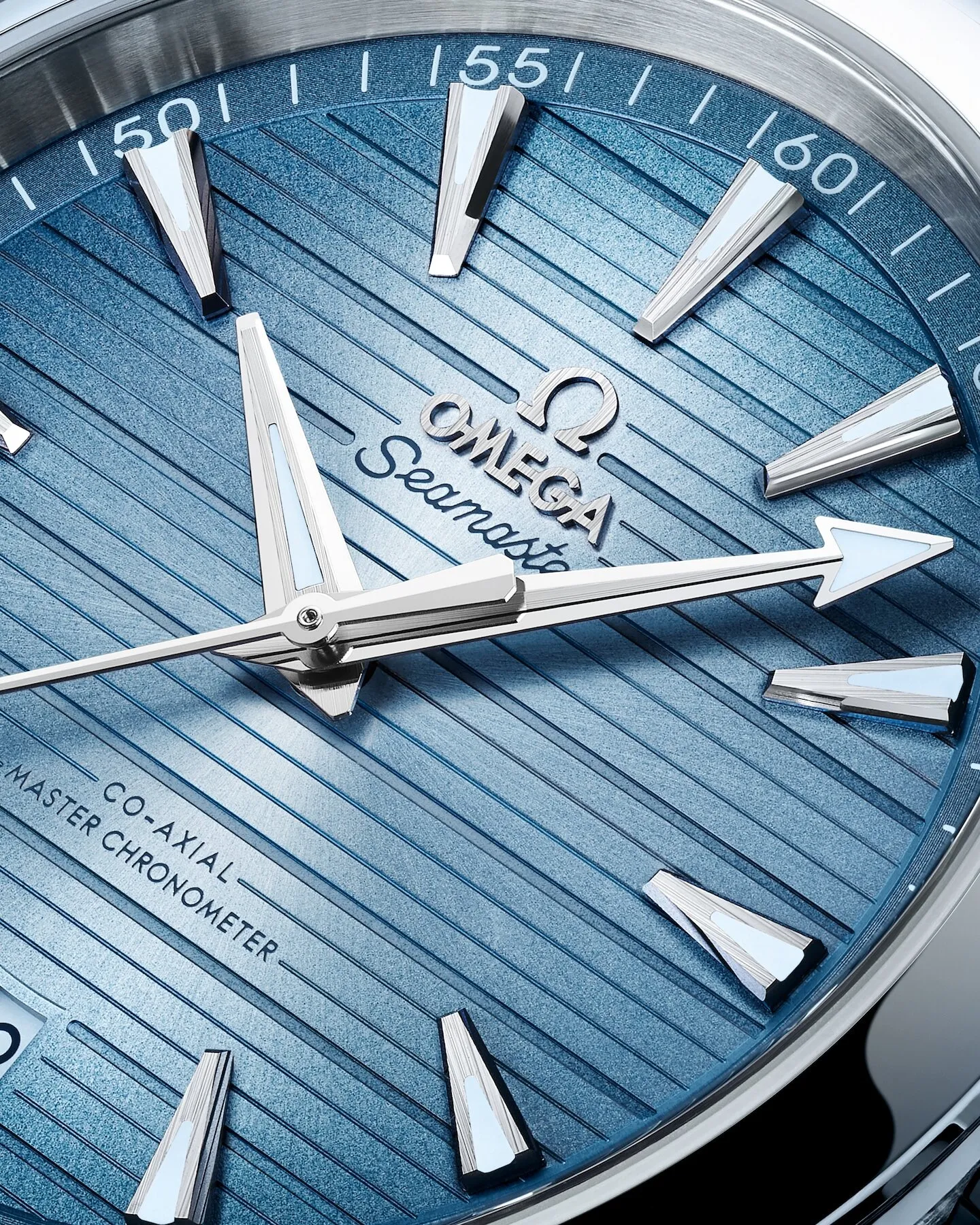
The teak pattern up close, on the Summer Blue dial. Image: Omega
Why there’s no dive bezel
A dive bezel turns to time a dive, and most people wearing an Aqua Terra will never need one. Leaving it off keeps the case to about 13mm thick and lets the dial take up more of the face, which is the clean look Omega traces back to the Seamaster 300. It also means nothing catches on a cuff.
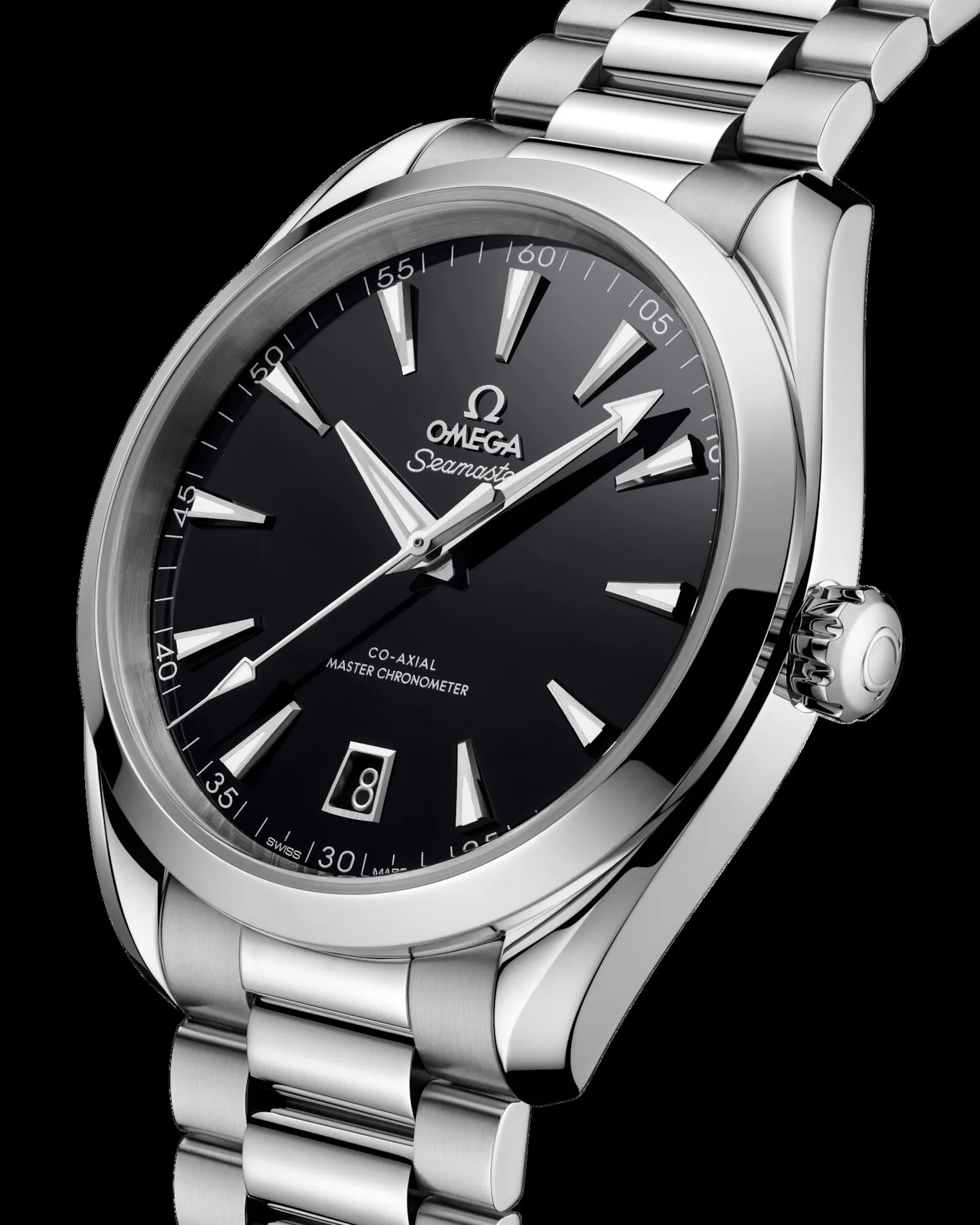
The 41mm Aqua Terra on its steel bracelet. Image: Omega
The water resistance stays. At 150m, the Aqua Terra handles swimming, snorkelling and a day on a boat with plenty to spare, which sets it apart from most watches this smart. You don’t need to take it off at the beach.
Why it shrugs off magnetism
Inside is Omega’s Calibre 8900, an automatic movement with the Co-Axial escapement used across Omega’s range. It runs for about 60 hours off the wrist, so a watch left on the dresser on Friday night is still going on Monday morning.
Like every current Aqua Terra, it’s a Master Chronometer, tested on the finished watch in a magnetic field of 15,000 gauss. That matters more than it sounds. Laptops, phone cases, bag clasps and speakers can magnetise an ordinary mechanical watch and make it run fast until it’s serviced. The Aqua Terra doesn’t have that problem.
The steel bracelet closes with a butterfly clasp, which folds flat under the wrist so nothing sticks out to scratch a desk or snag a sleeve.
Sizes, straps and Australian prices
The standard Aqua Terra is 41mm, and most of the range is built around it. The thin bezel and flat case keep it looking smaller than the number suggests. The Aqua Terra Shades range comes in 34mm and 38mm, in polished steel and in gold, with the same Master Chronometer certification.
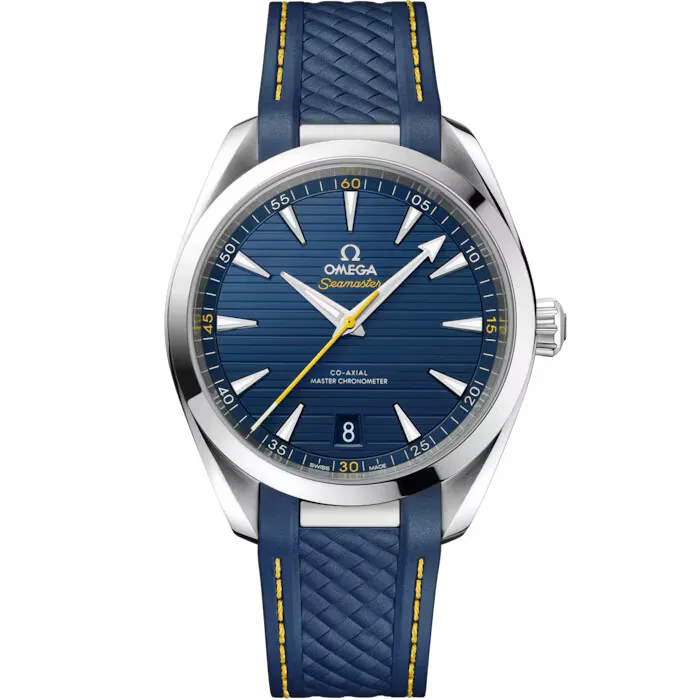
The 41mm Aqua Terra on Omega’s rubber strap. Image: Omega
In steel at 41mm, the strap sets the price:
| Strap | AUD RRP |
|---|---|
| Leather | $10,525 |
| Rubber | $10,750 |
| Steel bracelet | $11,750 |
Gold brings the price up quickly. Steel with Omega’s Sedna gold starts at $17,125, and the solid Moonshine gold models reach $73,375. Prices are from Omega Australia.
Which to buy, and what else to consider
Buy the 41mm in steel on the steel bracelet. The point of an Aqua Terra is that it goes from the office to the water, and a leather strap is something you’ll take off before you swim. The bracelet costs $1,225 more than leather and is worth it. Choose rubber instead if you’ll be in the water most weekends. If you have a slim wrist, or want the watch to sit under a cuff like a dress watch, try the 38mm next to the 41mm before you decide, because the difference is bigger on the wrist than on paper.
The Constellation is the closest alternative in Omega’s own range. It uses the same Calibre 8900 and starts at $11,350, but it’s the dressier watch, with Roman numerals on the bezel and the “claws” on the side of the case, and it’s rated to 50m rather than 150m. If the watch is for the office and dinner, it has more presence. If it has to cover the beach too, the Aqua Terra is the better choice. For a true dress watch, the De Ville Prestige starts at $8,100 in 40mm steel on leather. For a sports watch you’ll sometimes wear with a suit, the Seamaster Diver 300M starts at $9,925 on rubber, though it’s a thicker watch with a dive bezel.
The Aqua Terra’s natural rivals at Rolex are the Datejust, at $13,700 for 36mm and $14,900 for 41mm in steel, and the Explorer, at $13,250 for 36mm and $14,050 for 40mm. Against the Aqua Terra on its bracelet, that’s between $1,500 and $3,150 more for the Rolex, by our arithmetic.
Omega has boutiques in Sydney, Melbourne, Brisbane and Perth, plus authorised retailers listed on its store locator. Buying from one of them gets you Omega’s five-year warranty, which a watch from another seller may not carry.