Rolex Explorer: The Watch Rolex Made After Everest
From the Oysters on Everest in 1953 to today's Explorer 36 and 40: why it has a 3-6-9 dial and nothing else, and what each version costs in Australia.
At 11.30 on the morning of 29 May 1953, Edmund Hillary and Tenzing Norgay became the first people to stand on top of Everest. They were part of a British expedition led by John Hunt, which Rolex had kitted out with Oyster Perpetual watches. The watches on the mountain weren’t Explorers, though. That name came afterwards, when Rolex turned the spirit of the expedition into a watch of its own.
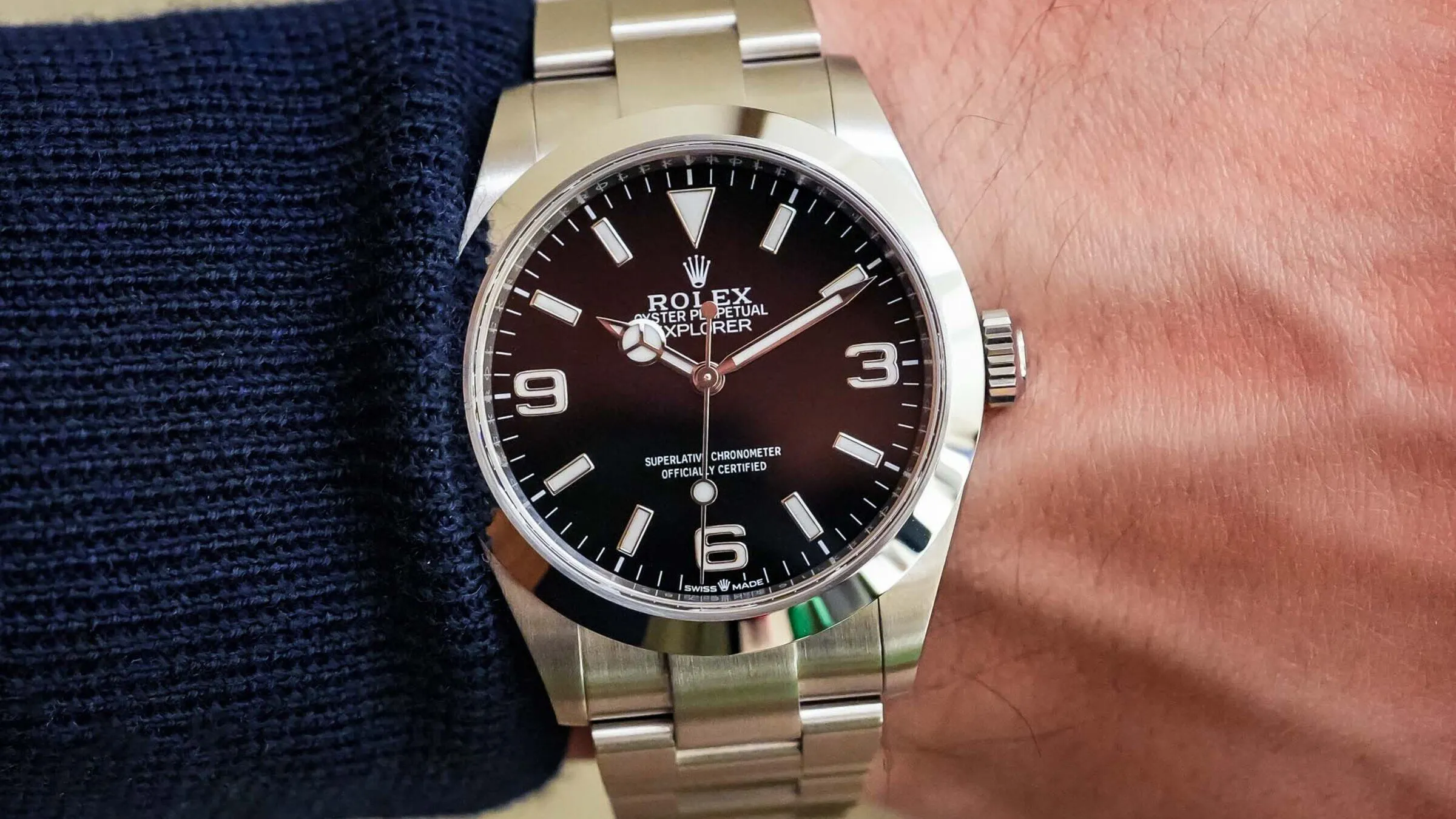
The result is about as plain as a Rolex gets: a steel Oyster case, a black dial with large numerals at 3, 6 and 9, a triangle at 12, and no date or rotating bezel. It now comes in 36mm and 40mm sizes, starting at $13,250. It suits anyone who wants a Rolex that simply tells the time and looks more like a tool than a dress watch. To see where it sits in the range, read our guide to the best Rolex watches.
Everest, and the watches that weren’t Explorers
Rolex had been sending watches to hard places long before Everest. Hans Wilsdorf proved his waterproof Oyster case in 1927 by having Mercedes Gleitze wear one as she swam the English Channel, and from the 1930s Oysters went with expeditions to the polar regions and the highest mountains. Rolex calls this its real-world laboratory: the people wearing the watches in those places told Rolex what failed, and the watches got more reliable.
Everest was the most famous test. After the climb, Hunt wrote that the Oysters had performed splendidly, and Rolex has told the story of Hillary and Tenzing ever since. But the watch it made in the wake of the ascent was something new: one of Rolex’s first Professional models, with its own name and a dial drawn for the job.
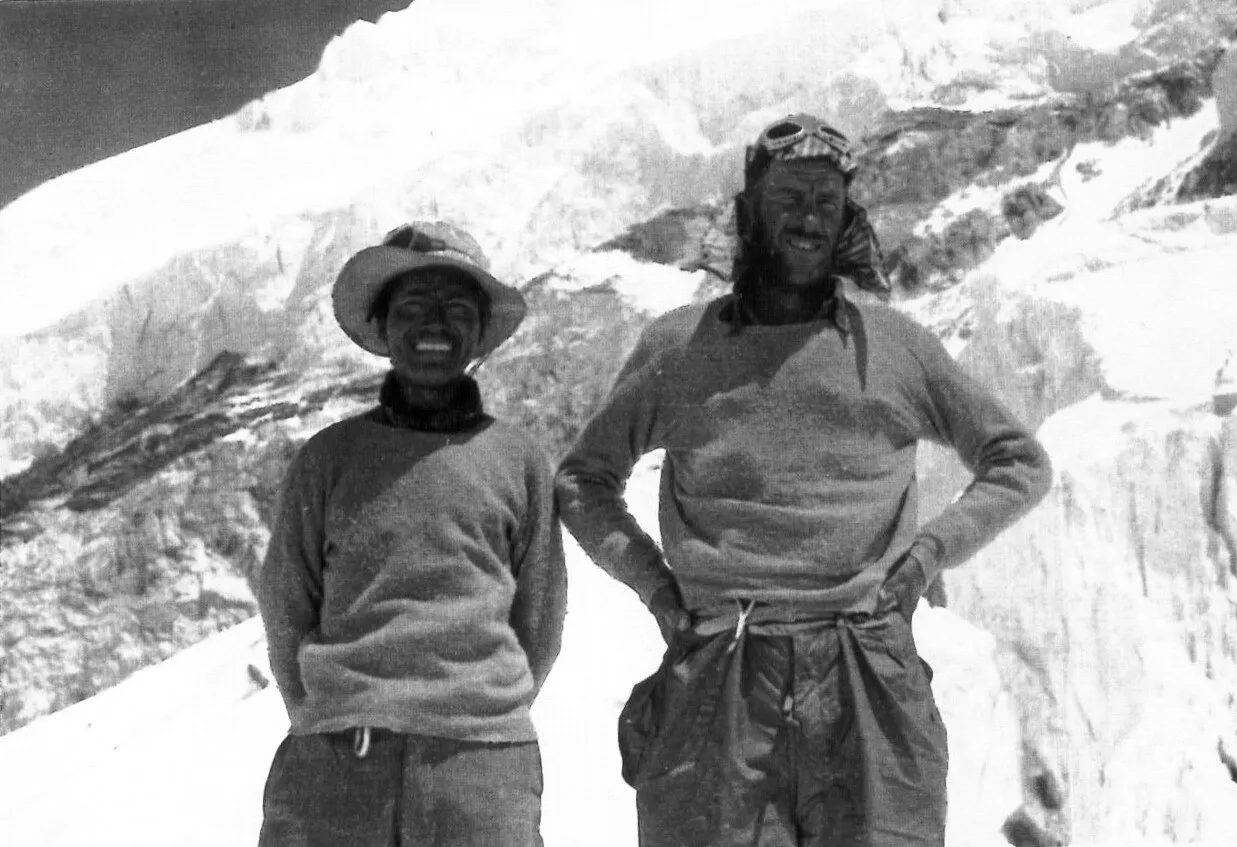
Tenzing Norgay (left) and Edmund Hillary on the 1953 British Everest expedition. Photo: Dirk Pons, from the John Henderson collection, CC BY-SA 3.0, converted to black and white
A dial made to be read
Rolex describes the original Explorer as designed for legibility, and its dial still shows how. There are only three numerals, at 3, 6 and 9, with baton markers between them and a triangle at 12. The quarters are where the eye goes when you glance at a watch, so big numerals there let you place the hands without counting markers, and the triangle tells you which way is up even when the watch has twisted on your wrist.
Tudor reached much the same face for its Ranger, with numerals at 3, 6, 9 and 12. Field watches from different makers end up looking alike because they’re solving the same problem.
The lume has changed more than the layout. Rolex unveiled its own luminescent material, Chromalight, in 2008: white in daylight, glowing blue in the dark. It reached the Explorer in 2010, and in 2021 the Explorer and Explorer II were the first Rolex watches to get an improved version that’s whiter by day and glows for longer at night.
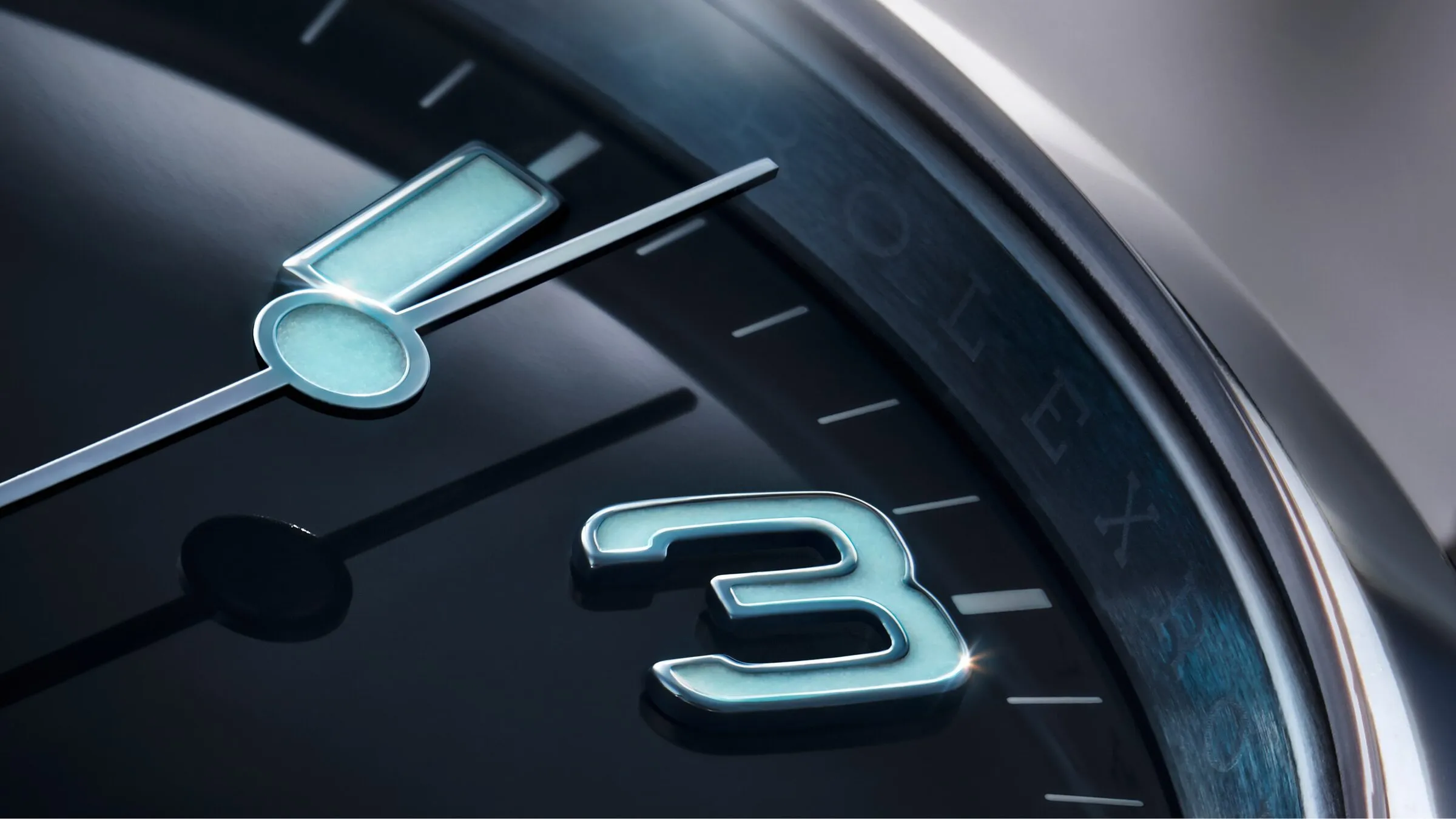
Chromalight on the Explorer: the 3 and the seconds hand glow blue in the dark. Image: Rolex
Why it leaves out a date
The Explorer tells the hour, minute and second, and nothing else. Rolex doesn’t say why, but the dial is the reason the watch exists, and a date window would crowd it. On a mountain the date is rarely the thing you need in a hurry. When Rolex did build an expedition watch with more on the dial, it made a separate model: the Explorer II, in 1971, added a date and a 24-hour hand for places where you can’t tell day from night.
The 36mm case follows the same thinking. It slips under a shirt cuff and gives the dial room to breathe without making a big watch.
The case and movement
The Explorer uses the Oyster case Wilsdorf built Rolex on: a solid middle case with a screw-down back and crown, which Rolex describes as waterproof and dustproof. The crown is a Twinlock, a design Rolex unveiled in 1953, the year of Everest, with two sealed zones. Together they give 100m of water resistance, enough for rain, swimming and snow melting on the case, without the bulk of a dive watch.
Inside both sizes is calibre 3230, which Rolex develops and makes itself. It winds itself as the wrist moves and runs for about 70 hours off the wrist, so it’s still going on Monday morning if you took it off on Friday night. It has Rolex’s blue Parachrom hairspring and Paraflex shock absorbers to protect it from knocks, and Rolex certifies it to within two seconds a day either way after it’s cased. The steel Oyster bracelet, which Rolex developed in the late 1930s, closes with an Oysterlock clasp that has a 5mm Easylink extension for a looser fit on a hot day.
Where Explorers went next
The Explorer name went up mountains soon after Everest. Rolex says the Italian climbers who made the first ascent of K2 in 1954 wore Oyster Perpetual Explorers, and Achille Compagnoni wrote that his worked perfectly above 8,000 metres. On the first ascent of Kangchenjunga in 1955, the British climber George Band wore his Explorer throughout.
The watches went across ice too. Rolex equipped the British Trans-Arctic Expedition with Explorers: Wally Herbert, Allan Gill, Kenneth Hedges and Roy Koerner crossed nearly 6,000km of frozen Arctic Ocean from Point Barrow in Alaska to Spitsbergen, finishing on 6 April 1969, the first overland crossing of the Arctic Ocean.
The Explorer today: sizes and prices
Rolex makes three Explorers, all with the black 3-6-9 dial, calibre 3230 and an Oyster bracelet.
| Explorer 36 | Explorer 36 Rolesor | Explorer 40 | |
|---|---|---|---|
| Reference | 124270 | 124273 | 224270 |
| Case | 36mm Oystersteel | 36mm Oystersteel, gold bezel | 40mm Oystersteel |
| Bracelet | Oystersteel | Oystersteel and yellow gold | Oystersteel |
| Movement | 3230, about 70h | 3230, about 70h | 3230, about 70h |
| Water resistance | 100m | 100m | 100m |
| Price | $13,250 | $24,400 | $14,050 |
Prices are Rolex’s Australian recommended retail at the time of writing.
The two sizes are the result of Rolex changing its mind. As Monochrome Watches traces in its review of the Explorer 40, the Explorer was a 36mm watch from 1953 until 2010, when Rolex enlarged it to 39mm. In 2021 it went back to 36mm, closer to the original, and in 2023 the 40mm arrived alongside it. Both are about 11.6mm thick, so the 40 is wider rather than chunkier. The one difference on the dial is the Explorer name, which sits under the Rolex logo at 12 on the 40 but at 6 on the old 39.
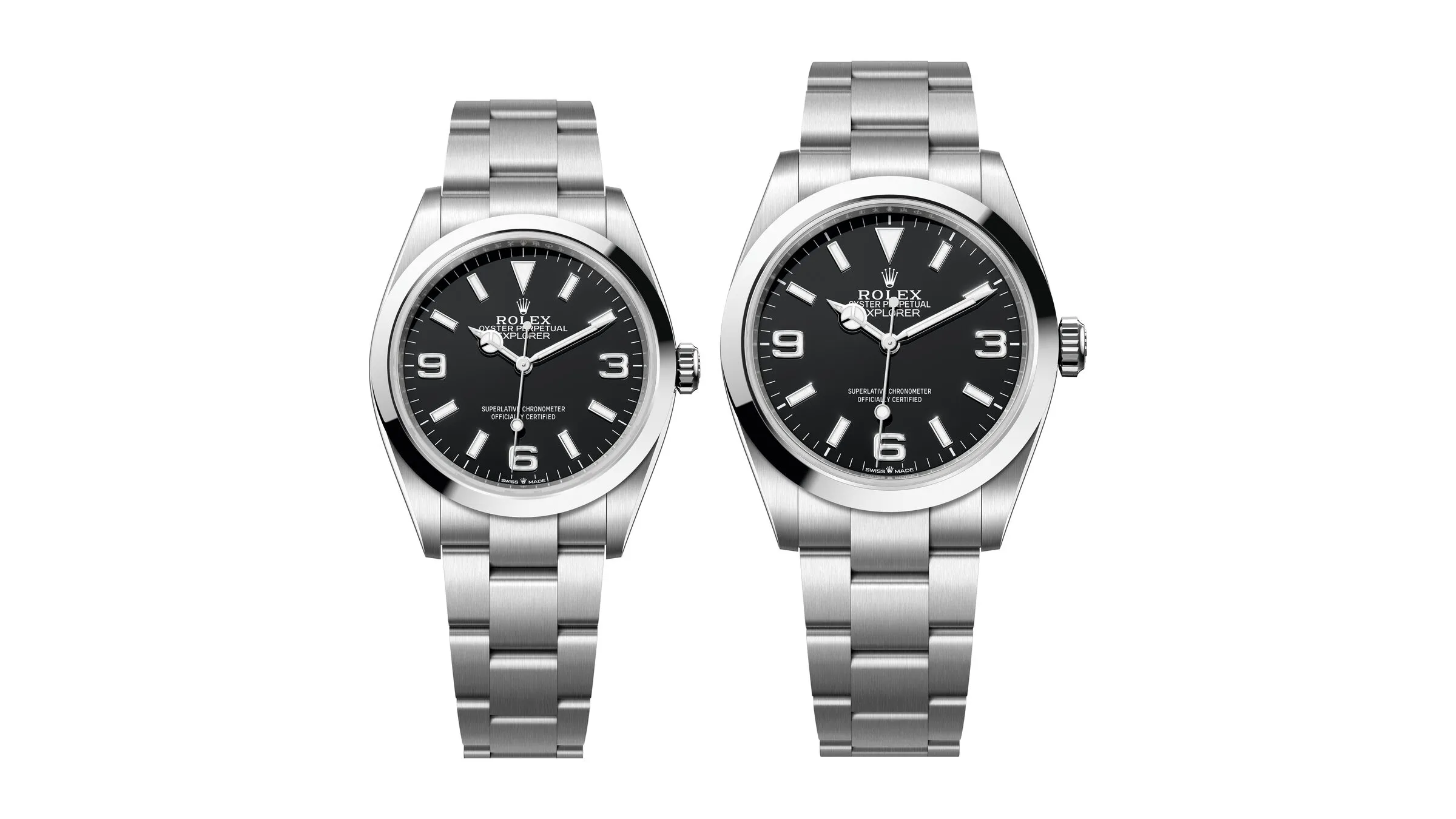
The Explorer 36 (left) beside the Explorer 40. Image: Rolex
Which Explorer, and the alternatives
The steel Explorer 36 is the one that stays closest to the original idea, and at $13,250 it’s the cheapest way to own a Rolex with an expedition story behind it. Choose the 40 if 36mm looks small on your wrist; it costs $800 more and has the same movement, lume and water resistance. The two-tone 124273 adds a yellow gold bezel and centre links for $24,400, which turns a tool watch into something dressier. It’s a handsome watch, but most of the extra $11,150 is gold rather than anything that helps it do the Explorer’s job.
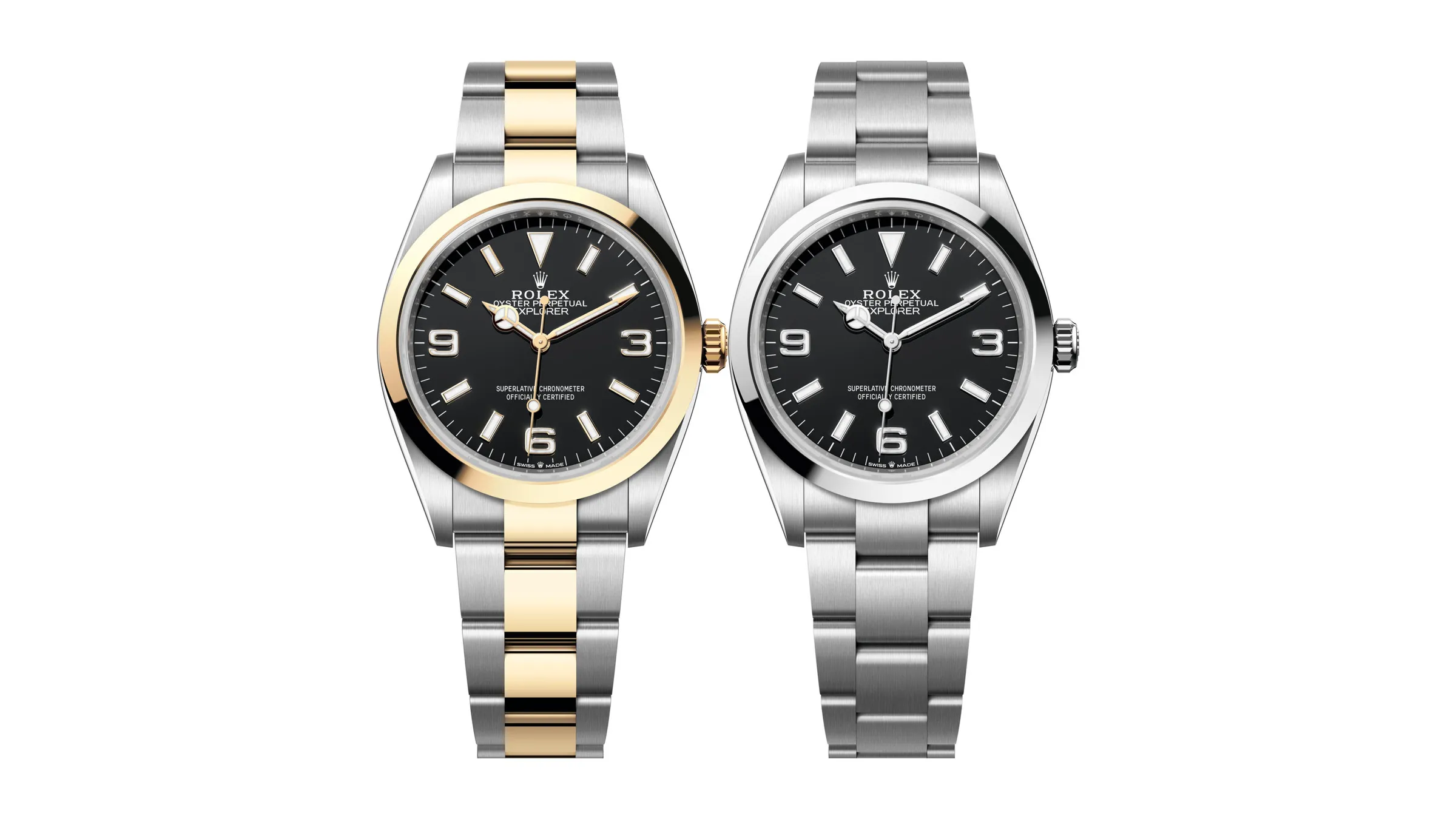
The Explorer 36 in Oystersteel and yellow gold (left) beside the steel Explorer 36. Image: Rolex
If you like the simplicity but not the expedition look, the Oyster Perpetual shares the same movement and 100m rating with plainer markers and brighter dial colours, from $11,200 for the 36mm. If you want the expedition story with a 24-hour hand and a date, look at the Explorer II.
Outside Rolex, the closest match in spirit is the Tudor Ranger, from the other company Wilsdorf founded. It has the same kind of dial and costs $5,630 on a bracelet, well under half the Explorer. Tudor’s Black Bay Pro, with a fixed 24-hour bezel and hand, is the Tudor answer to the Explorer II.