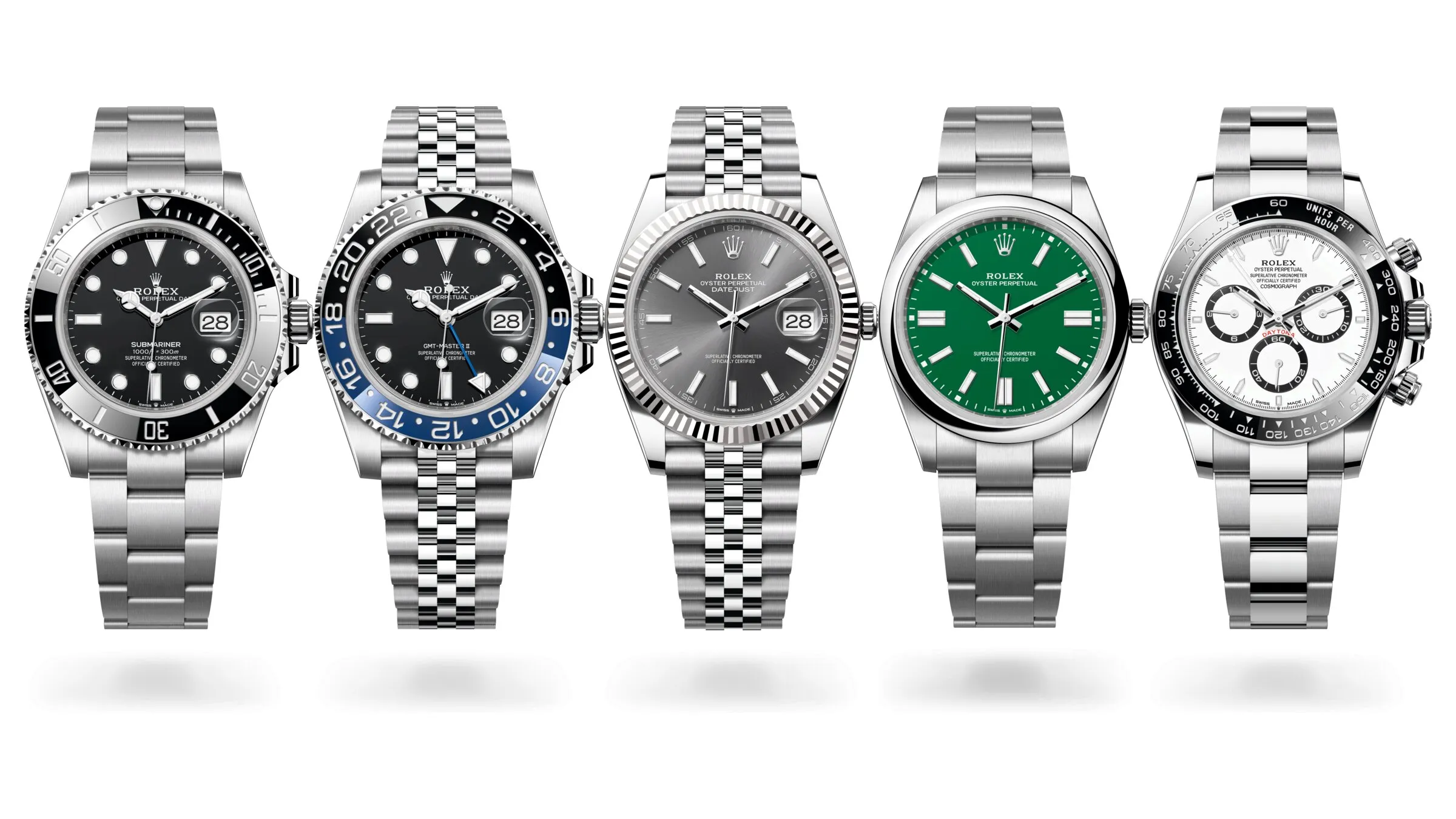
Rolex Yacht-Master: The Sailing Watch, From Buoy to Buoy
Where Rolex's sailing ties began, why the Yacht-Master's bezel has raised numerals, why no version is plain steel, and what the 37, 40 and 42 cost in Australia.
Rolex’s ties to sailing go back to 1958, when it partnered the New York Yacht Club, the club behind the America’s Cup. Today its name is on the start line of the Sydney Hobart. The Yacht-Master, launched in 1992, is the watch it made for life on the water, both on deck and at the yacht club afterwards.
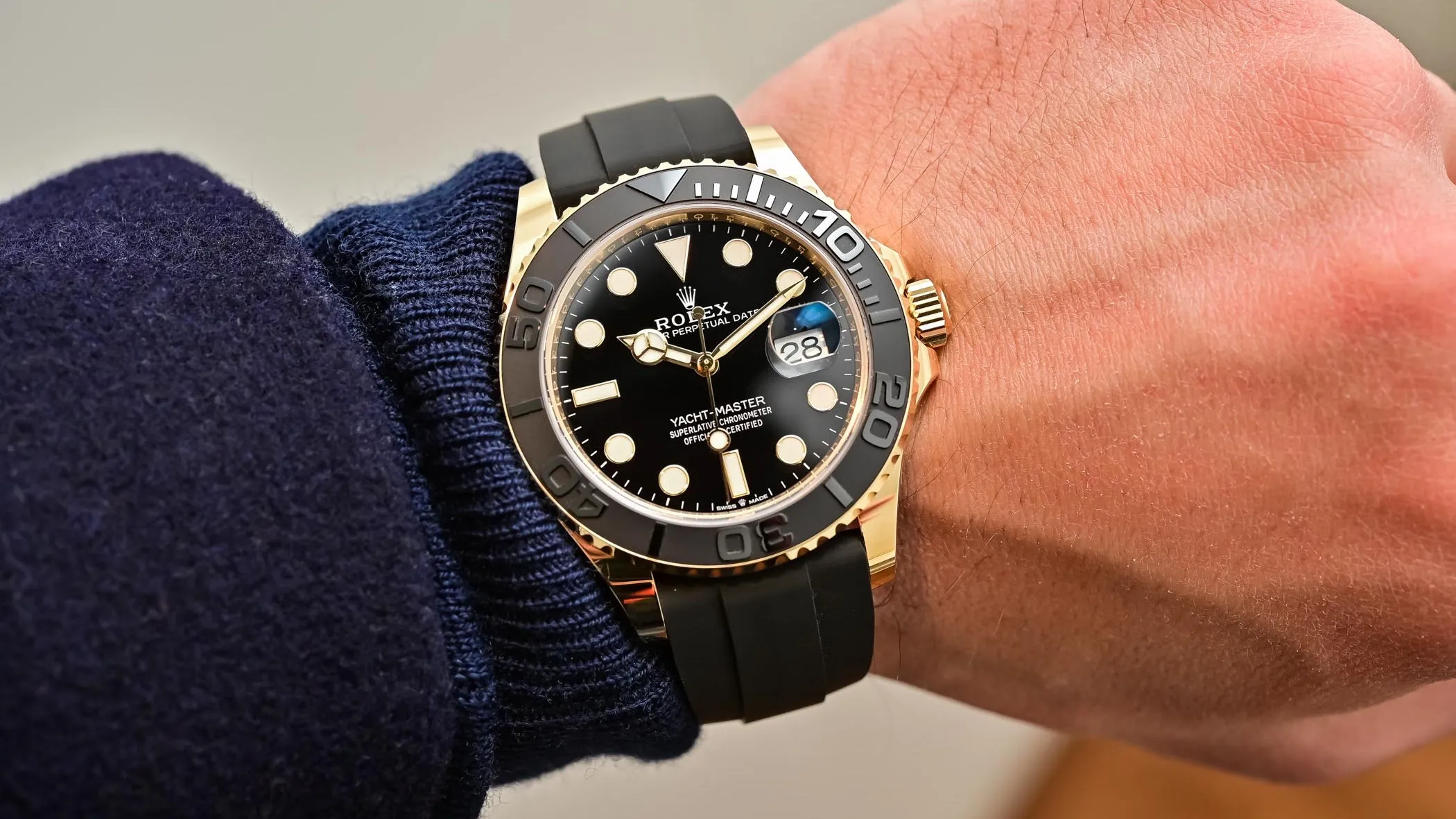
Life on a boat is hard on a watch, with salt spray, wet hands and knocks against winches and rails. The Yacht-Master is water resistant to 100m and has a 60-minute bezel with raised numerals that turns in both directions, so it’s easy to grip and read when timing a leg between buoys. Where the Yacht-Master II is made for the race start, this one suits everything around it. It never comes in plain steel, only steel with a platinum bezel, titanium or gold, which makes it the dressier sibling of the Submariner. It’s sized from 37mm to 42mm and starts at $20,800. To see where it sits in the range, read our guide to the best Rolex watches.
Rolex on the water
The partnership with the New York Yacht Club was Rolex’s first with a yacht club, and others followed, along with the races they run. Rolex has been title sponsor of the Maxi Yacht Rolex Cup off Porto Cervo in Sardinia since 1985, five years after the Yacht Club Costa Smeralda launched it. Closer to home, it has been title sponsor of the Sydney Hobart since 2002, alongside the Cruising Yacht Club of Australia, which runs the 628-nautical-mile race. Since 2001 it has also partnered World Sailing, the sport’s governing body, and presents its sailor of the year award each November.
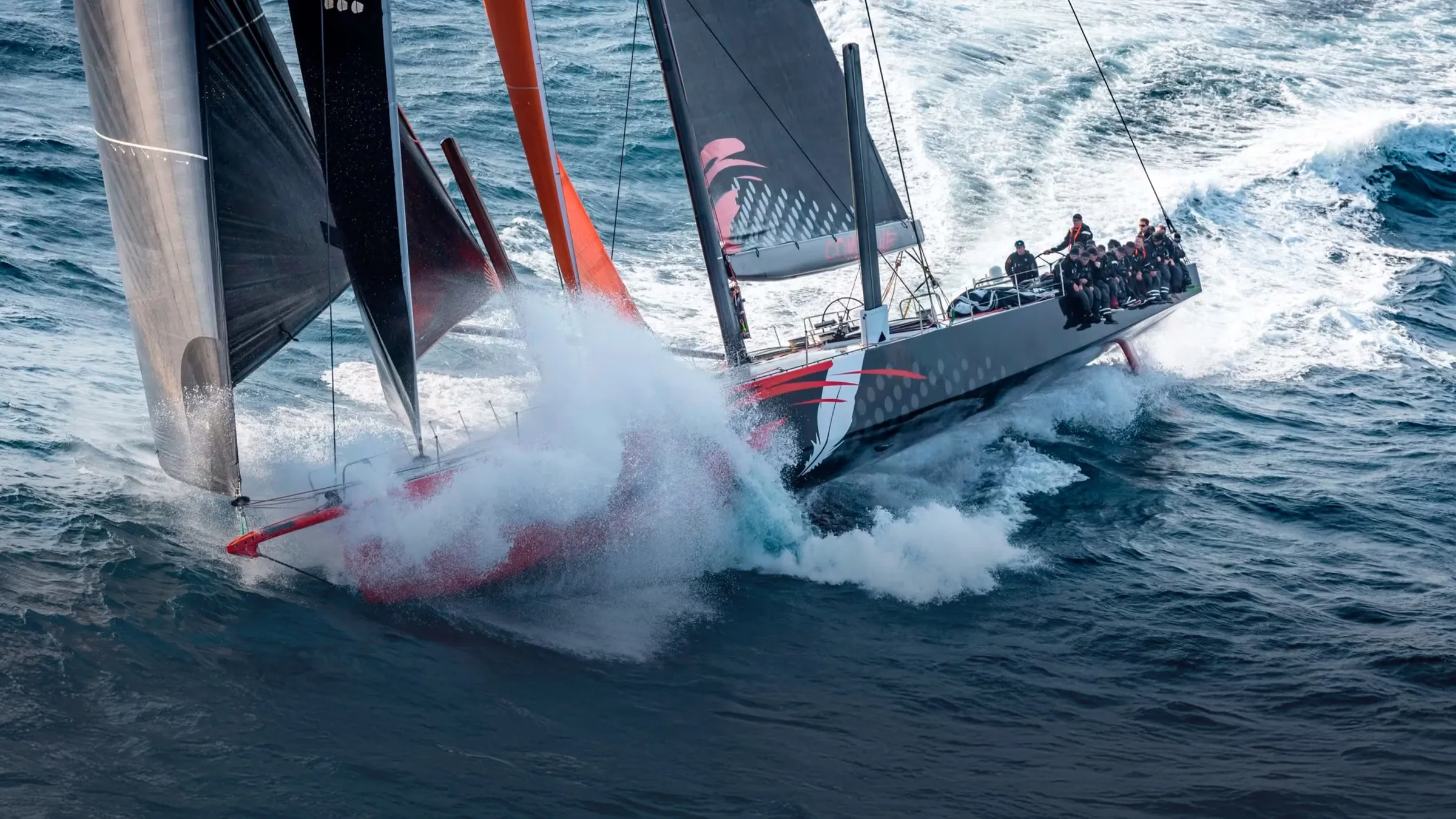
A maxi yacht in heavy seas during the Rolex Sydney Hobart. Image: Rolex
The link to the sea is older than any of that. Rolex tells the story of Sir Francis Chichester, who sailed alone around the world in 1966 and 1967, stopping only once, in Sydney, and wore an Oyster Perpetual the whole way. Behind it sits the idea Hans Wilsdorf built the company on. Ships navigated by marine chronometers, clocks tested by observatories for accuracy, and in 1914 Wilsdorf had a Rolex wristwatch certified as a chronometer at Kew Observatory, the first to earn one. Rolex puts the two together: sailing needs exact time, and exact time is what it sells.

Sir Francis Chichester greets the crowd after his solo voyage around the world, in 1967. Image: Rolex
Why the bezel has raised numerals
The bezel is the Yacht-Master’s working part. It turns both ways and is marked in minutes from 0 to 60, so you can line it up with the minute hand and read off how long something has taken. Rolex’s example is the time it takes to sail between two buoys: set the bezel as you round one mark and the minute hand shows your time to the next.
That’s the difference from the Submariner. A dive bezel turns one way only, so a knock can only make it show less time left underwater, never more. A sailor timing a leg has no such risk and wants to set the bezel quickly in either direction.
The numerals stand up from the bezel and are polished, against a matt, sand-blasted background. Rolex doesn’t say where the idea came from, but it calls the bezel a key part of the Yacht-Master’s look, and it’s the detail that tells one apart from across a room. On the Rolesium and Everose versions the whole bezel is solid platinum or gold; the others use a black Cerachrom ceramic insert.
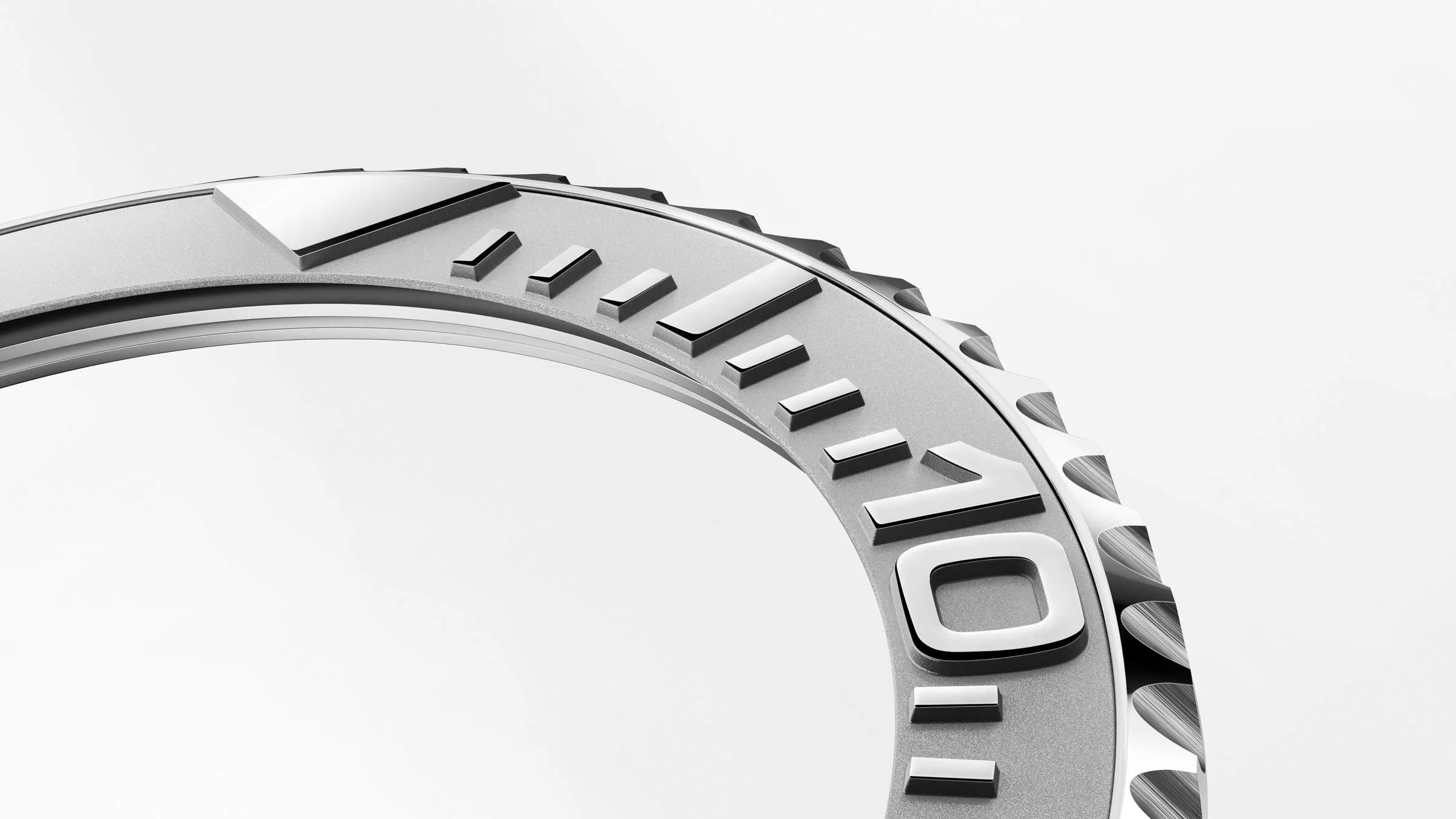
The solid platinum bezel of the Rolesium Yacht-Master 40, its numerals raised from a sand-blasted ground. Image: Rolex
Why no Yacht-Master is plain steel
Every current Yacht-Master is either a precious metal, a mix with one, or titanium. Each choice has a reason.
- Rolesium arrived on the Yacht-Master in 1999: an Oystersteel case and bracelet with a platinum bezel. It works like Rolex’s two-tone Rolesor, but platinum is quieter than gold and looks almost like steel. It’s the most affordable Yacht-Master in the 37mm and 40mm sizes.
- RLX titanium is a grade 5 titanium alloy Rolex uses on the 42mm model. Rolex says it is light and resists corrosion but is hard to machine, which is why it needed its own production processes. Lightness and corrosion resistance both suit a watch worn on a boat.
- Everose, yellow and white gold make up the rest, either as solid gold or as Everose Rolesor (steel and Everose gold).
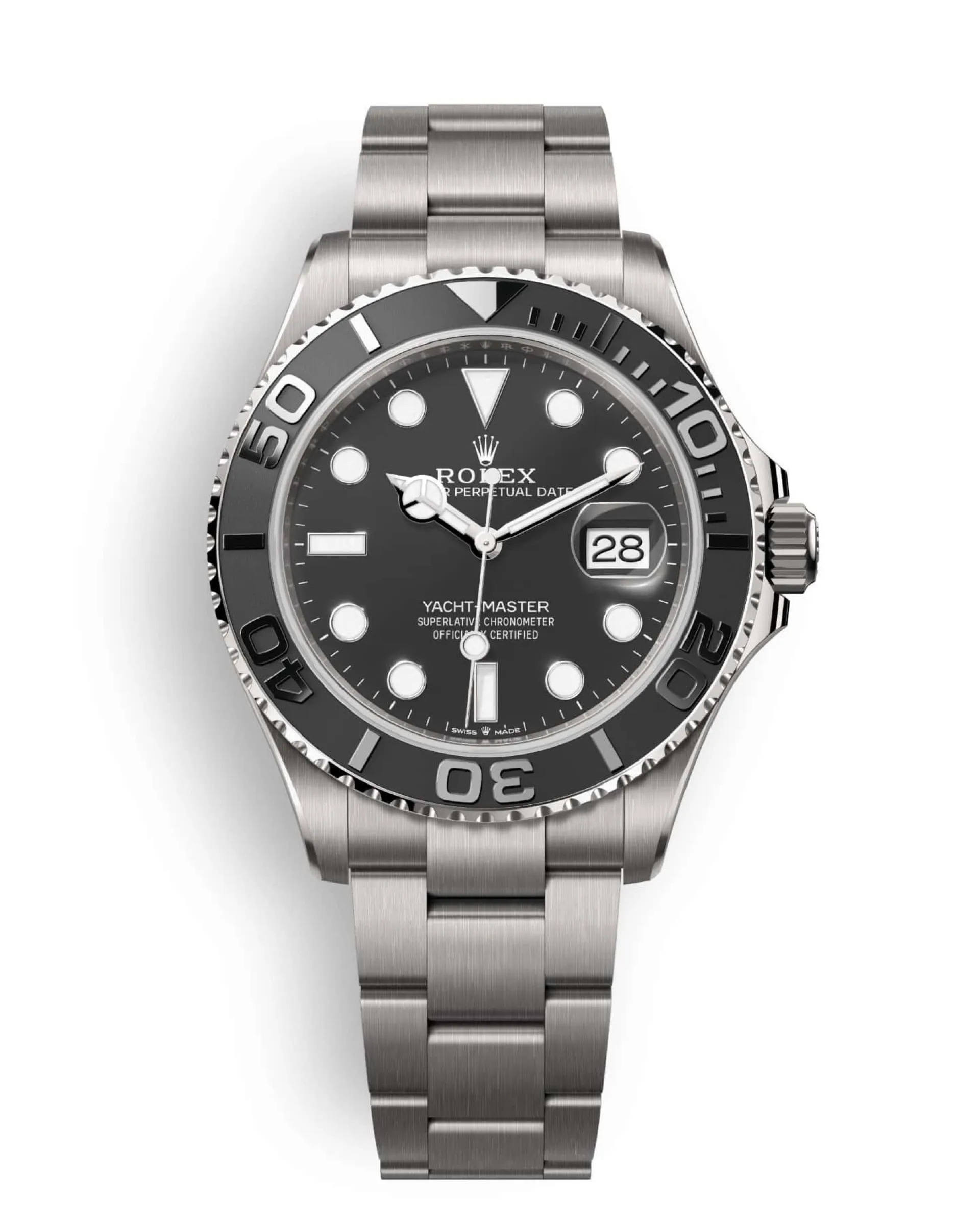
The Yacht-Master 42 in RLX titanium. Image: Rolex
The strap matters too. Rolex introduced the Oysterflex on the Yacht-Master in 2015. It looks like rubber, but inside are two flexible metal blades covered in elastomer, so it holds its shape like a bracelet. Cushions on the underside keep it steady on the wrist, and the Glidelock clasp adjusts it by about 15mm without tools.
The Yacht-Master II: a separate watch for the start line
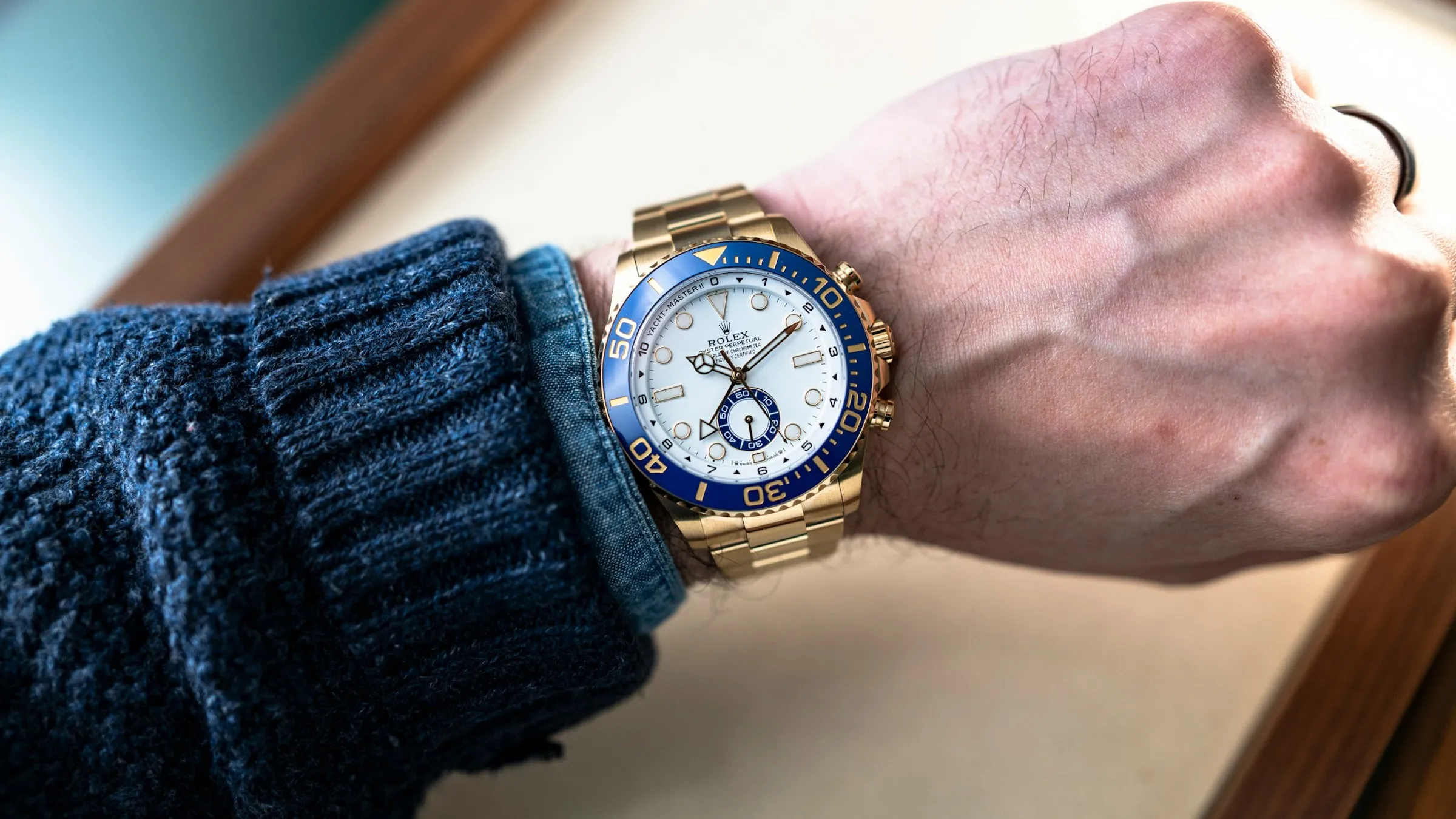
The Yacht-Master II shares the name and the sailing story but is a different kind of watch. Launched in 2007, it’s a 44mm regatta chronograph whose countdown times the minutes before a race starts, with a memory that keeps the countdown length for the next race. Rolex rebuilt it in 2026 with a new calibre, the 4162, and a countdown set from the pusher instead of the bezel. It costs $33,900 in Oystersteel and $101,600 in yellow gold.
The range and Australian prices
The Yacht-Master comes in three sizes. The 37mm models use calibre 2236, with about 55 hours of power reserve; the 40mm and 42mm models use calibre 3235, with about 70 hours. All are water resistant to 100m. Prices are from Rolex’s Australian site.
| Size | Reference | Material | Price |
|---|---|---|---|
| 37mm | 268622 | Rolesium (steel and platinum) | $20,800 |
| 37mm | 268621 | Everose Rolesor | $29,700 |
| 37mm | 268655 | Everose gold | $54,300 |
| 40mm | 126622 | Rolesium (steel and platinum) | $22,100 |
| 40mm | 126621 | Everose Rolesor | $33,100 |
| 40mm | 126655 | Everose gold | $63,100 |
| 42mm | 226627 | RLX titanium | $26,900 |
| 42mm | 226658 | Yellow gold | $63,800 |
| 42mm | 226659 | White gold | $67,000 |
Rolex sells only through its authorised retailers, and the retailer locator on its site lists them.
Who should buy which
The Rolesium 40 at $22,100 is the Yacht-Master most people mean. It wears like a steel sports watch, the platinum bezel sets it apart from a Submariner without shouting, and it’s the cheapest way into the 40mm case. The 37 is the same idea for a smaller wrist, from $20,800. The titanium 42 at $26,900 is the one to buy if you want something big that doesn’t feel heavy, and it’s the closest the Yacht-Master gets to a tool watch. The gold models are for buyers who want precious metal; on the Oysterflex they’re comfortable enough to wear on the water.
If you dive, the Submariner is the right watch, with its one-way bezel and 300m water resistance. If you travel more than you sail, the GMT-Master II tracks a second time zone and starts at $19,700 in steel.