Tudor Submariner: The 1954 Dive Watch Behind the Black Bay
From the 7922 of 1954 to the last Submariner of the 1990s: what Tudor shared with Rolex, how the French Navy shaped the line, and which Black Bay keeps the original's shape today.
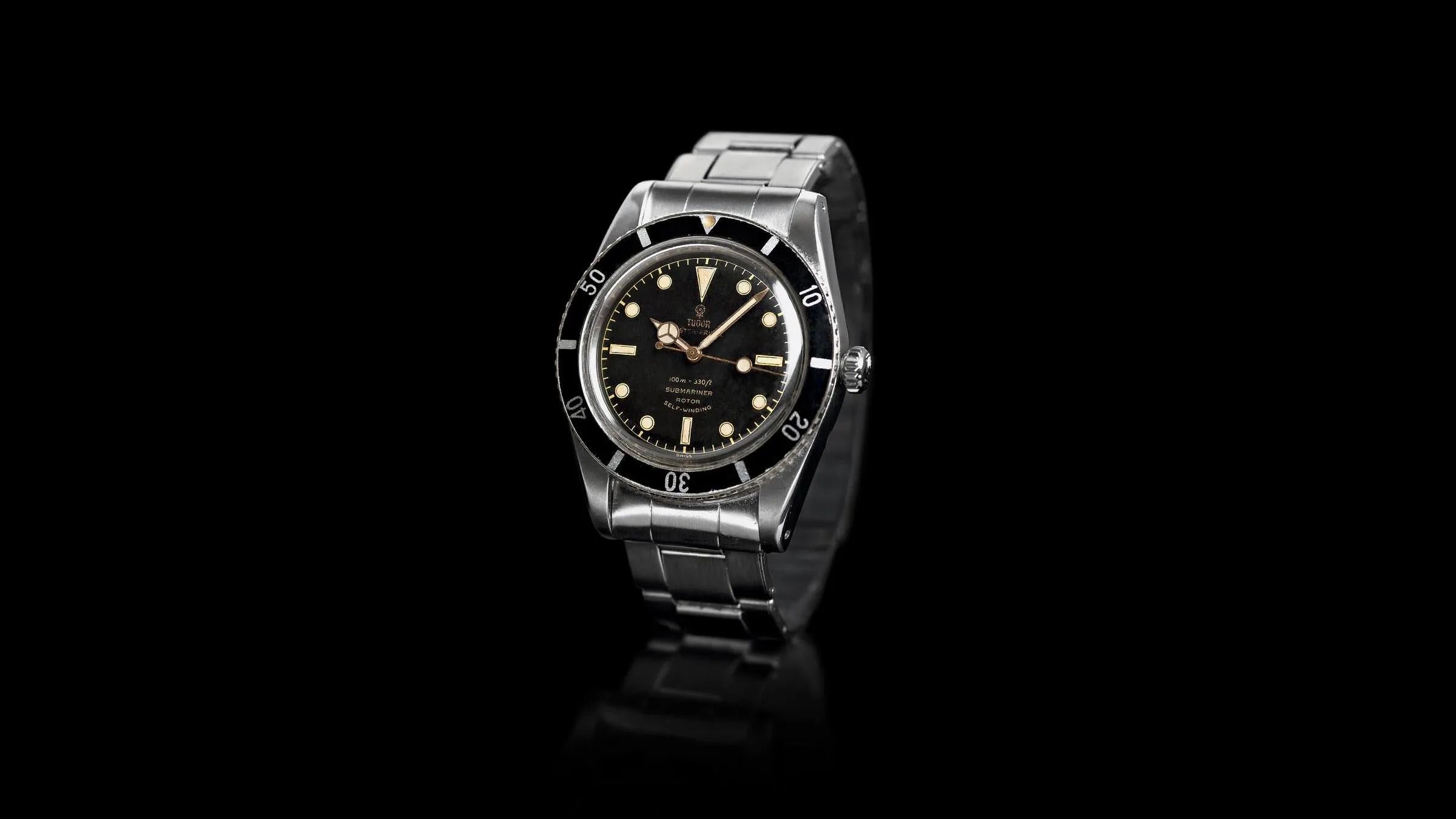
Every Black Bay that Tudor sells is described as a tribute to its 1950s dive watches. The first of those was the Oyster Prince Submariner, reference 7922, presented in 1954, a year after Rolex launched its own Submariner. It shared Rolex’s waterproof Oyster ideas and wore a Rolex-signed crown and bracelet, but it was sold as a Tudor, at what Tudor called a moderate price.
The 7922 and its successors went on to serve with the French Navy and stayed in Tudor’s catalogue until 1999. The watch closest to the original that you can buy new is the 37mm Black Bay 54, from $6,290, while the Black Bay 58 takes its name from the 7922’s successor. Both sit in our guide to the best Tudor watches.
Why Tudor built a dive watch in 1954
Hans Wilsdorf, who founded Rolex, set up Tudor to sell watches with Rolex’s dependability at a lower price. When Tudor launched the Oyster Prince in 1952, Wilsdorf’s selling point was that every one came with the waterproof Oyster case and the self-winding Perpetual rotor, both until then exclusive to Rolex. That same year, 26 Oyster Princes went to Greenland with a British expedition, the story behind the Ranger.
A dive watch was the obvious next step. Rolex introduced the Submariner in 1953 as the first diver’s watch waterproof to 100 metres, and Tudor followed in 1954 with a watch of the same rating. In Tudor’s own account, the 7922 had to be durable, reliable, precise and waterproof, at a moderate price.
What the 7922 was
Everything on the 7922 was there for a diver. The case back and the 5mm crown both screwed down, which sealed the case to 100 metres, or 330 feet. The bezel turned in either direction and was marked in five-minute steps: a diver lined its zero up with the minute hand on the way down, then read off how long they’d been under and when to stop for decompression on the way back up. Large luminous markers and hands made all of it readable in murky water.
The dial was black lacquer, slightly domed, with its text printed in gilt: “Oyster Prince” under the Tudor rose at the top, and “100 m = 330 ft”, “Submariner”, “Rotor” and “Self-winding” at the bottom. Over it sat a domed acrylic crystal, the kind Tudor calls Tropic-type.
Inside was where Tudor saved money. The 7922 ran on Tudor’s Calibre 390, built on a movement blank from Fleurier and beating at 18,000 vibrations an hour. The crown and the riveted steel bracelet, on the other hand, were signed by Rolex.
A year later Tudor added the reference 7923, the only Tudor Submariner with a hand-wound movement. It kept the 100-metre rating and swapped “Rotor” on the dial for “Shock-resisting”.
The French Navy tests it, and the Big Crown follows
From the start of 1956, the French Navy’s diving research group in Toulon, the G.E.R.S., put the 7922 and 7923 through their paces. The commander’s verdict, as Tudor tells it, was that the water resistance was “perfect”. Tudor also says the 7922 is known to have been evaluated and adopted by the US Navy, and widely used by professional divers.
The French Navy wanted more depth, and its request led to the reference 7924 of 1958. Doubling the rating to 200 metres meant standing up to twice the water pressure, so Tudor made the 37mm case thicker, fitted a thicker domed crystal, and gave it an 8mm screw-down crown against the 7922’s 5mm. That crown gave the watch the name collectors still use: the Big Crown. The dial now read “200 m = 660 ft”.
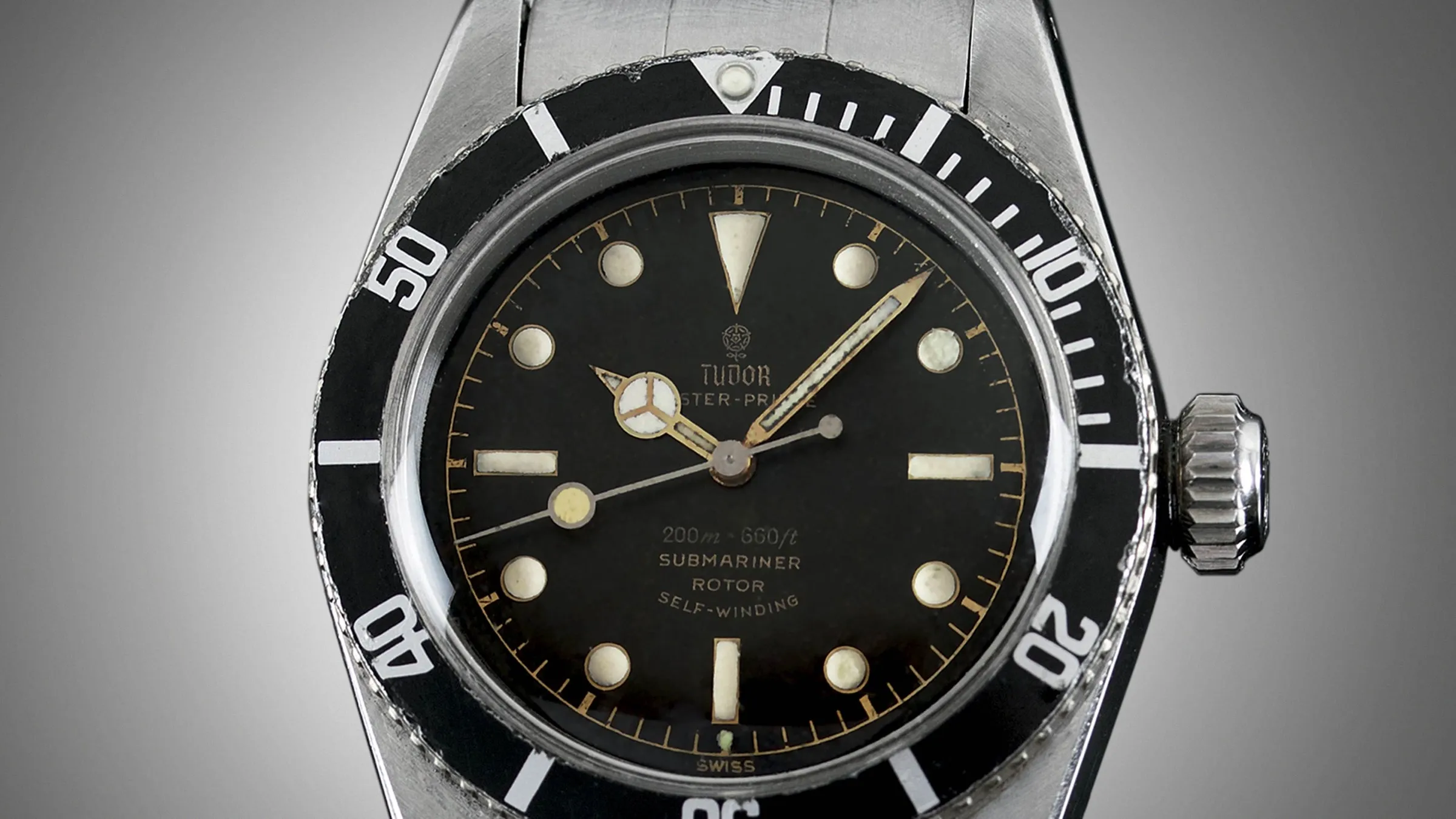
The 1958 reference 7924, the Big Crown. Image: Tudor
The reference 7928 followed in 1959, and the Navy adopted it as soon as it was available. It grew to 39mm and was the first Tudor diver with crown guards, square at first, then pointed from around 1960, then rounded from 1964, a shape that lasted until the end of the 1990s. Its case back was signed “Original Oyster Case by Rolex Geneva”. Tudor treats a 1967 example as the last of the first generation, thirteen years after the 7922.
The Black Bay 58 draws on this period: Tudor named it for 1958 and the 7924, while its 39mm case matches the 7928.
Snowflakes and the Marine Nationale, 1969 to 1999
The second era began in 1969 with the reference 7016 and its date-display sibling, the 7021. Tudor’s shield replaced the rose on the dial, Swiss ETA movements replaced the Calibre 390, and the case, crown and folding bracelet were still signed Rolex. The big change was the dial: square hour markers and angular hands that carried more luminous paint, which collectors came to call Snowflake. Tudor kept that handset in the catalogue until 1981.
From 1974, the French Navy’s watches carried “TUDOR M.N.” and the year engraved on the case back. Its best-known Tudor was the reference 9401 with a blue dial and bezel, which replaced the 7016 in the mid-1970s. The Navy kept taking deliveries into the 1980s and its divers wore them into the 2000s, usually on nylon or elastic straps rather than the steel bracelet.
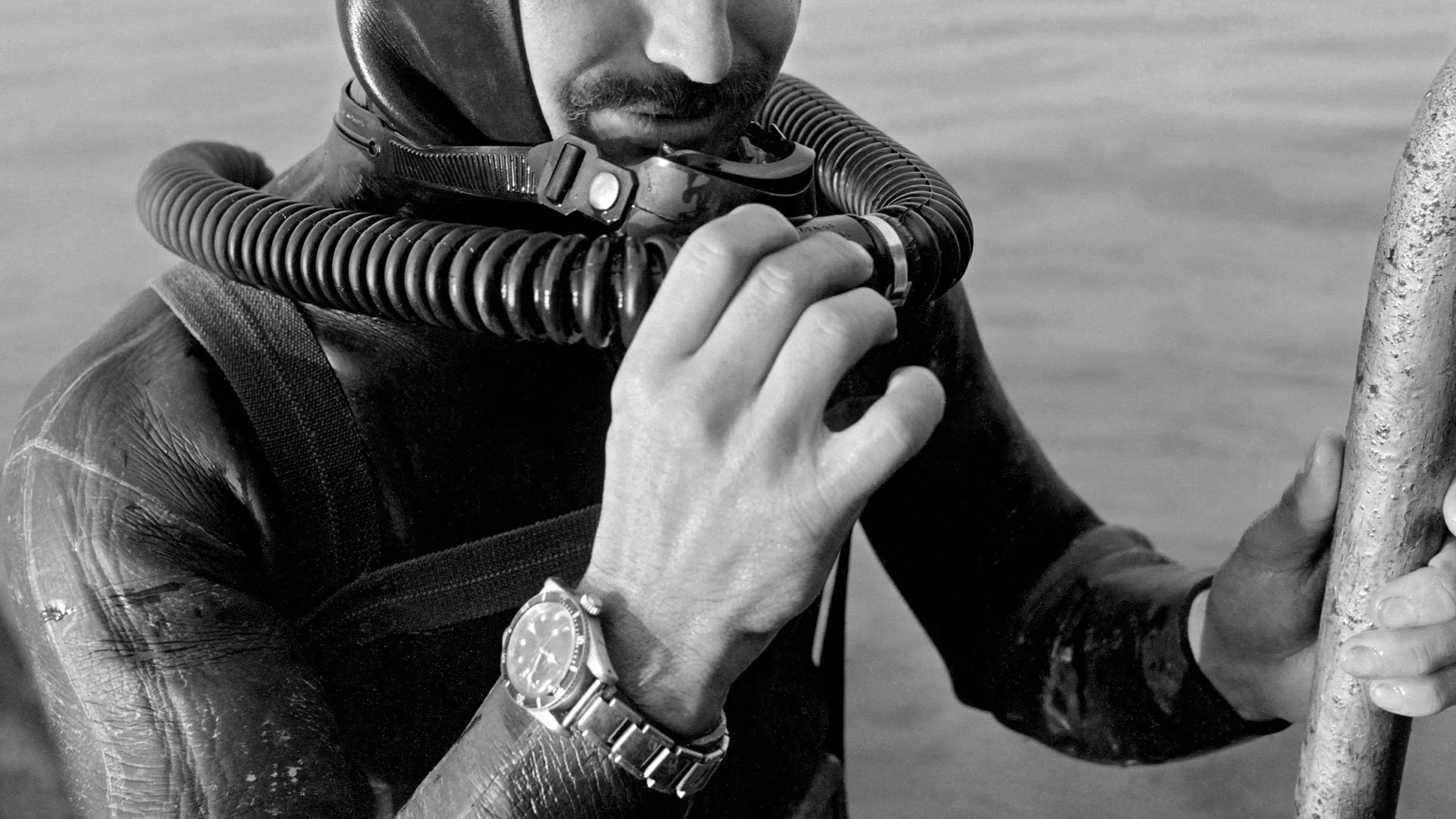
A French Navy diver with a Tudor on his wrist. Image: Tudor
For divers who did want the bracelet, Tudor offered a Fliplock clasp that folded out to fit over a dive suit. The Rolex name began to fade from the line in 1989, when the dated reference 79090 came on a bracelet with Tudor’s own logo. The last reference, the 79190 of 1995, had a sapphire crystal, a one-way bezel and a Tudor-signed bracelet. Tudor made more than 20 Submariner references between 1969 and 1999, and 1999 was the last year the name appeared in its catalogue.
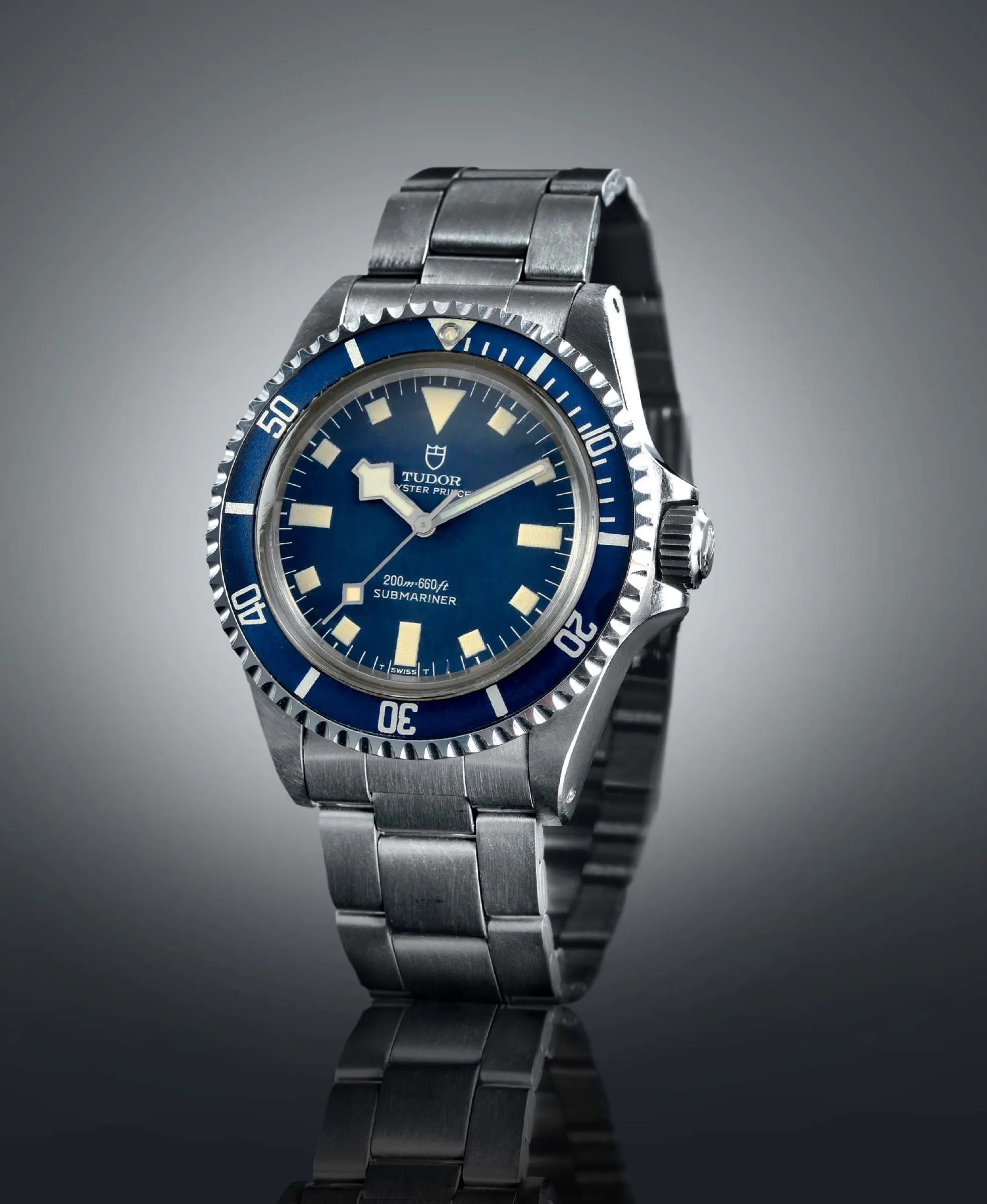
The reference 9401 with the blue dial and bezel the French Navy made famous. Image: Tudor
The Black Bay 54 is the 7922 you can buy today
Tudor brought the look back in 2012 with the Heritage Black Bay, which it described as a fresh take on a 1950s standard. The Black Bay range has borrowed from the old divers ever since, but the Black Bay 54 is the one Tudor calls the most true-to-form version of the 7922.
It’s 37mm across and 11.2mm thick, keeping the 7922’s proportions, and like the original it has no crown guards. The hands are the exception: Tudor gave it the Snowflake set from 1969. Inside is Tudor’s own MT5400 movement, a COSC-certified chronometer with about 70 hours of power reserve, and the case is rated to 200 metres, twice the original.
The Black Bay 54 costs $6,290 on a rubber strap and $6,630 on a steel bracelet, and the Lagoon Blue version with a sand-coloured dial is $6,900.
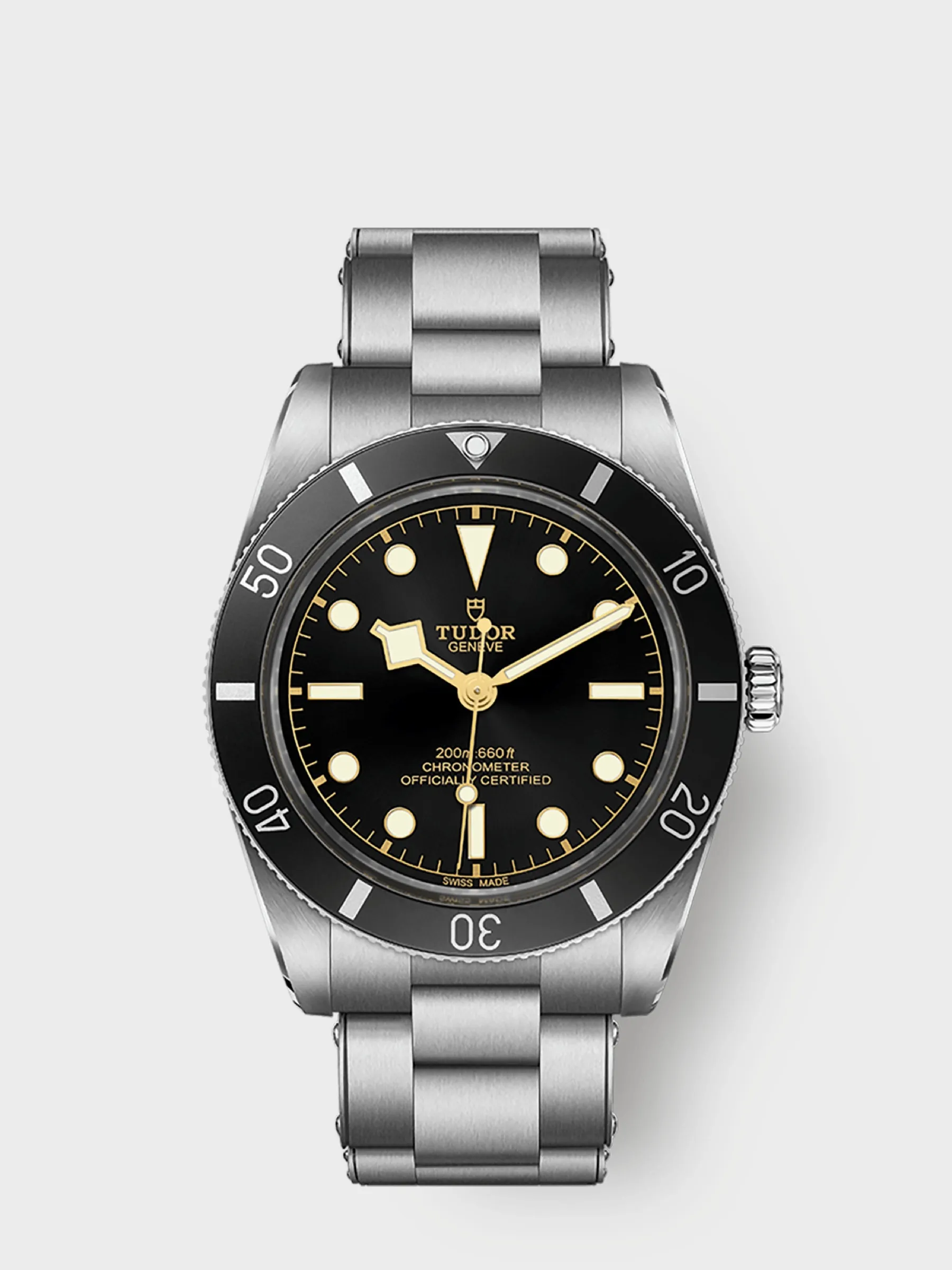
The 37mm Black Bay 54. Image: Tudor
If 37mm is too small for your wrist, the Black Bay 58 is the 7928’s size at 39mm. If you want a modern dive watch rather than a reissue, the titanium Pelagos is Tudor’s tool watch.
Buying a vintage Tudor Submariner
Original Tudor Submariners come up at auction, and early ones in good order are well beyond the price of a new Black Bay. At Phillips in Geneva in May 2016, a 7922 with a case back dated 1958, its original box and papers sold for CHF35,000, well above its estimate of CHF15,000 to CHF25,000. That’s one sale from one year, not a price guide.